

Moving Permits, Parking & Regulations

Boston Moving Permits & Parking Rules: A Practical, Step‑by‑Step Guide
Moving in Boston comes with rules that can feel confusing if you haven’t prepared. This guide lays out what you need to know about applying for moving and parking permits, the documents you’ll be asked for, the types of permits available, and how to reserve space for your truck. Follow these steps and tips to avoid fines and make moving day run more smoothly.
How to Apply for a Moving Permit in Boston
Getting a moving permit in Boston usually follows three basic steps: collect the required documents, complete the official application, and submit it to the city department that handles permits. Most applications are available on the City of Boston website. Completing the process correctly helps you avoid last‑minute issues or fines on moving day.
If you prefer hands‑on help, local moving services and permit specialists can handle the application for you and streamline the process.
If you choose to apply yourself, plan time for scanning documents, filling any online upload fields, and saving confirmation receipts. Many applicants find it helpful to create a single folder (digital or physical) with all supporting documents and a screenshots folder for confirmations. Keep contact information for the issuing office handy in case follow‑up is required.
Required Documents
When you apply, have these items ready:
- Proof of residency or property ownership: utility bill, lease, or deed.
- Valid photo ID: driver’s license or passport.
- Moving vehicle details: make/model and license plate number.
Preparing these documents ahead of time speeds up approval.
If your move involves a building with loading‑dock rules or property management coordination, bring any building approvals or written permissions that the city may request. For commercial moves, confirm any insurance or business license documentation that could be required as part of the application.
Fees
Permit costs vary by type. As an example, a moving parking permit is typically about $25 per space, per day. Some permits — such as street closures or special loading requests — may carry higher or variable fees. Residential and commercial moves generally follow the same fee structure.
Factor these charges into your moving budget so there are no surprises.
When estimating costs, consider cumulative charges: if you need more than one space or multiple days, multiply the per‑space rate by the number of spaces and days. For moves that require both a loading permit and temporary parking in multiple locations, calculate each permit separately and keep the receipts together for reimbursement or accounting.
Payment Methods
Boston accepts multiple payment options for permits. You can pay online via the city portal with a credit or debit card, or you can pay in person at the relevant city office by card, check, or cash. Paying online is usually the fastest way to secure your permit.
Save proof of payment and any confirmation numbers. If you pay in person, request a printed receipt. For online payments, keep screenshots or PDF receipts. These documents are useful if a dispute or refund request arises, or if enforcement officers ask to verify payment on moving day.
Types of Permits
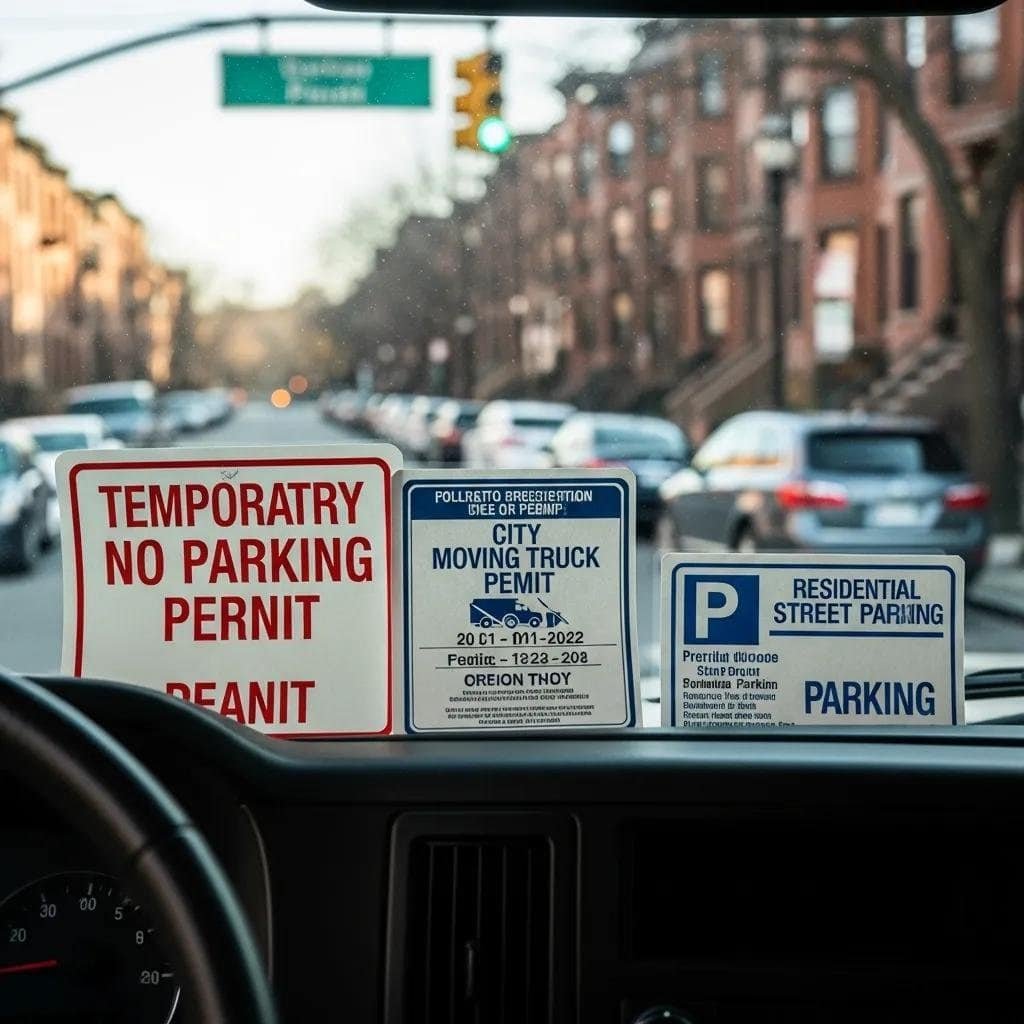
The main permit types used for moves are:
- Loading Zone Permit: for using designated loading areas to load or unload furniture and boxes.
- Street Closure Permit: for temporarily blocking a street or sidewalk during a move.
- Temporary Parking Permit: to park moving trucks in restricted or metered spots without getting ticketed.
Choose the permit that matches what you need on moving day.
In practice, smaller residential moves often need only a temporary parking or loading permit, while larger moves — especially those requiring space for multiple large trucks or a temporary fenced area — may need a street closure or more complex arrangement. Discuss your needs with the issuing office if you are unsure which category fits your situation.
How to Reserve Parking Spaces
To reserve parking for your moving vehicle, check availability for your street and desired time, complete the reservation form (usually on the city’s website), and wait for confirmation. Keep your confirmation with you on moving day to show enforcement officers if needed.
Reservation steps typically include selecting the location on a map, specifying the number of spaces and hours required, and uploading any supporting documents. After submission, monitor your email for the confirmation or any follow‑up requests; do not assume a reservation is final until you receive written confirmation.
When to Reserve
Reserve your space as early as possible — we recommend at least 10 business days before your move. Peak moving season fills up quickly, so earlier reservations reduce stress and improve your chances of getting the exact time and location you need.
If your move falls during a holiday, major city event, or university move‑in period, allow extra lead time. Some neighborhoods have high demand on weekends and month‑end dates, so booking earlier can mean the difference between an acceptable slot and rearranging your move.
Moving Day Rules

On moving day, make sure your permit is visible in the vehicle. Moving trucks are typically allowed to park in permitted spaces for up to 4 hours — check local signs for neighborhood‑specific rules. Following posted regulations prevents tickets and keeps your move on schedule.
Use a clear holder or place the printed permit on the dashboard where it is easily seen through the windshield. If your permit includes specific times, adhere to them strictly. Have a backup plan (nearby legal parking or a secondary vehicle) in case enforcement arrives early or a posted sign is interpreted differently than expected.
Who Needs a Permit
Anyone parking a moving vehicle in a restricted area — residents, businesses, or moving companies — needs the appropriate permit. Confirm eligibility and any additional requirements before your move.
Academic and policy research also examines how permit distribution and parking supply decisions affect cities broadly.
Parking Permit Distribution & Policy
Examines parking‑permit distribution and how parking supply and permit‑trading policies influence outcomes.
Parking permits management and optimal parking supply considering traffic emission cost, X Zhang, 2018
What Happens If You Move Without a Permit
Moving without the required permits can lead to fines, tickets, or towing — all of which add cost and stress. To avoid these consequences, secure the right permits before your scheduled move.
If an enforcement officer issues a citation, keep all application paperwork and receipts; many cities offer an appeal or review process. Contact the issuing office promptly if you believe a citation was issued in error and follow their instructions for contesting charges. Resolving issues quickly can reduce added fees and administrative delays.
On‑street enforcement and permit management are common topics in urban planning studies, reflecting the operational challenges cities face.
On-Street Parking Permits & Enforcement
Proposes a model using Lidar and license‑plate recognition to prioritize resident permits and describes a layered enforcement approach with warnings and fines to handle unauthorized parking.
Efficient on-Street Parking Management: Priority Parking Permits for Residents Integrated with Digital Systems, Case of Istanbul, H İnaç, 2025
Other Things to Keep in Mind
Additional considerations include permit duration, rules about transferring permits, and any special conditions for your neighborhood. Read the permit terms closely so you know how long it’s valid and whether any restrictions apply.
If your plans change, ask the issuing office about extensions, amendments, or reissuance — some permits can be modified if requested in advance. Also confirm whether you can display digital confirmation on a phone or if a printed permit is required, especially in areas with strict enforcement practices.
How do I apply for a Moving Permit in Boston?
Follow these steps to apply:
- Gather your documents: proof of residency, photo ID, and vehicle information.
- Fill out the application: complete the official form accurately.
- Submit the application: send it to the city department for processing and keep your confirmation.
Completing each step carefully reduces delays.
What are the step-by-step requirements for the Moving Permit Application Process?
The requirements are straightforward:
- Collect required documents: residency proof, ID, and truck details.
- Complete the form: provide accurate information on the application.
- Submit and follow up: file the application and track its status with the issuing office.
Following this checklist helps ensure approval before your move.
Which documents and fees are needed for a Boston Moving Permit?
You will typically need:
- Documents:Proof of residency or ownershipValid IDMoving vehicle details
- Fees: Moving parking permits are commonly $25 per space per day; other permits may cost more depending on the request.
Having everything ready speeds up processing.
If you represent a business or professional mover, include any required company credentials and proof of insurance with your submission. Keeping a checklist for each permit requested prevents missing attachments that can cause processing delays.
What types of Temporary and Residential Parking Permits are available for moves?
Common permits for moves include:
- Loading Zone Permit: for short‑term loading and unloading in designated zones.
- Street Closure Permit: for temporarily blocking a street or sidewalk.
- Temporary Parking Permit: for parking moving vehicles in restricted spots during the move.
Select the permit that matches your logistics and vehicle size.
How do Temporary Parking Permits differ from Residential and Commercial Permits?
Temporary permits are issued for short‑term moves and generally apply across residential and commercial contexts. Commercial moves may need additional permits or approvals depending on vehicle size and the scope of the move. Check requirements specific to commercial operations to avoid surprises.
When in doubt, describe the vehicle dimensions and the length of time you’ll need the space. The issuing authority can advise whether a temporary permit is sufficient or whether a commercial‑grade permit is required.
What are the eligibility criteria and restrictions for each Parking Permit type?
All moving trucks parked in restricted areas must display a valid permit. Typically, permitted parking for moving trucks is limited to 4 hours per location unless otherwise specified. Confirm any time limits or neighborhood exceptions before you arrive.
Key City of Boston Moving Regulations and Recent Updates
Boston periodically updates moving and parking rules. Recent updates have clarified permit requirements and streamlined parts of the application process to make it easier to obtain permits online and plan moves with fewer delays.
Which new parking and moving rules were introduced in the 2026 Boston regulations update?
Recent changes reinforce a few points, such as:
- Required permits for moving trucks: all moving trucks must display a valid parking permit when parked in restricted areas.
- Improved application details: certain application steps have been simplified to speed approvals.
These adjustments are intended to improve on‑street operations and reduce conflicts on move days.
How do these regulations affect moving day parking and permit validity?
The regulations mean you should have your permit clearly displayed and follow any posted time limits or special neighborhood rules. Staying compliant prevents tickets and helps your move proceed without interruptions.
Small operational changes may affect when enforcement typically begins or whether temporary signs can be posted. Review the permit confirmation carefully for any site‑specific instructions to avoid misunderstandings with local enforcement officers.
How can I ensure Moving Day Parking Compliance and avoid fines?
To avoid fines, follow these practical steps:
- Obtain the right permits well before moving day.
- Follow local signs and regulations where you park.
- Reserve spaces early so you aren’t scrambling at the last minute.
Being proactive is the best way to avoid enforcement issues.
Common Parking Restrictions and Loading Zone Rules During Moves
Typical restrictions include:
- Time limits: moving trucks usually have a limited parking window in permitted areas.
- Permit display: permits must be visible while the vehicle is parked.
- Loading zone rules: many loading zones have specific hours or require permits for use.
Check local signage and your permit terms so you know what’s allowed.
Fines and Penalties for Violations During a Move
Consequences for noncompliance can include:
- Fines for parking without the proper permit.
- Towing or ticketing if the vehicle is parked illegally.
Securing permits and following posted rules is far cheaper than paying fines or towing fees.
Long‑Distance Moving Permits and Parking Considerations
For long‑distance moves, take these items into account:
- Documentation: ensure you have the required paperwork for both origin and destination cities.
- Application differences: long‑distance moves may involve different rules or additional permits compared with local moves.
Plan ahead so both ends of the move comply with local and federal regulations.
When coordinating an interstate move, contact the destination city’s permitting office early to confirm differences in permit timelines, vehicle restrictions, or inspection requirements. Synchronizing pickup and delivery slots between cities reduces waiting time and unexpected fees.
How Long‑Distance Moving Permits Differ from Local Permits
Local permits are governed by city rules, while long‑distance moves must also follow state and federal regulations for transport. Verify both sets of requirements when planning an interstate move.
Are there specific parking regulations for commercial moving trucks on long distance moves?
Yes. Commercial trucks may need permits tailored to their size and operation, and loading‑zone rules for commercial vehicles can differ from residential moves. Confirm any additional permit types your moving company might require.
How do Storage and Parking Permits interact during a move?
If you’re using temporary storage, you may need both storage permits and parking permits, depending on where your vehicle or container will be located. Coordinate both permits to avoid conflicts and ensure continuous legal use of the space.
What permits are required for temporary storage and associated parking zones?
Typical needs include:
- Parking permits for vehicles or containers in restricted spots.
- Loading zone permits for moving items between storage and the truck.
Confirm requirements with the city office that issues permits for your neighborhood.
How to coordinate multiple permits for smooth moving and storage compliance
Coordinate permits effectively by:
- Identifying all required permits for moving, parking, and storage.
- Applying early for each permit to allow for processing time.
- Aligning schedules so permit times and locations don’t conflict.
Good coordination reduces the chance of enforcement problems on moving day.
Frequently Asked Questions
What should I do if I forget to apply for a moving permit?
Act quickly: contact the city department that issues permits and ask about expedited options. If you can’t secure a permit before moving, be prepared for the risk of fines and consider rescheduling the move if possible.
Can I transfer my moving permit to another person?
Most moving permits are non‑transferable and issued to the applicant. If circumstances require a transfer, contact the issuing office to learn whether they allow exceptions and what steps are needed.
Are there any restrictions on moving during certain hours in Boston?
Yes. Many areas restrict moving during peak traffic hours or set neighborhood‑specific rules. Check local signage and any permit conditions to identify allowed moving hours and avoid disruptions.
What happens if my moving truck is towed?
If your truck is towed, contact the city’s parking authority or local police to find the towing company and impound location. Be prepared to pay towing and storage fees as well as any fines. Prevent this by confirming permit coverage and following posted rules.
How can I find out about changes to moving regulations in Boston?
Stay up to date by checking the City of Boston’s official website, signing up for city notifications, or following neighborhood associations and community boards. These sources typically announce regulatory changes first.
What should I do if I encounter issues with my parking permit on moving day?
If a permit is missing, unclear, or not displaying properly, contact the city’s parking authority right away and have your application or confirmation ready. If needed, move the vehicle to avoid fines while you resolve the issue.
Can I apply for multiple permits for different locations on the same day?
Yes — you can apply for multiple permits for the same day, but you must meet the requirements for each one and provide the necessary documentation. Processing times can vary, so apply well in advance.
Conclusion
Understanding Boston’s moving permit process takes a little planning, but it’s the best way to avoid fines and delays. Gather the necessary documents, apply early, and choose the right permits for your situation. With the right preparation, moving day in Boston can be straightforward — start by reviewing the city’s resources and reserving your permits today.
Finally, allow extra time on moving day for unexpected issues and keep all permit confirmations and receipts together. A calm, well‑documented approach reduces stress and helps ensure your move goes smoothly.
