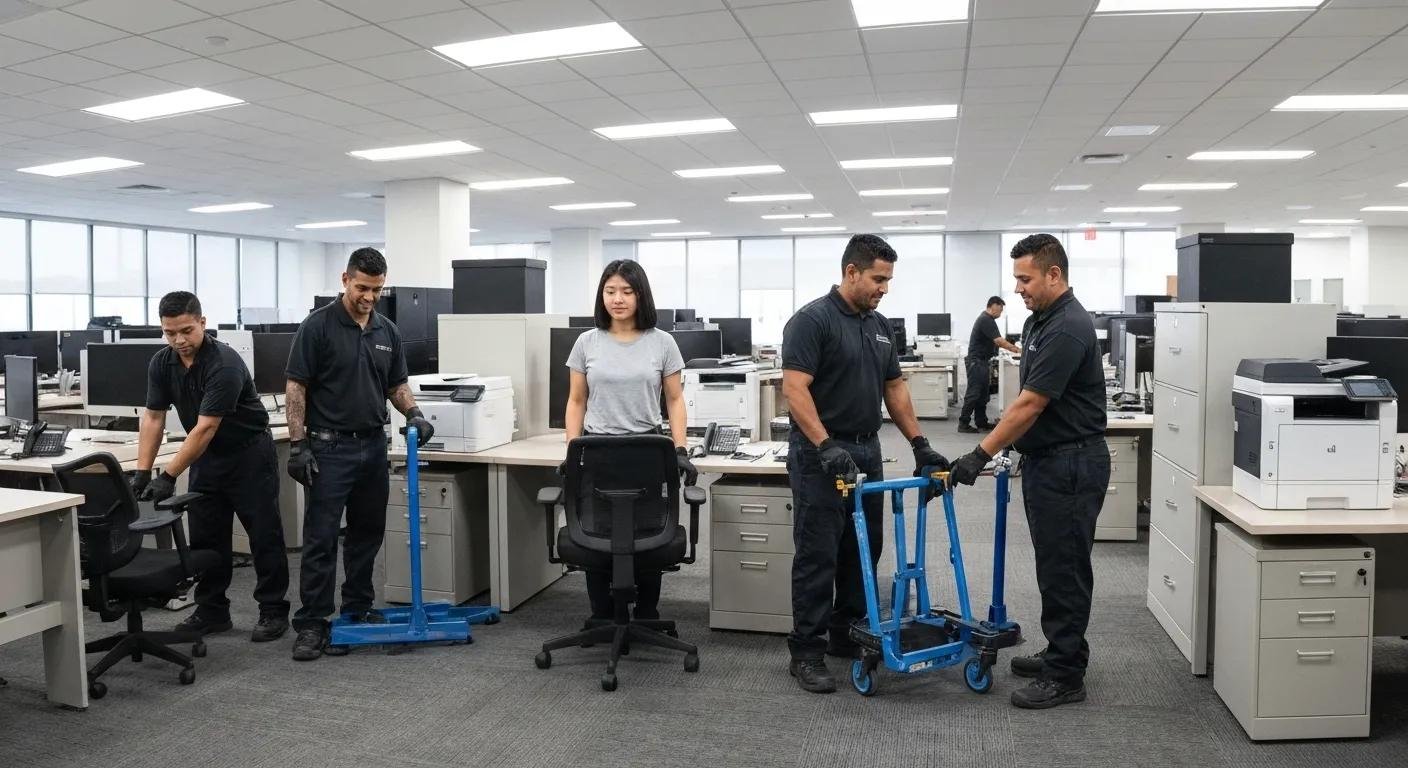
Top 10 Essential Tips for Keeping Your Belongings Safe During a Local Move

Top 10 Essential Tips for Keeping Your Belongings Safe During a Local Move in Boston

Relocating locally in Boston presents unique challenges for your cherished possessions, from navigating tight stairwells to enduring the city’s bustling streets. If you’ve ever worried about how to ensure your items arrive unscathed, you’re in the right place. This guide outlines ten crucial safety strategies, covering everything from meticulous packing and careful furniture handling to secure loading, transit protection, insurance options, and the invaluable support of Horizon Boston Movers. We’ll delve into:

  1. Expert techniques for packing delicate items
  2. Safeguarding furniture during disassembly and transport
  3. Proper loading and securing of your cargo
  4. Understanding insurance and the benefits of professional movers
  5. Specialized care for valuables and post-move checks

Each section provides practical insights, step-by-step guidance, and recommended supplies to minimize risks and ensure your Boston move is as smooth as possible.

How Can Strategic Packing Protect Fragile Items During Your Local Move?

Strategic packing involves enveloping fragile items in ample cushioning to absorb impacts and prevent damage during handling and transit. By selecting the right materials, you significantly reduce the likelihood of cracks or breakage when boxes shift within the moving truck. For instance, glassware wrapped in bubble wrap can better withstand vibrations, while double-walled boxes offer superior structural integrity under pressure.

What Are the Best Packing Materials for Fragile Items?

Display of packing materials like bubble wrap and boxes for protecting fragile items during a move
MaterialProtection FeatureKey Benefit
Bubble wrapAir-filled cushioningAbsorbs shocks and vibrations
Double-walled boxesReinforced cardboardHolds weight without collapsing
Packing paperFlexible fillerFills voids and prevents shifting

Utilizing high-quality materials is fundamental to minimizing handling risks and forms the bedrock of secure packing for everything from delicate electronics to larger household items.

How Should You Pack Electronics to Prevent Damage?

  1. Place each electronic device in its original packaging or a snug, protective box.
  2. Wrap screens and sensitive components with anti-static bubble wrap to guard against electrostatic discharge.
  3. Bundle and clearly label power cords, then seal them in bags to prevent tangling and moisture ingress.

Adhering to these steps ensures your electronics arrive in perfect working order, ready for immediate setup.

Why Is Proper Labeling and Inventory Important for Belongings Safety?

A meticulous labeling and inventory system is crucial for preventing accidental mishandling and streamlining the unpacking process. Clearly mark boxes containing fragile items with prominent “FRAGILE” labels on all sides. Maintain a detailed inventory list that correlates box numbers with their contents and intended room placement. This transparent tracking system not only speeds up unloading but also alerts handlers to boxes requiring extra caution.

Effective labeling completes the packing phase, paving the way for safer furniture handling and loading techniques.

What Are the Best Practices for Furniture and Appliance Protection During a Move?

Protecting your furniture and appliances starts with reducing their size, securing loose parts, and adding protective layers to prevent scratches and dents. Disassembling items makes them easier to lift, while padding corners and edges preserves their finishes. Appliances benefit from stabilized internal components to prevent damage during transit.

How Do You Disassemble and Protect Furniture Safely?

  • Carefully remove legs, shelves, and any loose hardware, storing screws and fittings in clearly labeled bags.
  • Wrap each disassembled component in moving blankets or foam padding to shield against impacts.
  • Use shrink wrap to secure the blankets in place and keep smaller parts contained.
  • Reassemble furniture upon arrival, thoroughly checking each joint for stability before use.

This methodical approach reduces the weight of individual items and safeguards wood, glass, and metal surfaces.

What Are Safe Handling Techniques for Appliances?
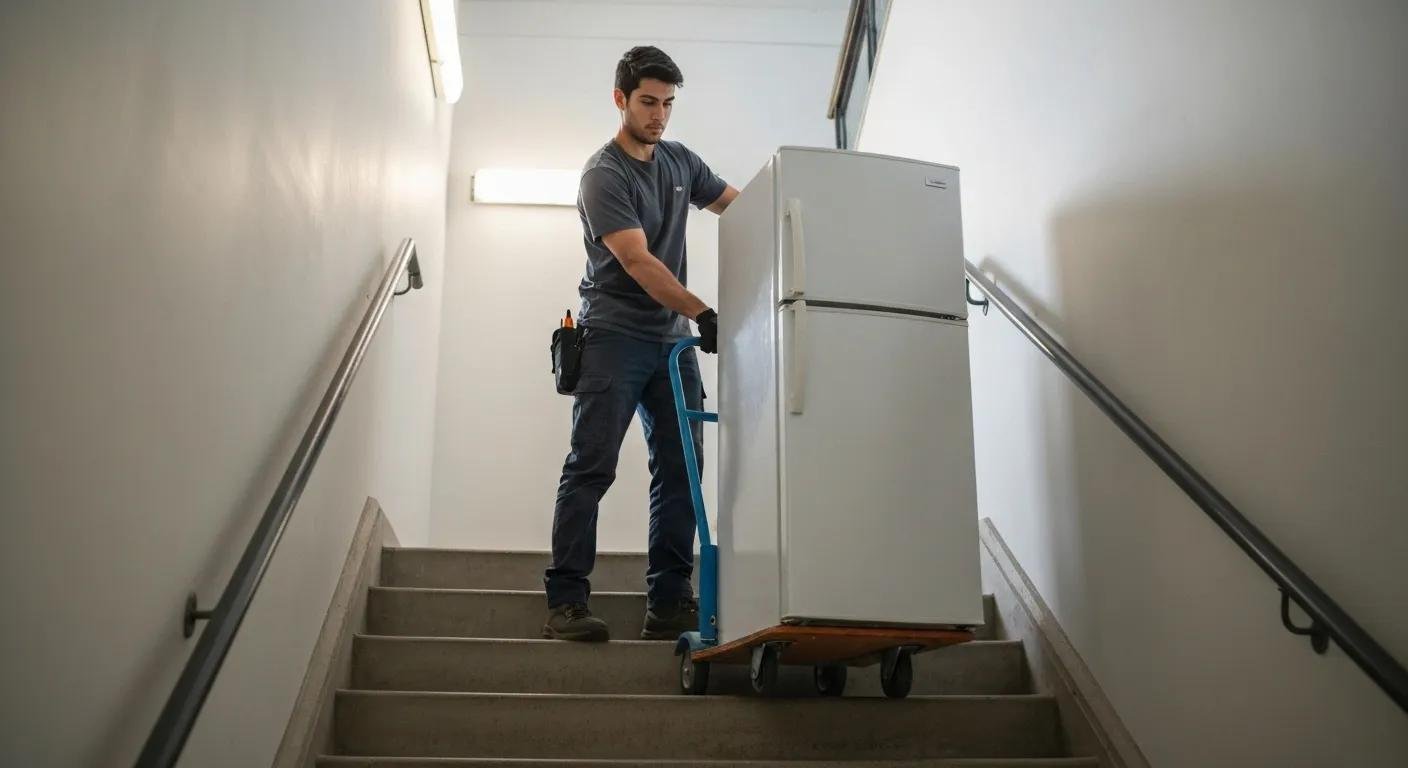
Mover using an appliance dolly to transport a refrigerator safely down stairs, showcasing safe handling techniques
  • Thoroughly drain and dry refrigerators and freezers to prevent leaks during the move.
  • Secure appliance doors firmly with heavy-duty straps or bungee cords.
  • Utilize appliance dollies equipped with straps to tilt and maneuver units, always keeping them upright.
  • Lift appliances with a partner, focusing on the sturdy frame rather than handles or control panels.

Securing internal components and employing ergonomic equipment not only reduces physical strain but also protects your floors from damage.

How Can You Protect Floors and Walls While Moving Furniture?

  • Lay down floor runners or protective cardboard sheets along hallways and staircases.
  • Attach corner guards to door frames to prevent accidental scrapes and scuffs.
  • Place felt sliders beneath furniture legs to facilitate smooth movement without scratching wood or tile surfaces.

These preventative measures protect both your belongings and your property, ensuring a smooth transition to the truck loading phase.

How Do You Ensure Safe Loading and Secure Transport of Your Belongings?

Safe loading is about balancing weight, stabilizing cargo, and preventing movement during transit. Proper distribution of heavy items over the truck’s axles is key to maintaining stability, while padding and tie-downs keep everything securely in place, even during sudden stops.

What Are Proper Loading Techniques for Moving Trucks?

TechniqueMain PurposeImpact on Safety
Heaviest items on axleCentralize weight distributionImproves steering and braking
Furniture flat against wallsMaximizes floor spacePrevents lateral shifting
Padding between itemsShock absorptionProtects surfaces from scratches

Research consistently shows that improper loading and inadequate load securement can lead to significant damage to packages and their contents, as well as potential injuries during unloading.

Load Securement and Packaging Methods for Reducing Damage in Transit

Products of different sizes and weights are loaded into trailers using various methods both mechanical and manual, by various algorithms to best weigh or cube out a trailer efficiently. However improper loading and lack of load securement inside the trailer can result in damage to both packages and the products they contain, and can lead to subsequent injury during unloading. The paper discusses improperly loaded trailers, and recommends proper loading methods.
Load securement and packaging methods to reduce risk of damage and personal injury for cargo freight in truck, container and intermodal shipments, J Singh, 2014

How Can You Secure Items Effectively During Transit?

  • Utilize ratchet straps to firmly anchor bulky items to the truck’s wall rails.
  • Insert foam panels or moving blankets between stacked boxes to provide cushioning.
  • Place non-slip mats beneath fragile crates to prevent them from sliding.
  • Employ the truck’s built-in hooks and load bars to create secure compartments for groups of items.

These measures ensure that every item is stabilized, guaranteeing a smooth journey through Boston’s streets.

The primary goal of research in this field is to establish the connection between load securement and packaging strategies in minimizing cargo damage during truck transit.

Reducing Cargo Damage: Load Securement and Packaging in Trucks

The objective of this study is to determine whether the relationship between load securement and packaging method to reduce risk of damage for cargo freight in trucks.
Load securement and packaging methods to reduce risk of damage for cargo freight in truck, S Abdul Hanan, 2017

What Are the Unique Challenges of Navigating Boston Streets with Your Belongings?

Boston’s narrow thoroughfares, limited parking availability, and historic building entrances present distinct challenges during a move. Movers must navigate meter regulations, one-way street restrictions, and potentially steep driveways. Proactive planning involves securing necessary parking permits, scouting the most efficient load-in routes, and assigning spotters to guide large items through tight corners.

Understanding and anticipating these local complexities is integral to effective packing and loading, ensuring a seamless relocation experience.

Why Should You Consider Moving Insurance and Professional Movers for Safety?

Moving insurance and professional assistance offer a dual layer of protection against unexpected issues. Insurance safeguards your financial investment against loss or accidental damage, while trained movers employ proven handling techniques to minimize the risk of breakage.

What Moving Insurance Options Protect Your Valuables?

  • Released value protection, offered at a minimal cost, provides basic coverage calculated per pound per item.
  • Full replacement value coverage, which reimburses the actual value of items, subject to a deductible.
  • Third-party transit insurance, providing customizable policies tailored for high-value items like antiques or artwork.

Selecting the appropriate insurance option offers invaluable peace of mind and ensures a straightforward claims process should any incident occur during transit.

How Do Professional Movers Like Horizon Boston Movers Enhance Belongings Safety?

Seasoned local movers utilize proprietary packing techniques, specialized equipment, and rigorous handling protocols. Horizon Boston Movers assigns dedicated teams expertly trained in navigating staircases, maneuvering in tight spaces, and securely loading moving trucks. Our uniformed professionals employ calibrated dollies, robust anchoring systems, and custom crates to ensure each item is protected from the moment it leaves your old home to the moment it arrives at your new one.

Combining comprehensive insurance coverage with the expertise of professional movers provides a complete safety net for your relocation.

How Can You Protect Valuables and Ensure a Damage-Free Move?

High-value items require exceptional care, including discreet storage, personalized transport, and systematic verification. Secure containers, dedicated carry-on boxes, and thorough post-move inspections are essential to confirm that every piece arrives in pristine condition.

What Are Best Practices for Moving Jewelry, Documents, and Artwork?

  • Store jewelry in padded, lockable travel cases that you carry personally.
  • Transport critical documents in waterproof filing boxes kept under your direct supervision.
  • Pack artwork in sturdy, foam-lined crates equipped with corner protectors, and clearly label them with orientation indicators.

Maintaining personal custody of irreplaceable items prevents loss and allows for direct oversight of their condition throughout the move.

Specialized guidance is available for moving valuables and other irreplaceable items safely, ensuring their protection at every stage of the process.

Moving Valuables and Irreplaceable Items Safely

Valuables and irreplaceable items like jewelry, coin collections and family photos should be moved.
The Smooth Move, 1992

How Should You Unpack Safely and Check for Damage After Your Move?

  1. Open boxes one by one, carefully inspecting each item against your inventory list.
  2. Promptly photograph any discovered damage to facilitate insurance claims.
  3. Allow electronic devices to acclimate to their new environment before powering them on.
  4. Set aside packing materials for future use or dispose of them responsibly according to local recycling guidelines.

Completing this thorough inspection process directly relates to accurate labeling and inventory management, effectively closing the safety loop from initial packing to final placement.

Implementing these ten essential steps creates a robust defense against damage, stress, and unexpected issues during your Boston move. By integrating professional packing, meticulous handling, strategic loading, and the specialized expertise and insurance options offered by Horizon Boston Movers, you can ensure both the safety of your belongings and your peace of mind.

Request a quote today for a truly damage-free relocation experience.

Residential Moving Services That Exceed Expectations

Residential Moving Services That Exceed Expectations: Your Guide to the Best Local and Long-Distance Home Moving Solutions

A seamless residential moving service hinges on expert coordination, meticulous handling, and transparent pricing to transform relocation stress into satisfaction. Readers will learn foundational definitions, criteria for selecting local movers, essential long-distance planning tips, the value of professional packing, and optimal storage solutions. This guide maps out:

  1. What core services deliver exceptional home relocations
  2. How to pick trusted local experts
  3. Tips for interstate and cross-country moves
  4. The role of packing/unpacking services
  5. Storage options that support every timeline

Discover detailed residential moving service details—trust providers like Horizon Boston Movers for proven reliability and outstanding customer care.

What Are Residential Moving Services and How Do They Exceed Expectations?

Residential moving services provide end-to-end solutions—from systematic packing and secure transport to precise unpacking—ensuring each item arrives intact and on time. By integrating professional logistics, experienced teams, and personalized coordination, these services deliver reliability, reduce damage claims, and maximize customer satisfaction through every relocation phase.

Introduced here are five key ways full-service providers exceed expectations:

  • Comprehensive planning and dedicated move coordinators for tailored schedules
  • High-quality packing materials and specialty crating for fragile items
  • Real-time status updates and clear communication at each milestone
  • Transparent cost estimates with no hidden fees or surprise charges
  • Trained crews that handle furniture assembly, appliance setup, and final walkthrough

These performance pillars set the stage for choosing the ideal moving solution in your area.

2025 Moving Survey Results

A 2025 survey of 1,000 moving customers revealed that convenience was the primary motivation for hiring professional movers, with full-service packing and cost also being significant factors. Over 70% of respondents recommended their moving company, often highlighting professionalism and clear communication, while 19% reported issues with broken or missing items.
This survey data supports the article’s claims regarding the benefits of professional moving services, including customer satisfaction, the value of professional packing, and the reduction of damage claims.

What Does Full-Service Residential Moving Include?

The full-service model encompasses every step of a home move to free clients from manual labor and coordination stress.

Service ComponentIncluded ActivitiesKey Benefit
PackingCustom crates, protective padding, labelingMinimizes breakage and streamlines unpacking
Loading & TransportationProfessional loading, secure vehicle transitEnsures safe, efficient transit
Unloading & UnpackingFurniture setup, box organizationAccelerates move-in readiness
Debris RemovalBox disposal, recyclable materials pickupLeaves residence clean and clutter-free

Each component works in concert to deliver a turn-key relocation that begins and ends on schedule.

How Do Professional Movers Ensure a Stress-Free Relocation?

Professional movers ensure stress-free relocations by integrating skilled training, standardized protocols, and proactive communication. First, certified crews follow exacting safety and handling procedures when lifting, wrapping, and stowing belongings. Then, personalized move plans map out each milestone—from pickup to delivery—while digital tracking provides transparency. Finally, on-site supervisors coordinate last-minute adjustments to prevent delays and address concerns. This structured approach keeps clients informed and confident from departure through final placement.

Why Is Transparent Pricing Important for Residential Moves?

Transparent pricing fosters trust by outlining every cost factor—labor hours, mileage, materials, and surcharges—in the initial estimate. Clear invoicing prevents unexpected expenses and aligns client expectations with actual services delivered.

  • Itemized quotes covering hauling fees, packing supplies, and additional services
  • Written agreements that lock in rates regardless of traffic or weather conditions
  • Clear definitions of billable labor increments and travel distances
  • Advance notice for any requested add-ons or schedule changes

Transparent pricing builds confidence, reduces disputes, and reinforces a service provider’s commitment to integrity.

How Transparent Pricing Wins Customer Trust in Moving Services

Transparent pricing is a strategic approach that significantly influences customer relationships by eliminating hidden fees and providing clear estimates. This fosters trust, enhances customer loyalty, and reduces potential friction points, ultimately boosting customer satisfaction and a company’s reputation in the moving industry.
This research reinforces the article’s emphasis on transparent pricing as a critical factor for building confidence, reducing disputes, and demonstrating integrity in residential moving services.

How to Choose the Best Local Residential Movers for Your Home Move?

Local movers consulting with a homeowner about moving logistics, emphasizing trust and professionalism

Choosing local residential movers involves evaluating area expertise, service range, and reputation to guarantee swift and customized relocations. Local specialists leverage community knowledge to navigate traffic, building restrictions, and optimal routes, translating into faster pickups and deliveries. Understanding these factors ensures you select a partner who delivers both speed and care.

When vetting options, consider a trusted regional company such as Horizon Boston Movers that demonstrates local expertise and accountability. Their familiarity with neighborhood layouts and building regulations streamlines every step of the move.

What Are the Key Benefits of Hiring Local Residential Moving Experts?

Engaging local experts delivers:

  1. Reduced travel expenses thanks to shorter routes and lower fuel costs.
  2. Familiarity with neighborhood access points, parking permits, and elevator protocols.
  3. Rapid response to schedule changes or urgent requests.
  4. Community-driven accountability reinforced by regional reviews and referrals.

These advantages collectively speed up loading and unloading, making your short-distance relocation seamless.

How Do Apartment Moving Solutions Differ from House Moving Services?

Apartment and house relocations share core logistics but differ in handling constraints and workflows:

Moving ScenarioEnvironmental ConstraintSpecialized Handling
Apartment MoveHallway widths, elevator schedulesCompact box stacking, timing coordination
House MoveOutdoor loading zones, driveway accessUse of ramps, blanket protection for exteriors

What Should You Expect from Short-Distance Residential Moving?

Short-distance relocations typically deliver final unpacking within hours rather than days. Clients can expect:

  • Predictable, flat-rate pricing based on a single-day service window
  • Flexible scheduling, including evenings or weekends
  • Direct crew management from origin to destination without interim stops

This rapid turnaround helps families settle in quickly and continue daily routines uninterrupted.

What Are the Essential Tips for Successful Long-Distance Residential Moving?

Long-distance residential moving demands thorough planning, regulatory compliance, and reliable coordination to ensure belongings cross state lines safely.

Follow these five essential tips:

  1. Begin preparations at least eight weeks in advance to secure desired dates.
  2. Create a detailed inventory to support insurance coverage and avoid lost items.
  3. Confirm carrier credentials and track record for cross-state logistics.
  4. Book professional packing for high-value or fragile possessions.
  5. Schedule flexible delivery windows to accommodate road conditions and rest stops.

Implementing these strategies safeguards both timeline and budget throughout the relocation journey.

How Do Interstate Moving Regulations Affect Your Relocation?

Interstate moves fall under federal guidelines that mandate carrier licensing, insurance coverage, and shipment tracking. Movers must register with the Federal Motor Carrier Safety Administration (FMCSA) and provide a written bill of lading outlining terms. Understanding these rules ensures legal compliance, reliable service, and protection against liability during cross-state transit.

What Are the Typical Costs of Long-Distance Residential Moving?

Below is a cost reference table for long-distance relocations, illustrating average rates and influencing factors.

Distance RangeTypical CostPrimary Cost Drivers
Up to 500 miles$2,400–$3,500Load size, labor hours, fuel
500–1,200 miles$3,500–$5,000Route complexity, tolls, stops
Over 1,200 miles$5,000+Overnight layovers, distance fees

Costs vary based on overall volume, special handling requirements, and seasonal demand.

How Can You Plan a Cross-Country Residential Move Efficiently?

An efficient cross-country move hinges on structured milestones:

  • Compile a room-by-room inventory with photos and descriptions.
  • Solicit binding estimates from multiple licensed carriers.
  • Reserve professional packing and loading crews four to six weeks ahead.
  • Confirm departure and delivery slots with precise date ranges.
  • Maintain open communication for real-time tracking and adjustments.

Adhering to a phased timeline preserves control, avoids last-minute rush fees, and reduces stress.

How Do Professional Packing and Unpacking Services Enhance Your Residential Move?

Professional packers wrapping fragile items and organizing boxes, highlighting the benefits of expert packing services

Professional packing and unpacking services deliver specialized expertise, time savings, and damage prevention that standard DIY methods often cannot match.

What Are the Advantages of Professional Packing Solutions?

Expert packers improve move efficiency by:

  • Using industry-grade packing materials to protect high-value items.
  • Applying custom crating techniques for antiques and artwork.
  • Labeling boxes with detailed contents and placement instructions.
  • Handling disassembly and reassembly of furniture to guarantee proper fit.

These advantages translate into fewer mishaps and rapid unpacking at your destination.

How Can You Pack Fragile and Specialty Items Safely?

Packing delicate items demands a systematic approach:

  1. Wrap glassware and ceramics individually with bubble wrap and cushioning paper.
  2. Crate electronics in shock-absorbent liners and seal in moisture-resistant film.
  3. Secure framed art between custom-sized foam boards.
  4. Reinforce corners and edges of specialty crates with extra padding.

Following these steps safeguards valuable possessions and preserves sentimental items.

When Should You Consider DIY Packing vs. Full-Service Packing?

Determine the optimal packing method by weighing:

  • Budget constraints and willingness to invest in full coverage.
  • Time availability and capacity to manage packaging tasks.
  • Complexity and fragility of items slated for transport.

DIY packing suits simple relocations with minimal breakables, while full-service packing excels for large homes or high-value contents.

What Storage Solutions Support Residential Moving Services That Exceed Expectations?

Incorporating flexible storage safeguards relocation timelines and accommodates unforeseen delays or staging needs.

What Are the Options for Short-Term and Long-Term Storage?

Different storage types fit varied timelines and budgets:

Storage TypeTypical DurationPrimary Benefit
Short-Term UnitDays to weeksImmediate overflow during move
Long-Term FacilityMonths to yearsCost-effective rates for extended stays

Implementing the right storage timeline bridges gaps between move-out and move-in dates without clutter.

How Does Climate-Controlled Storage Protect Your Belongings?

Climate-controlled units maintain stable temperature and humidity levels, preventing warping, mold growth, and corrosion on sensitive items such as wooden furniture, electronics, and fine fabrics. This specialized environment safeguards valuables during extended storage periods and adds an extra layer of protection for heirlooms and high-end equipment.

When Is Storage Needed During a Residential Move?

Storage becomes essential when:

  • Move-in and move-out dates do not align.
  • Renovations or repairs delay occupancy.
  • Excess furnishings or seasonal items require temporary staging.

Leveraging storage solutions ensures a flexible, stress-free transition without rushing possessions into incomplete spaces.

Residential relocations demand precision planning, skilled execution, and adaptable services to exceed expectations at every turn. By understanding core service components, selecting qualified local experts, mastering long-distance logistics, leveraging professional packing, and utilizing strategic storage solutions, homeowners can transform any move into a seamless experience. For personalized quotes and proven expertise in local and long-distance residential moving, consider exploring providers like Horizon Boston Movers for timely, transparent, and professional service.

Uncovering Hidden Costs: What to Expect When Hiring Local Movers Near You

Uncovering Hidden Costs: What to Expect When Hiring Local Movers Near You in Boston

Relocating within Boston often comes with unexpected expenses that can stretch your budget beyond what you initially planned. Knowing the common hidden costs when hiring local movers near me helps you budget more accurately and avoid unwelcome surprises. This guide breaks down key surcharge categories—from carry fees to permits—and shows how transparent providers offer complete cost clarity. You’ll discover major fee types, how upfront pricing prevents extra charges, practical tips to sidestep last-minute costs, Boston-specific logistical considerations, and where to get a free, no-obligation estimate from a trusted mover.

What Are the Most Common Hidden Moving Costs to Watch For?

Checklist of hidden moving costs with calculator and coffee cup

Hidden moving costs emerge when standard quotes don’t account for extra labor, specialized handling, or local regulations. These fees often surface after the move begins, leading to stress and unexpected payments. Recognizing each potential fee upfront allows you to compare quotes fairly and seek out companies with transparent pricing. Here are four major surcharges that frequently catch Boston residents off guard.

What Is a Long Carry Fee and How Does It Affect Your Move?

A long carry fee covers the extra labor involved when movers have to transport items a significant distance, typically more than 75 feet from the truck to your doorway. Companies might charge this fee per trip or per foot, which can add up quickly, especially on narrow city streets or in buildings without easy access. In Boston’s historic neighborhoods with tight alleys, long carries are a common occurrence. Confirming this surcharge beforehand will prevent surprise charges on your final bill.

Do Movers Charge Extra for Stairs or Elevator Use?

Stair and elevator charges are fees movers apply to compensate for the extra effort and time required to navigate vertical spaces during a move. Most companies charge a flat rate per flight of stairs or per elevator ride. In Boston’s many mid-rise apartment buildings, these fees can accumulate rapidly. Choosing a mover that includes elevator access in their standard rates or offers complimentary ground-floor loading can help you avoid this cost.

What Are Heavy and Specialty Item Fees for Items Like Pianos and Safes?

Heavy and specialty item fees are applied to belongings that demand extra personnel, specialized equipment, or enhanced insurance. These charges typically range from $100 to $500, depending on the item’s weight and the complexity of its handling.

ItemTypical Fee RangeBoston Context
Piano$150–$400Navigating narrow hallways in Back Bay
Safe$100–$300Requiring specialized equipment for stair descents
Large Sculpture$200–$500Needing custom padding and hoisting solutions

These specialized fees reflect the actual costs of handling such items and should always be included in your initial estimate.

Are Packing Materials and Services Included in Moving Quotes?

Packing materials and the labor to use them often incur separate charges. Basic kits with boxes and tape can cost between $50 and $300, while comprehensive packing services will add hourly labor fees.

  • Standard boxes and tape kit
  • Protective wrap and custom crates
  • Full-service packing labor

Opting to supply your own boxes can reduce material costs, while professional packing ensures efficiency and protects your belongings from damage.

How Do Fuel Surcharges and Travel Time Impact Moving Costs?

Fuel surcharges are added to cover fluctuating fuel prices and are usually calculated per mile or as a percentage of the total labor costs. Travel time fees compensate the crew for their commute to and from your location. During Boston’s busy traffic hours, extended travel time can add $50–$150 to your moving bill. Reputable movers will clearly outline their fuel policies and travel time estimates in writing to prevent unexpected increases.

How Does Pricing Transparency Help You Avoid Unexpected Fees?

Moving company representative explaining transparent pricing to a client

Transparent pricing models break down every cost component—labor, materials, travel—so clients can see all potential surcharges upfront. Clear cost structures build trust and enable accurate budgeting. Here are key transparency features that protect you from unknown fees.

What Is Time-Based Pricing and Why Is It Better for Avoiding Hidden Costs?

Time-based pricing means you only pay for the actual labor and truck time used, eliminating surprises related to weight or volume. You’re charged an hourly rate that covers the crew, vehicle, and necessary equipment. This method aligns the cost directly with the duration of your move, ensuring that common surcharges like long carries or stair fees are incorporated into a single rate rather than added later. It provides predictable billing and straightforward cost management.

How Do Free, No-Obligation Quotes Provide Cost Clarity?

A free, no-obligation quote details every aspect of the service—packing, loading, travel, specialty items—before you commit to anything. In-home or virtual estimates allow movers to assess potential challenges and accurately estimate the resources required. Receiving a binding quote in writing ensures accountability and prevents unexpected add-ons down the line. This clarity is essential for stress-free financial planning.

How Does Horizon Boston Movers Address Boston’s Unique Moving Challenges?

Horizon Boston Movers leverages its local expertise to anticipate challenges like narrow street access, permit requirements, and the numerous flights of stairs common in Boston residences. Their teams come equipped with specialized gear—dollies, hoisting straps, protective padding—to navigate tight spaces efficiently. By factoring these elements into upfront, time-based estimates, they eliminate separate surcharges and provide a single, comprehensive price.

What Are the Benefits of Choosing a Transparent Local Moving Company in Boston?

  1. Complete visibility into all fee types before your move begins.
  2. No surprise charges for stairs, long carries, or fuel.
  3. Accountability through written, binding estimates.
  4. Local crews with in-depth knowledge of Boston’s regulations and parking rules.

These advantages lead to greater peace of mind, consistent budgeting, and a smoother relocation experience.

How Can You Avoid Last-Minute Fees and Rescheduling Charges?

Last-minute changes to your moving date, time, or services can incur additional fees, often ranging from $100 to $500, depending on crew availability and the impact on the schedule. Avoiding these extra costs requires careful planning and clear communication.

What Are Common Last-Minute Change Fees When Hiring Movers?

Last-minute rescheduling or adding services can trigger change fees related to crew reallocation and potential overtime. These fees typically include:

  • A surcharge for changing your booking date
  • Additional labor costs for unexpected packing or last-minute tasks
  • Premium rates for weekend or holiday moves

Confirming your move details at least 72 hours in advance usually helps you avoid these penalties and secure better rates.

What Practical Tips Help You Avoid Unexpected Moving Charges?

  1. Finalize your inventory and service needs well in advance.
  2. Secure necessary permits or parking spots ahead of time.
  3. Clearly label boxes by fragility and specific handling requirements.
  4. Consolidate any service add-ons into your original quote.

Taking these steps ensures accuracy in your binding estimate and keeps your moving costs on track.

How Does Early Planning Reduce the Risk of Extra Fees?

Booking your move date well before peak moving seasons helps secure lower hourly rates and avoids potential overtime charges. Early planning also guarantees the availability of specialized crews and equipment, reducing the need for costly last-minute rentals. Establishing clear timelines minimizes surprises and improves cost control.

What Additional Boston-Specific Costs Should You Expect When Moving Locally?

Moving within Boston comes with unique local expenses tied to city regulations and infrastructure. Being aware of these costs beforehand allows you to select a mover who incorporates them into their upfront pricing.

How Do Parking Permits and Access Restrictions Affect Moving Costs in Boston?

Boston requires residential parking permits or the rental of metered spaces for moving trucks in many areas. Permit fees can range from $25 to $75 per day, while meter rates might add $15–$40 for extended loading times. Movers that handle permit applications for you will include these costs in the initial estimate, saving you from unexpected city fees.

What Storage Fees Might Apply During Your Move?

Temporary storage solutions are often needed when timing or space constraints arise during a relocation. Storage-in-transit fees typically average $150–$400 per month, depending on the unit size and whether climate control is needed. Some movers offer bundled short-term storage at reduced rates, integrating warehousing into your moving package to avoid separate invoices.

Are Disassembly and Reassembly Services Charged Separately?

Disassembly and reassembly fees cover the time and tools required to take apart and put back together furniture or fixtures. Standard charges for these services usually range from $75 to $200, depending on the complexity. Transparent movers will itemize these tasks in their quotes, so you know exactly what to expect rather than encountering a surprise charge after the job is done.

Where Can You Find Reliable Information and Get a Transparent Moving Quote?

Selecting the right moving partner starts with accessing clear, detailed information about costs and services. A reputable local mover will make this process straightforward and obligation-free.

How Can You Request a Free, Transparent Quote from Horizon Boston Movers?

You can schedule a complimentary in-home or virtual estimate to receive a comprehensive, time-based quote. During this consultation, the team will document all logistical factors—such as stairs, carry distances, specialty items, and packing needs—and translate them into a single, bundled rate with no hidden add-ons.

What FAQs Should You Ask to Understand Moving Costs Fully?

When evaluating potential movers, be sure to ask about:

  • Their approach to carry and stair fees
  • How fuel surcharges are calculated
  • Their process for handling permit applications
  • The pricing structure for packing supplies and labor

Asking these targeted questions can help uncover any potential hidden charges before you commit.

Why Trust Horizon Boston Movers for a Stress-Free, Transparent Move?

Horizon Boston Movers has earned its reputation through professional reliability, transparent time-based pricing, and extensive local knowledge. Their commitment to providing free, no-obligation quotes and maintaining clear communication eliminates surprise fees and ensures peace of mind for every Boston relocation.

Moving locally in Boston doesn’t have to mean dealing with unwelcome financial surprises. By understanding common surcharge categories, choosing a time-based pricing model, and partnering with a transparent local expert, you can ensure a stress-free experience. Contact Horizon Boston Movers today for your free, fully detailed estimate and move forward with confidence.

Eco-Friendly Moving Companies Near Me for Green Relocations

Boston’s Green Movers: Your Eco-Conscious Relocation Partner

Selecting an environmentally friendly moving service in Boston can significantly reduce your carbon footprint while ensuring a smooth transition. Our green moving partners utilize reusable packing supplies, fuel-efficient vehicles, carbon offset programs, and waste reduction strategies to provide responsible and dependable service. This guide will cover what makes a move sustainable, the specific green solutions offered by Horizon Boston Movers, practical steps you can take to make your move greener, why Horizon Boston Movers is the top eco-conscious choice, and answers to common questions about moving in Boston. By aligning your move with Boston’s environmental goals and Horizon Boston Movers’ clear, hourly pricing, you’ll achieve both efficiency and peace of mind throughout your relocation.

What Are Eco-Friendly Moving Services and Why Choose Them in Boston?

Eco-friendly moving services combine resource conservation, emission reduction, and circular economy principles to minimize environmental impact without compromising quality or reliability. In Boston’s busy urban landscape, sustainable moving incorporates local recycling partnerships, biodegradable packing materials, and optimized routes to cut down on traffic and lower greenhouse gas emissions. These services support the city’s objectives for waste diversion and cleaner air, contributing to a healthier community and potentially reducing long-term moving expenses.

The following table details core sustainable practices, how they are implemented, and the benefits they offer for moves in Boston.

Sustainable PracticeImplementationBenefit
Reusable Packing MaterialsPlastic crates that are rented and cleanedReduces cardboard waste and lowers supply costs
Fuel-Efficient VehiclesMoving trucks that are hybrid or highly fuel-efficientDecreases CO₂ emissions by up to 56 percent
Carbon Offset ProgramsInvesting in local tree-planting initiativesBalances out unavoidable relocation emissions
Digital Inventory & Paperless QuotesUsing mobile apps and electronic signaturesSaves trees and speeds up the estimate approval process

These fundamental features deliver tangible environmental advantages—less waste, reduced emissions, and more efficient operations—making green moves in Boston both practical and economical. Next, we’ll explore what defines an eco-friendly moving company.

What Defines an Eco-Friendly Moving Company?

Fleet of fuel-efficient moving trucks at a recycling center, representing eco-friendly moving services

An eco-friendly moving company integrates sustainability policies, green operational practices, and transparent reporting to ensure every part of a relocation has the least possible environmental impact. Key characteristics include a commitment to reuse, minimizing single-use items, fuel-efficient fleets, optimized routing, and partnerships with local recycling facilities. For instance, a mover that uses durable, returnable plastic crates and helps coordinate with donation centers demonstrates a comprehensive approach to greener moves.

The main qualities to look for in a green moving provider in Boston include:

  • Using reusable crates and recycled packing paper instead of flimsy cardboard.
  • Employing fuel-efficient or hybrid vehicles for efficient city navigation.
  • Offering carbon offset options to neutralize any remaining emissions.
  • Implementing paperless estimates, billing, and inventory management to save resources.
  • Collaborating with local recycling centers and charitable organizations.

Understanding these defining traits will help you identify moving companies that align with Boston’s environmental values and consistently deliver sustainable service.

How Do Sustainable Relocation Practices Benefit the Environment and You?

Sustainable relocation practices enhance air quality and conserve resources by cutting greenhouse gas emissions and diverting materials from landfills. By opting for reused packing materials and arranging for furniture donations, households reduce waste volumes and support community causes. Optimized routing further cuts fuel consumption, leading to cleaner city streets and lower transportation costs for clients.

Personally, clients benefit from clearer pricing and fewer hidden charges thanks to streamlined green processes. Using fewer packing supplies means less waste to dispose of at your new home. Health benefits also arise when biodegradable packing materials replace chemical-based foams, reducing indoor air pollutants. These advantages highlight why green moves are beneficial for both the environment and individuals.

Green Strategies Drive Environmental and Economic Benefits

The results also showed that the shift towards green strategies leads to achieving noticeable environmental and economic benefits, despite the high initial costs and challenges associated with supply chain management and compliance with environmental regulations.

The role of adopting green strategies in the development of eco-friendly products, ME Al Khazraje, 2024

Which Green Moving Services Are Available in Boston?

Boston residents have access to a comprehensive range of eco-friendly moving services designed to minimize waste and emissions at every step. Popular local options include:

  • Renting returnable plastic moving crates instead of disposable cardboard ones.
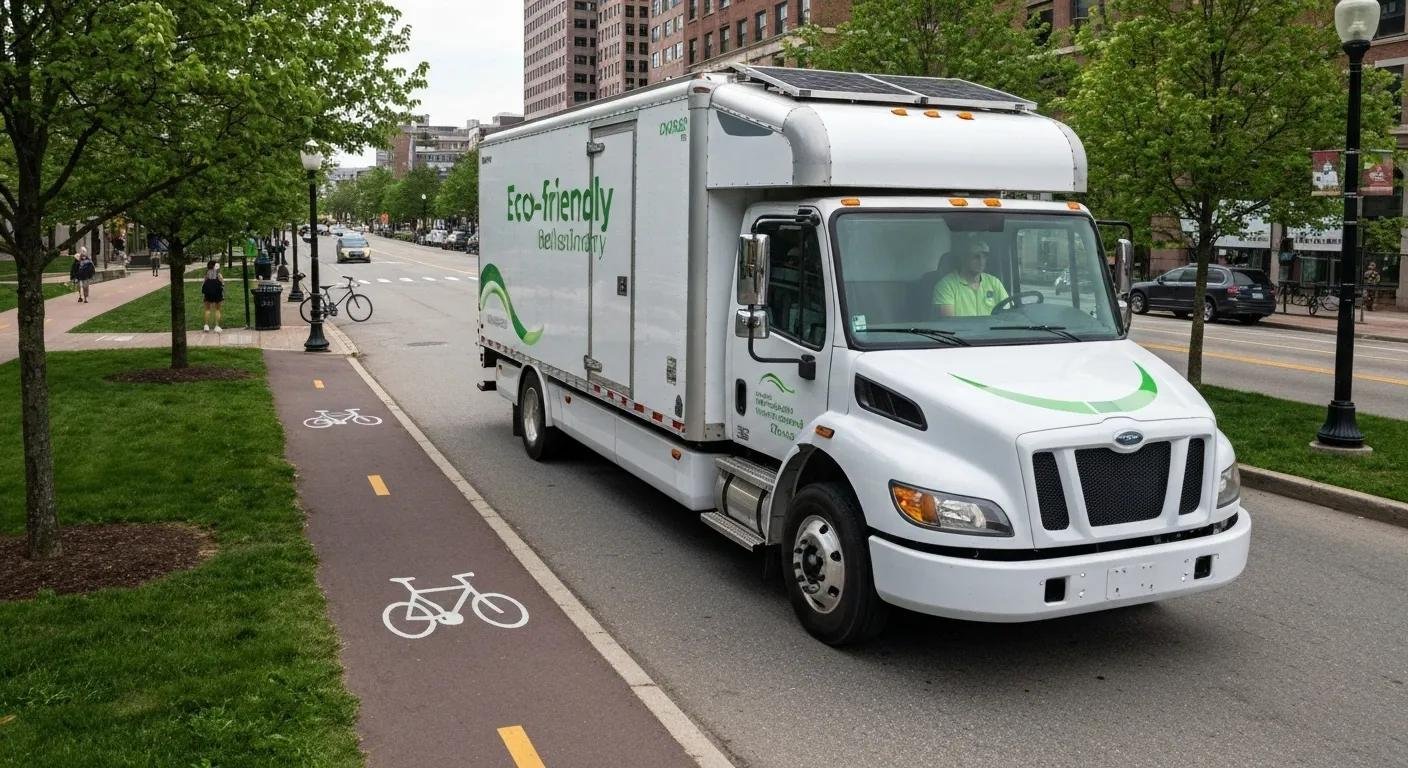
  • Choosing from options like electric, hybrid, or highly fuel-efficient moving trucks.
  • Arranging for donation pickups of unwanted furniture and items.
  • Using biodegradable packing peanuts and recycled paper for cushioning.
  • Managing inventory and receiving paperless quotes via mobile apps.

These service choices showcase the wide array of sustainable relocation solutions available locally, ensuring that every move in Boston can be handled responsibly from packing to delivery.

How Does Horizon Boston Movers Provide Green Moving Solutions?

Horizon Boston Movers team member loading reusable crates into a hybrid truck, showcasing green moving solutions

Horizon Boston Movers offers customized green moving solutions that combine trusted local experience with cutting-edge sustainability practices. Since 2015, this BBB-accredited company has assisted over 5,000 clients annually, earning an average rating of 4.9 stars from 135 reviews by incorporating eco-friendly methods into their residential, commercial, and long-distance moving services. Their transparent, hourly pricing ensures clients pay only for the actual time spent moving, avoiding the unpredictability of weight-based charges.

Their green approach centers on three key areas—packing, transportation, and waste management—which work together to create a truly sustainable relocation experience.

Service ComponentGreen PracticeEnvironmental Impact
Packing SolutionsReusable crates, recycled cardboard boxesEliminates waste from single-use materials
Transportation LogisticsFuel-efficient fleet, optimized routesReduces CO₂ emissions and speeds up move times
Waste Reduction ProgramsCoordinating donations, recycling materialsDiverts items from landfills and lowers disposal costs

What Sustainable Packing Materials Do We Use?

Horizon Boston Movers uses reusable plastic crates, recycled cardboard boxes, and biodegradable packing peanuts to protect your belongings while minimizing waste. These materials replace single-use options, cutting down cardboard usage by over 80 percent and avoiding plastic foams that persist in landfills.

Clients benefit from fewer discarded boxes after moving out and a simple process for returning crates. This practice not only supports Boston’s waste reduction goals but also makes unpacking and cleanup at your new location much easier.

How Do Our Fuel-Efficient Vehicles Reduce Carbon Footprint?

Our fleet includes hybrid trucks and highly fuel-efficient vehicles equipped with route optimization software to minimize driving distances and engine idling. This strategy reduces fuel consumption by up to 56 percent compared to standard moving fleets.

Regular maintenance and smart scheduling further boost efficiency, ensuring that each move contributes less to urban air pollution while still arriving on time for our clients.

What Waste Reduction and Recycling Programs Do We Offer?

Horizon Boston Movers collaborates with local charities and recycling centers to facilitate donation pickups and material recycling. We assist clients in sorting unwanted items for donation, recycling used packing materials, and managing digital inventories to eliminate paper waste.

Through these efforts, over 500 pounds of reusable goods are diverted from landfills each month, strengthening community support systems and reinforcing our dedication to sustainable relocations.

How Can You Make Your Move More Sustainable with Green Moving Companies Near Me?

A sustainable move requires careful planning, conscious choices, and partnering with a mover that prioritizes environmental responsibility. By incorporating green practices from the start—choosing reusable supplies, scheduling efficient transportation, and reducing items to discard—you can significantly lower both the cost and the carbon impact of your relocation.

In addition to hiring an eco-focused company, simple actions like decluttering, donating items, and digitizing your inventory play a vital role in a greener moving experience.

How to Rent Reusable Moving Boxes in Boston?

  1. Estimate the number of crates needed based on your home’s size.
  2. Arrange for delivery a day before you start packing.
  3. Pack your belongings, noting any fragile items in the digital inventory.
  4. Return the empty crates within the agreed rental period.

This method eliminates cardboard waste and provides a convenient, cost-effective alternative to disposable boxes.

What Are the Best Practices for Reducing Waste During a Move?

Minimizing waste on moving day depends on making proactive decisions and adopting resourceful habits.

  • Donate or sell unwanted items well before you begin packing.
  • Opt for biodegradable or recycled packing materials instead of new cardboard.
  • Use digital checklists and e-signatures for all necessary paperwork.
  • Consolidate your belongings to reduce the number of trips and minimize vehicle idling.

These practices ensure minimal reliance on single-use supplies and lower overall moving expenses.

How Do Carbon Offset Programs Work for Your Relocation?

Carbon offset programs allow you to balance out unavoidable emissions by supporting environmental projects. After estimating your move’s emissions—based on distance and vehicle type—you can invest in local tree planting or renewable energy initiatives. Horizon Boston Movers includes offset calculations in their quotes, giving you the option to add a small fee that directly funds certified carbon-neutral projects.

Offsetting complements other green practices, creating a comprehensive environmental benefit that extends beyond daily operations.

Why Choose Horizon Boston Movers as Your Boston Green Moving Company?

Horizon Boston Movers combines over a decade of local moving expertise with a strong commitment to sustainable relocation. Their hourly pricing model offers clarity and flexibility, aligning cost transparency with eco-friendly practices. Supported by a 4.9-star rating from over 135 reviews and BBB accreditation, this team provides reliable moving solutions tailored to your green objectives.

Local knowledge, customer satisfaction, and environmental responsibility come together to make every move in Boston more efficient and conscientious.

How Does Transparent Pricing Support Your Eco-Friendly Move?

By charging solely for the actual hours spent moving, rather than by weight, transparent pricing reduces unnecessary vehicle idling and labor costs. Clients can schedule shorter, more efficient moves that align with their green commitments, ensuring effective resource use without unexpected charges.

This approach empowers customers to plan precisely, matching sustainable practices with clear budgeting.

What Do Customers Say About Our Green Moving Services?

Clients consistently praise the seamless use of reusable crates, punctual arrivals in fuel-efficient trucks, and helpful coordination for donations. Positive feedback highlights both the environmental benefits—like reduced cardboard waste—and the operational reliability, underscoring Horizon Boston Movers’ dual commitment to performance and sustainability.

These testimonials confirm the company’s reputation for dependable, eco-responsible relocations.

How Does Local Expertise Enhance Sustainable Relocations in Boston?

A deep understanding of Boston’s neighborhoods, traffic patterns, and local recycling resources enables Horizon Boston Movers to optimize routes, shorten travel times, and streamline donation drop-offs. Local partnerships with recycling centers and donation charities further boost waste diversion efforts, ensuring your move supports community sustainability goals.

This neighborhood-level insight ensures every green relocation is both efficient and impactful.

What Are Common Questions About Eco-Friendly Moving in Boston?

Potential clients often seek clarification on the practicality, availability, and cost of sustainable moving services in Boston. Key considerations include comparing green mover rates with traditional estimates, understanding the terms for renting reusable crates, and identifying available electric or hybrid truck options. Clients frequently inquire about incorporating donation pickups, offsetting remaining emissions, and ensuring that paperless processes fit within tight moving schedules.

Addressing these topics helps you make informed decisions and highlights Horizon Boston Movers’ readiness to clarify every step, ensuring a transparent, eco-conscious moving experience.

Moving sustainably in Boston is both achievable and rewarding when you partner with a mover that prioritizes environmental impact, service reliability, and community support. By choosing Horizon Boston Movers, you align your relocation with leading green practices, transparent pricing, and local expertise—creating a move that is not only efficient but also responsible. Request your eco-friendly moving estimate today to make your next Boston relocation a greener journey.

Eco-Friendly Local Movers That Care for the Earth

Boston’s Green Movers: Sustainable Local Relocation Services That Cherish Our Planet

Every year, Boston households contribute tons of waste to landfills. However, by choosing eco-friendly local moving services, we can slash landfill contributions by as much as 60 percent. This guide reveals how Boston residents and businesses can embrace sustainable moving practices to lighten their environmental footprint, explore earth-kind packing solutions, cut down on emissions, manage waste responsibly, and select Horizon Boston Movers for a truly greener relocation. You’ll find clear explanations, practical advice on reusable containers and smart routing, and straightforward steps to get a quote for your sustainable move.

What Exactly Are Eco-Friendly Moving Services, and Why Are They Crucial for Boston?

Eco-friendly moving services weave sustainability into every step of your relocation. They focus on reusing materials, cutting down on emissions, and diverting waste to protect our precious urban environments. In Boston’s bustling neighborhoods, where traffic congestion and limited waste facilities already strain our planet, green moving practices help restore balance by reducing carbon output and minimizing single-use packaging. For instance, swapping out dozens of cardboard boxes for durable, reusable plastic crates in a single household move significantly reduces deforestation and disposal burdens. Understanding these fundamental principles is key to exploring specific green methods and choosing the right partners.

How Do Green Moving Practices Make a Difference for the Environment?

Green moving reduces environmental impact by replacing disposable supplies with circular-economy alternatives, optimizing transportation routes, and directing unwanted items to donation centers or recycling facilities instead of landfills. By using reusable packing containers and biodegradable wraps, movers eliminate the need for single-use items that contribute to landfill methane production. Sophisticated route planning software shortens travel distances, conserving fuel and lowering harmful emissions in Boston’s busy streets. Together, these strategies can cut waste volume in half and contribute to cleaner air, directly benefiting our community’s health and sustainability goals.

What Qualities Define an Environmentally Responsible Moving Company?

An environmentally responsible moving company integrates sustainability into its core operations through the use of renewable materials, low-emission vehicles, and strategic waste partnerships. Key indicators include a robust reusable crate rental program with thorough sanitization between uses, a commitment to sourcing recycled and compostable packing supplies, and active collaborations with local charities to rehome furniture and electronics. Companies that meticulously track fuel consumption, offset their carbon emissions, and obtain certifications from recognized environmental organizations demonstrate a strong commitment to transparency and accountability. These practices bolster Boston’s resilience by aligning moving logistics with vital ecological priorities.

What Sustainable Packing Solutions Do Boston’s Green Movers Provide?

Sustainable packing options like reusable crates and recyclable boxes for environmentally conscious moving

Boston’s leading green movers offer a comprehensive range of sustainable packing solutions designed to minimize waste and simplify your relocation. Their typical offerings include reusable packing crates, which are conveniently delivered before your move and collected afterward, along with fully recyclable boxes crafted from post-consumer paper. You’ll also find compostable packing peanuts or bubble wrap made from plant-based starches. These solutions are rooted in circular economy principles, leading to reduced costs and less material consumption.

  • Reusable crates are delivered before your move, professionally cleaned after collection, and can replace up to 50 cardboard boxes per move.
  • Compostable packing peanuts break down naturally within weeks, preventing persistent plastic waste from entering our municipal systems.
  • Boxes made from recycled paper offer durability comparable to virgin-fiber cartons while actively supporting the paper recycling industry.

These eco-conscious packing options not only reduce landfill contributions and lower overall moving expenses but also pave the way for a truly green relocation experience.

How Do Reusable Moving Crates Help Cut Down on Waste?

Reusable moving crates significantly reduce the need for single-use cardboard by providing sturdy plastic containers that stack efficiently in moving vans. Each crate effectively replaces an average of three cardboard boxes and requires only simple, water-based cleaning between uses, minimizing the demand for new raw materials. Clients benefit from lower disposal fees, and moving crews can handle these uniform containers more safely, reducing the risk of damage to fragile items. This streamlined system shrinks the waste stream and promotes a more efficient moving process throughout Boston’s diverse neighborhoods.

What Kinds of Recycled and Biodegradable Packing Materials Are Used?

Moving professionals in Boston utilize recycled paper cartons, biodegradable bubble wrap, and packing peanuts made from plant starches to secure your belongings without leaving a lasting environmental mark. The table below outlines common materials, detailing their composition, origin, and what happens to them after use.

MaterialOriginEnd-of-Life Outcome
Recycled Paper BoxesPaper sourced from post-consumer wasteCan be recycled again through standard curbside programs
Biodegradable WrapPlant-derived polymersCompostable in industrial composting facilities
Starch Packing PeanutsDerived from corn or tapioca starchDissolves harmlessly in water, leaving no residue

How Can Decluttering Before Your Move Contribute to a Greener Relocation?

Decluttering before your move helps by reducing the volume of items to be packed, which in turn lowers the fuel consumption of moving vehicles. Donating usable furniture, clothing, and electronics to local Boston charities extends the lifespan of these items and keeps them out of landfills. A well-organized decluttering plan involves categorizing items into keep, donate, recycle, or discard piles, and then arranging for donation pickups or drop-offs. This approach not only saves you time and money but also amplifies social good by supporting community organizations while shrinking the environmental impact of your move.

How Do Green Moving Companies in Boston Minimize Their Carbon Footprint?

Fuel-efficient moving truck in Boston showcasing eco-friendly relocation practices

Green moving companies actively reduce their carbon footprint by employing fuel-efficient trucks, exploring electric vehicle options, and meticulously optimizing every route to minimize mileage. These strategies directly address the significant contribution of transportation to moving emissions, which can account for over 70 percent of a move’s environmental impact in urban areas. By embracing advanced logistics and cleaner engine technologies, these companies achieve measurable reductions in emissions, aligning their services with Boston’s ambitious carbon-neutral goals.

What Are Fuel-Efficient and Electric Moving Vehicles?

Fuel-efficient vehicles are designed with advanced engine tuning, aerodynamic features, and tires that minimize rolling resistance, leading to fuel savings of up to 20 percent compared to older truck models. Increasingly, electric moving vans are entering the market, utilizing battery power to eliminate tailpipe emissions during city driving and even regenerating energy through braking. Both types of vehicles contribute to cleaner air quality, enhance the livability of our neighborhoods, and showcase a commitment to adopting cutting-edge transportation technologies in the moving industry.

How Does Route Optimization Help Reduce Emissions?

Route optimization software analyzes real-time traffic conditions, road closures, and delivery schedules to determine the most efficient and shortest paths for moving fleets. By minimizing time spent in traffic congestion and reducing engine idling, movers can cut overall mileage and associated emissions by up to 25 percent. This dynamic rerouting capability adapts to Boston’s ever-changing traffic patterns, ensuring that each delivery follows the most efficient route possible. This level of logistical precision not only lowers fuel consumption and operational costs but also reinforces a commitment to sustainable service delivery.

What Responsible Waste Management Practices Support Eco-Friendly Moving?

Responsible waste management during a move involves carefully sorting, recycling, donating, and properly disposing of items to prevent harmful materials from polluting landfills or waterways. By partnering with certified recycling centers and reputable charitable organizations, green movers effectively divert textiles, paper, metals, and electronics from the waste stream. This integrated approach fosters a circular economy within Boston’s relocation sector and actively protects our environmental health.

How Are Post-Move Recycling and Donation Services Carried Out?

Post-move services commence with on-site sorting stations where moving crews meticulously separate recyclables, items designated for donation, and any remaining waste. Clients are provided with clear labels and designated bins for each category, ensuring accurate sorting. Our recycling partners then collect paper, plastics, and metals, while local donation organizations arrange for the pickup of usable furniture and clothing. This coordinated process ensures that upwards of 80 percent of materials are diverted from landfills, actively supporting Boston’s zero-waste objectives.

What Are the Best Practices for Disposing of E-Waste During a Move?

E-waste requires specialized handling due to the presence of heavy metals and hazardous components. Green movers collaborate with licensed e-waste recyclers to transport electronics to certified facilities, where they are safely processed through shredding, component recovery, and secure data destruction. We advise clients to create an inventory of their electronic devices beforehand, remove batteries whenever possible, and label electronics separately to prevent contamination. These practices are crucial for protecting public health and recovering valuable resources from outdated equipment.

Why Should You Choose Horizon Boston Movers for Your Sustainable Moving Needs?

Horizon Boston Movers expertly combines decades of moving experience with innovative green practices to provide seamless, environmentally conscious relocations throughout Boston. Our dedicated local team, competitive pricing, and personalized service offer both reliability and a deep commitment to environmental stewardship, making us the premier choice for residents and businesses seeking a low-impact move.

What Are the Environmental and Financial Advantages of Selecting Green Movers?

  1. Significantly reduced waste through the use of reusable packaging and strategic donation partnerships.
  2. Lower fuel surcharges due to optimized routes and the utilization of fuel-efficient vehicles.
  3. Decreased disposal fees achieved by diverting recyclables and unwanted items from landfills.
  4. Enhanced protection for your belongings, thanks to uniform, sanitized reusable crates.

These combined benefits translate into tangible savings and positive environmental impact, delivering a superior moving experience overall.

How Does Horizon Boston Movers Contribute to Boston’s Green Initiatives?

Horizon Boston Movers actively partners with local recycling centers and community nonprofits to organize donation drives and e-waste collection events, strengthening our local ties. The company diligently tracks its fuel consumption, publishes annual reports on carbon emission reductions, and continuously upgrades its fleet to meet and exceed Massachusetts’ sustainability standards. This unwavering dedication amplifies Boston’s role as an environmental leader and ensures that our relocation services align with our shared civic responsibility.

How Can Customers Obtain an Eco-Friendly Moving Quote Today?

To request your eco-friendly moving quote, simply reach out to Horizon Boston Movers via their website at moversboston.org or give their local Boston office a call for a personalized estimate. Clients will receive detailed breakdowns of green packaging options, vehicle choices, and waste management plans, ensuring complete transparency and a customized sustainability roadmap for every relocation.

Embracing an eco-friendly relocation means combining environmental responsibility with practical advantages across packing, transportation, and disposal. Boston residents and businesses can make a substantial difference in reducing waste and emissions by selecting sustainable methods and partnering with companies that prioritize our planet. Horizon Boston Movers integrates these essential practices into every move, empowering clients to achieve cost savings, safeguard their belongings, and actively support local green initiatives. By adopting these strategies, your next move can truly make a positive impact on the Earth.

Understanding Local Movers: A Comparative Guide to Pricing Structures in Your Area

Navigating Local Mover Pricing: A Boston Moving Company Cost Breakdown

Understanding how local movers in your area structure their pricing can turn a potentially overwhelming move into a well-managed transition. This guide breaks down the key elements of Boston moving company costs, explaining the differences between hourly and flat rates, how distance and volume affect your bill, and what to expect regarding extra service fees and potential hidden charges. You’ll also find insights into average costs for apartments, houses, businesses, and special items, along with tips for getting accurate estimates, exploring senior moving assistance, and avoiding unwelcome surprises. By demystifying these aspects and highlighting the transparent approach of Horizon Boston Movers, you’ll feel more confident comparing your options and securing dependable quotes for any move within Boston and its surrounding neighborhoods.

What Drives Moving Costs in Boston?

The price of moving in Boston is shaped by several factors: labor rates, the distance your belongings travel, the sheer volume of your possessions, the scope of services you require, and the dynamics of the local market. Labor costs can fluctuate with the seasons and the size of the moving crew, while mileage directly impacts fuel and time expenses. The amount of stuff you have determines the truck space needed and the effort involved in loading. If you opt for extra services like packing, unpacking, or storage, these will add to the overall cost. Keep in mind that high demand during peak seasons can also lead to surcharges. Knowing these cost drivers will help you create a more accurate budget and better evaluate specific pricing models.

Hourly vs. Flat Rate Pricing for Boston Movers: What’s the Difference?

Hourly rates mean you pay a set price for each mover for every hour they work, offering flexibility if your moving plans are a bit uncertain or if you anticipate needing to make adjustments on the go. Flat rate pricing, on the other hand, bundles the estimated labor, travel time, and all agreed-upon services into a single, fixed project cost. This provides cost certainty for moves where you have a clear picture of what’s involved, helping to prevent unexpected charges for overtime.

Pricing ModelHow It WorksBest For
Hourly RateA fee per mover, per hourSmaller apartments or when you only need packing assistance
Flat RateA fixed price for the entire job based on its scopeLarger homes with a detailed list of items to be moved

Your choice between these pricing structures will depend on how complex your move is and how important it is for you to have a fixed budget. This leads us to consider how distance and volume further influence the final cost.

How Do Distance and Volume Impact Boston Moving Expenses?

The distance your move covers and the volume of items you’re transporting directly affect your Boston moving costs by influencing travel charges and the number of movers needed. Longer distances mean higher fuel costs and more time spent by the moving crew. A larger volume of belongings requires a bigger truck or potentially multiple trips, along with more effort to load and unload. For instance, a two-hour drive will add both labor hours and mileage fees to any local moving quote, whether it’s hourly or flat rate. A truck packed to capacity might also incur extra charges if you’re moving during a weekend or a busy holiday period. Understanding these connections highlights why providing an accurate inventory is crucial for getting precise quotes.

What Additional Services Can Affect Your Total Boston Moving Bill?

Beyond the basic transport, several additional services can adjust your moving price:

  1. Hiring professionals for packing and unpacking ensures your items are well-protected but will add hourly fees or charges per box.
  2. If you need storage, this will typically involve daily or monthly rates, plus any handling fees for moving items in and out.
  3. Moving special items like pianos or safes requires specialized equipment, padded trucks, and extra labor.
  4. Having furniture disassembled and then reassembled at your new location is usually billed by the hour or on a per-piece basis.

These services can significantly enhance the convenience and safety of your move, but they naturally lead to the next important topic: identifying potential hidden fees that could impact your budget.

What Hidden Fees and Surcharges Should Boston Movers’ Customers Be Aware Of?

  • Tolls and bridge fees that are added for each segment of the trip.
  • Parking permits or elevator access fees that might be charged by your building management.
  • Long carry fees if movers have to carry items a significant distance from the truck or up multiple flights of stairs.
  • Fees for last-minute cancellations or rescheduling, which help compensate the company for holding crews for you.

Being aware of these potential extras in your estimate can prevent unexpected charges and prepare you to better understand the average costs for different types of moves.

What Are the Typical Moving Costs in Boston by Move Type?

A group of people discussing moving costs while looking at a laptop, illustrating average moving expenses

The average cost of moving in Boston varies depending on whether you’re moving a small apartment or a large house, or if it’s a residential or commercial relocation. Recent industry figures indicate that local apartment moves typically range from $400 to $1,200. For a three-bedroom house, expect costs to be between $800 and $2,500, influenced by distance and the time of year. Commercial moves often involve larger teams and specialized packing, which can increase rates compared to residential moves of similar size. Moving specialty items like pianos or safes usually adds an extra $150–$400 per item. These general figures can help you set realistic expectations before you start requesting detailed quotes.

Type of MoveTypical Price RangeWhat Influences the Cost
Studio Apartment$400 – $7002 movers, about 3 hours, local travel
One- to Two-Bedroom Apt.$700 – $1,2003 movers, around 4 hours, moderate distance
Three-Bedroom House$1,200 – $2,5004 movers, roughly 6 hours, larger inventory
Small Commercial Office$1,500 – $3,000Team size, packing needs, equipment relocation

These numbers provide a good starting point for understanding the specifics of different move types.

How Much Does It Cost to Move a Boston Apartment, Based on Size?

The cost of moving an apartment generally increases with its square footage and the amount of belongings you have:

  • Studio apartments usually require 2 movers for 2–3 hours, often priced at an hourly rate or a modest flat fee.
  • One-bedroom apartments typically need about one additional mover and an extra hour of labor.
  • Two-bedroom apartments often call for 3 movers and a commitment of about half a day.

When you provide accurate estimates of your belongings, you’ll get more precise hourly or flat rate quotes that reflect the size of your apartment and its contents.

What Are the Usual Prices for Moving a House in Boston by Size?

Moving a house generally requires larger crews and more time:

  • Three-bedroom homes typically involve a half-day move with 3–4 movers, and mileage fees will be higher.
  • Homes with four or more bedrooms might need full-day crews of 4–5 movers, specialized equipment, and potentially packing services.

For larger homes, flat rate estimates are often the most beneficial, as they cap your labor costs and prevent you from being charged extra for extended hours.

How Do Commercial Moving Rates in Boston Compare to Residential Moves?

Commercial moves often involve handling sensitive equipment, requiring custom packing solutions, and adhering to strict timelines. Crews with specialized training for business relocations might charge 10–20% more per hour than for residential moves. Scheduling moves outside of business hours can also increase hourly rates. However, opting for a flat rate agreement for weekend or overnight moves can help businesses control costs by minimizing operational downtime.

What Are the Costs Associated with Moving Specialty Items in Boston?

Moving items like pianos, safes, or valuable antiques requires specialized equipment, extra padding, and additional personnel. This typically adds $150–$400 per item to your moving cost. These tasks involve using padded trucks, custom rigging techniques, and ensuring proper liability coverage, all of which contribute to a higher project estimate compared to moving standard furniture.

How Can You Secure Accurate Moving Estimates from Boston Local Movers?

To get accurate estimates, you need to provide thorough information, understand transparent pricing structures, and ensure you receive written proposals. Be sure to give a detailed inventory of everything you need moved, clarify any access challenges at your locations (like narrow staircases or specific parking rules), and clearly state all the services you require upfront. Always confirm that quotes include labor, mileage, packing supplies, and any known surcharges. Open communication at this stage is key to avoiding surprises and building trust in the estimate you receive.

What Steps Should You Take to Request a Reliable Moving Quote in Boston?

  1. Create a detailed list of all your belongings, including any specialty items.
  2. Note any access details, such as whether you have stairs, an elevator, or specific parking limitations.
  3. Specify the services you need, like packing or unpacking, and your preferred moving dates.
  4. Ask for a written estimate that clearly itemizes every cost component.

Following these steps will help align expectations and make it easier to compare quotes from different companies.

How Do You Compare Quotes from Various Boston Moving Companies?

  • Make sure each estimate covers the exact same services and accounts for the same volume of items.
  • Compare the hourly labor rates, mileage fees, and what’s included in any flat fee.
  • Look for companies that are upfront about potential surcharges.
  • Check the experience of the moving crews and their insurance coverage details.

A consistent comparison will help you identify the best value and service guarantee for your move.

What Questions Should You Ask Boston Movers About Their Pricing?

  • “Do you offer both hourly and flat rate pricing options?”
  • “Are there any potential fees or surcharges that might apply based on my building or the route?”
  • “What is your policy if I need to cancel or reschedule my move?”
  • “Can you provide a detailed breakdown of all costs in writing?”

Asking these direct questions will bring clarity and help prevent unexpected charges.

What Special Pricing and Services Are Available for Senior Moves in Boston?

A senior couple receiving moving assistance, illustrating compassionate moving services

Relocating for seniors often requires a blend of moving expertise and compassionate support. Many local moving companies offer specialized packages that can include discounted hourly rates, dedicated packing teams, and assistance coordinating with downsizing services. Senior move programs frequently bundle services like packing, labeling, and unpacking into a single, clear price structure designed to ease both the physical and emotional aspects of the transition.

How Do Senior Moving Discounts and Packages Work in Boston?

Senior moving packages typically begin with a complimentary in-home consultation. This is followed by a bundled flat rate that covers packing, transportation, and unpacking. You might also find discounted labor rates or waived travel fees. Flexible scheduling options are often available to accommodate medical appointments or family support needs, ensuring a respectful and well-organized move.

What Unique Factors Influence Senior Relocations and Their Costs?

Moves for seniors often involve the careful handling of cherished heirlooms, close coordination with family members, and thoughtful space planning for the new residence. Services that save time, such as pre-move sorting, detailed labeling of boxes, and real-time updates on moving day, add significant value. However, it’s important to clearly define the scope of these services to maintain budget transparency.

How Can You Avoid Surprises with Boston Moving Company Pricing?

Preventing unexpected fees comes down to having clear, upfront agreements and precisely defined services. Always request itemized proposals that list all labor, mileage, packing materials, and any potential surcharges. Confirm any rate adjustments that might apply during peak months, for weekend moves, or due to building access limitations. This proactive approach ensures peace of mind and builds confidence in the moving company you choose.

What Are Common Pricing Pitfalls and How Can You Spot Them?

  • Vague language like “hourly plus fees” without clear limits on potential surcharges.
  • A lack of written confirmation for any components of a flat rate.
  • Estimates that don’t include packing supplies or mention charges for specialty handling.
  • Failure to address specific building access restrictions in the initial quote.

Identifying these gaps early on will help you insist on complete and accurate proposals.

How Does Transparent Pricing Benefit Boston Moving Customers?

Transparent pricing builds trust, reduces stress, and makes budgeting much simpler by eliminating hidden fees. Clear estimates allow for straightforward comparisons between companies, empower you to make informed decisions, and ensure that moving day proceeds smoothly—aligning your service expectations with the actual value you receive.

By thoroughly understanding rate structures, average costs, and the best practices for getting estimates, you’ll be well-equipped to choose trusted professionals like Horizon Boston Movers for a seamless relocation in Boston. Comparing hourly versus flat rates, factoring in distance and volume, and clarifying all cost components upfront will help you avoid surprises and secure dependable, transparent service. Contact us with your detailed inventory and building information to receive a comprehensive quote tailored to your specific needs, and schedule your next move with confidence.

Uncovering Hidden Fees: What Local Movers Don’t Tell You Before Your Move

Uncovering Hidden Fees: What Local Movers Don’t Tell You Before Your Move in Boston

Are there any hidden fees I should be aware of with local movers? Unexpected charges can add an average of $723 to Boston moves, eroding budgets and trust. This guide reveals the most common undisclosed moving costs, explains how to secure fully transparent quotes, uncovers Boston-specific regulations, shares scam-avoidance strategies, and highlights senior-focused considerations—all to help you plan confidently and benefit from Horizon Boston Movers’ clear pricing promise.

What Are the Most Common Hidden Moving Fees Local Movers Don’t Disclose?

Local moving companies often tack on fees for services that aren’t included in base estimates, driving up final invoices and surprising customers.

What Packing and Material Charges Should You Expect?

Variety of packing materials including boxes, tape, and protective wrap

Packing material charges cover the cost of boxes, tape, and protective wrap, as well as labor for skilled packing.

  • Corrugated boxes: $3 each
  • Packing tape: $2 per roll
  • Furniture pads: $5 each

Understanding these charges helps you budget for both supplies and professional packing time.

How Do Accessorial Service Fees Like Stair and Long Carry Charges Work?

Stair and long carry fees compensate movers for extra effort when loading and unloading beyond a standard distance or flight of stairs.

  • Stair fees: $25 per flight
  • Long carry fees: $0.60 per foot beyond 75 ft
  • Elevator or shuttle fees: $50 flat rate

Factoring in building layout upfront prevents last-minute surprises.

Which Bulky and Specialty Item Surcharges Are Often Overlooked?

Heavy or delicate items require special handling, equipment, and insurance, all of which incur surcharges.

  • Piano moves: $150–$300
  • Safe relocation: $200–$400
  • Large artwork crating: $75 per piece

Disclosing these items before moving day ensures accurate quotes.

When Do Fuel, Travel, and Toll Charges Apply?

Fuel surcharges and travel fees account for rising fuel costs and time spent reaching your location.

  • Fuel surcharge: 6% of total cost
  • Travel fee: 1 hour of labor
  • Toll reimbursement: actual tolls incurred

Planning for mileage and traffic patterns avoids unexpected line-item charges.

What Are Storage, Cancellation, and Rescheduling Fees?

Temporary storage, last-minute cancellations, or date changes often trigger penalties to cover logistics and holding costs.

  • Storage: $30 per day
  • Cancellation: 25% of booked labor cost
  • Rescheduling: $75 flat fee

Knowing these policies in advance safeguards your budget and schedule.

How Can You Ensure Your Moving Quote Is Transparent and Free of Hidden Costs?

A truly transparent estimate combines clear definitions, an in-home survey, and documented terms that protect your interests.

What Is the Difference Between Binding, Non-Binding, and Binding Not-to-Exceed Estimates?

Binding estimates guarantee a fixed price; non-binding can fluctuate; and binding not-to-exceed caps the cost even if weight or hours increase.

Estimate TypePrice GuaranteeConsumer Benefit
Non-BindingApproximateLow initial cost, potential overages
BindingFixed if inventory accuratePredictable budget
Binding Not-to-ExceedUpper limit enforcedProtection against increases

What Should a Detailed Moving Quote from a Local Boston Mover Include?

An itemized quote lists labor, materials, accessorial fees, insurance options, and any Boston-specific charges, ensuring full clarity.

  • Labor hours and rates
  • Packing materials and labor
  • Accessorial services
  • Fuel, travel, and tolls
  • Permits and insurance costs

Reviewing each line item helps you compare providers effectively.

How Does Horizon Boston Movers Guarantee No Hidden Fees?

Horizon Boston Movers conducts free in-home surveys, provides binding not-to-exceed estimates in writing, and confirms all accessorial and local charges before booking. Their transparent process builds trust and prevents surprise additions on moving day.

What Boston-Specific Moving Costs and Regulations Could Affect Your Final Price?

Boston’s dense neighborhoods and municipal rules often trigger extra expenses not seen elsewhere.

How Do Boston Parking Permits and City Regulations Impact Moving Fees?

Restricted parking zones and meter enforcement require permits or paid parking, which movers must secure in advance. Permit costs start at $30 and may involve delivery delays if not arranged properly.

What Building Access Challenges in Boston Can Lead to Extra Charges?

Movers navigating a narrow stairwell in a historic Boston building

Historic brownstones and narrow stairwells complicate loading, while elevator reservations in high-rise condos often carry booking fees of $50–$75 per appointment.

Are There Local Permits or Insurance Requirements That Add to Moving Costs?

Some Boston buildings mandate certificates of insurance or damage deposits ranging from $150 to $500, ensuring compliance with property management rules and protecting shared spaces.

How Can You Avoid Surprise Moving Fees and Scams When Hiring Local Movers?

Vigilance and thorough vetting eliminate most unethical tactics that inflate costs after loading.

What Are the Red Flags of Moving Scams and Lowball Estimates?

Beware unrealistically low quotes, demands for large deposits, or reluctance to provide written estimates—common indicators of potential “hostage load” schemes and hidden surcharges.

How Do You Verify Mover Credentials and Licensing in Boston?

Confirm USDOT registration via FMCSA records, check Better Business Bureau ratings, and review local business listings to ensure legitimacy and insurance coverage.

What Questions Should You Ask Movers to Prevent Unexpected Charges?

  1. Can you provide a binding not-to-exceed written estimate?
  2. Which accessorial fees apply to my building?
  3. How do you calculate packing, travel, and fuel charges?
  4. What deposit and cancellation policies do you enforce?
  5. Do you handle all necessary permits and insurance?

What Special Considerations Should Seniors Know About Hidden Moving Fees?

Seniors often require tailored services that carry specific costs but can benefit from targeted discounts and protections.

How Do Downsizing and Heirloom Packing Affect Moving Costs for Seniors?

Professional downsizing and heirloom packing involve additional labor and specialized materials, typically billed at $50 per hour for careful handling of sentimental items.

Are There Senior Discounts or Support Services That Reduce Hidden Fees?

Some movers offer reduced labor rates or waived packing material fees for seniors, as well as coordination with elder care services to streamline transitions and minimize costs.

What Insurance Options Are Important for Seniors Moving Valuable Items?

Full-value protection covers full replacement cost, while basic liability limits payouts per pound. Seniors moving heirlooms often opt for full-value plans at approximately 1.5% of total declared value.

Horizon Boston Movers combines experience, clear estimates, and senior-friendly policies to ensure transparent pricing and peace of mind.

Key Factors That Determine the Cost of Local Moving Services in Your Area

Boston Local Moving Costs: Your Guide to What Really Matters

Wondering what makes your local Boston move cost what it does? It’s not just one thing; a few key factors really shape the final price. Knowing these details upfront means you can plan your budget like a pro and skip those unwelcome surprises. We’ll break down exactly what goes into your moving bill—from how many hands are on deck and how much stuff you have, to how far we’re going, any extra help you need, and even when you decide to move. Plus, we’ll show you how Horizon Boston Movers keeps everything crystal clear with our quotes. Get ready to understand your moving estimate inside and out and find out how to get a price that’s spot-on.

What Are the Main Factors Affecting Local Moving Costs in Boston?

The price of your local Boston move boils down to the people doing the work, the sheer volume of your belongings, and the distance we need to travel. It’s all about the time and effort involved. These elements dictate the hourly rate or flat fee Boston moving companies charge, which is why a generic quote just doesn’t cut it. For instance, a small studio might take a two-person crew a couple of hours, but a larger family home could easily need more hands and multiple trips, naturally increasing the total cost.

Here are the big players in your moving estimate:

  • How many movers are on your team and how long they’re working
  • The sheer amount and weight of everything you’re bringing
  • How far we’re traveling from your old place to your new one

These are the cornerstones of any moving quote, setting the stage for any additional services you might need.

How Do Labor Hours and Crew Size Influence Moving Prices?

A team of movers carefully maneuvering a sofa into a moving truck, illustrating the impact of labor and crew size

Labor hours track the total time our team spends packing, loading, driving, and unloading. The size of the crew directly impacts how quickly we get the job done. A bigger team means fewer hours overall, but the hourly rate might be higher. Conversely, a smaller crew takes longer but has a lower hourly cost. Think of it this way: three movers might wrap up a six-hour job in just four hours. It’s a trade-off between a higher hourly rate and getting you settled faster. This balance shows how adjusting the crew can boost efficiency and manage your budget, leading us to consider the volume and weight of your possessions.

Why Does the Volume and Weight of Your Belongings Matter?

Moving companies figure out how much space your items will take up in the truck (cubic feet) and how heavy they are (tonnage) to estimate the effort and resources needed. More stuff, or particularly heavy furniture, means more labor and potentially higher fuel costs. A home filled with heavy bookcases and solid wood dressers requires careful handling and a slower pace, which adds to the hours and might even involve special equipment fees. Knowing the approximate volume of your shipment helps us bring the right truck and the right number of movers, which naturally leads into how distance plays a role in your overall moving expenses.

How Does Distance Impact the Cost of Your Local Move?

The miles we travel directly affect fuel consumption and the wear and tear on our trucks, so longer journeys within Boston and its surrounding neighborhoods come with higher per-mile charges. A move from Back Bay to Cambridge, for example, will naturally take more time and fuel than a short hop across town. While short local moves, often under 10 miles, might be covered by our base rates, longer distances will add incremental costs. This shows how proximity influences your final estimate, and it sets the stage for how extra services can add to the total.

How Do Additional Services Affect Your Boston Moving Quote?

Beyond the core elements of labor, volume, and distance, extra services like professional packing or special handling for delicate items will appear as separate charges on your bill. These options add convenience and extra protection, but they do increase the overall cost. Understanding what each service entails helps you choose what fits your budget and your comfort level with risk.

ServiceTypical Cost RangeWhat It Covers
Standard Packing Supplies$50–$150Quality boxes, tape, and padding to keep your items safe
Full-Service Packing$200–$500Our team packs everything in your home for you
Furniture Disassembly/Assembly$75–$200Taking apart and putting back together your furniture safely

This overview highlights how choosing specific services can enhance protection and efficiency, smoothly leading into the details about packing and specialty moves.

What Are the Costs of Professional Packing Services and Supplies?

Professional packing services cover the labor involved in wrapping, boxing, and securing your belongings. The supplies themselves include boxes, tape, bubble wrap, and other protective materials. For a one-bedroom apartment, a basic set of supplies might run around $75. If you opt for our full-service packing for a larger family home, the cost could easily go over $400. It’s an investment that significantly reduces the risk of damage and saves you precious time. This naturally leads us to discuss the costs associated with specialty items and other extra tasks.

How Much Do Specialty Item Moves and Extra Tasks Cost?

Moving items like pianos, valuable antiques, or large exercise equipment requires specialized skills and equipment. You can typically expect an additional charge of $100–$300 per item for these. Extra tasks, such as navigating long flights of stairs or using a shuttle service for tight city streets where our main truck can’t access, might add $50–$150 to your bill. Budgeting for these potential complexities ensures all your moving needs are covered and prepares you for the important decisions about insurance.

How Does Moving Insurance and Valuation Coverage Influence Your Total Cost?

A family reviewing moving insurance options with a professional consultant in a comfortable office setting

Moving insurance and valuation coverage act as financial safety nets, helping to cover losses or damage. Choosing more comprehensive protection means less risk for you, but it will increase your overall moving quote. It’s all about finding the right balance between the level of protection you need and what fits your budget.

Type of CoverageWhat It CoversHow It Affects Your Price
Released Value Protection$0.60 per poundBasic, minimal protection included at no extra charge
Full Value ProtectionReplacement costTypically adds $2–$5 for every $100 of declared value
Third-Party InsuranceCustomizable coverage limitsPrice varies depending on the insurance provider

These options help you decide between our standard plans and enhanced valuation, guiding you toward the specific choices available right here in Boston.

What Types of Moving Insurance Are Available in Boston?

Released value protection offers basic coverage based on the weight of your items and is usually included automatically. Full value protection ensures that damaged items will be repaired, replaced, or you’ll receive a cash settlement up to the value you declare, and it comes with an additional charge. You can also opt for third-party insurance policies to cover gaps beyond what the movers offer, allowing for customized limits, especially for high-value collections. This leads us to how valuation specifically impacts your pricing.

How Does Valuation Coverage Protect Your Belongings and Affect Pricing?

Valuation coverage determines the maximum amount we’ll pay out if your belongings are lost or damaged. The higher the declared value, the more your quote will increase. For example, declaring $10,000 worth of items under full value protection might add $200–$500 to your estimate. This gives you peace of mind, especially when moving valuable possessions, and sets the stage for considering the best timing for your move.

When Is the Best Time to Move in Boston to Save on Costs?

Choosing to move during less busy seasons and on weekdays can often mean lower rates because demand is lower. Moving company prices tend to follow the housing market, so avoiding the peak summer months and the end of the month can lead to significant savings.

Keep these timing tips in mind:

  1. Consider a winter or early spring move when it’s off-season and rates are generally lower.
  2. Schedule your move for a weekday instead of a weekend to avoid premium pricing.
  3. Aim for the middle of the month rather than the beginning or end to bypass peak demand.

These scheduling strategies show how aligning your move with market cycles can make a difference, leading us to a closer look at seasonal and weekday impacts.

How Does Seasonal Demand Affect Moving Prices in Boston?

The peak moving season in Boston typically runs from May through August. During these months, hourly rates and the availability of crews can increase by 20–30 percent due to high demand. In the off-peak months, you’ll often find more flexible scheduling options and modest discounts, making a move in the spring or fall a more budget-friendly choice. This connects directly to how the day of the week can also influence your quote.

Do Day of the Week and Month Impact Your Moving Quote?

Moving on weekends or around the first or last few days of the month usually comes with higher prices, often 10–15 percent more than standard weekday rates. If you choose a Tuesday or Wednesday in the middle of the month, you’re more likely to get access to our full teams at our standard rates. This completes our look at timing strategies and brings us to how Horizon Boston Movers ensures you get a clear and accurate quote.

How Can Horizon Boston Movers Provide Transparent Pricing and Accurate Quotes?

At Horizon Boston Movers, we use detailed cost breakdowns and offer both fixed-rate and hourly pricing options to give you clear, reliable estimates that truly reflect your specific moving needs. Our deep understanding of Boston combined with our upfront quoting process means you can anticipate your final charges with confidence, no surprises.

What Is Horizon Boston Movers’ Approach to Clear and Trustworthy Pricing?

We are committed to providing on-site assessments, clear estimates broken down by service, and written agreements that detail labor hours, mileage, and any additional fees. Our extensive experience with local Boston moves ensures our quotes accurately capture current market conditions and the precise scope of work, building your trust in the final price.

How Can You Get a Personalized Moving Quote from Horizon Boston Movers?

To get your custom moving quote, simply start with a quick phone call or schedule an on-site visit. We’ll review your inventory, assess any access challenges at your locations, and discuss your preferred services. This collaborative approach results in an accurate, no-obligation quote tailored to your budget and schedule, so you can book with complete clarity and peace of mind.

By understanding these key cost factors—from the people doing the work and the distance traveled to the extra services, insurance options, and timing—you’re now well-equipped to evaluate Boston moving estimates like an expert and secure the most accurate quote possible. Horizon Boston Movers’ commitment to transparency closes the loop, turning potentially complex pricing details into straightforward, actionable figures for your next local move.

Commercial Moving Solutions for Your Business Needs

Commercial Moving Solutions for Your Business Needs: Expert Services to Ensure a Smooth Relocation

Relocating a business introduces logistical hurdles, potential equipment damage, and productivity loss, but professional commercial moving solutions streamline every step with strategic planning and expert execution. This article explores why specialized movers are essential, outlines available service offerings, details the step-by-step relocation process, compares local versus long-distance options, and highlights industry trends that keep your transition efficient and secure.

Why Choose Professional Commercial Moving Services for Your Business?

Professional commercial moving services combine strategic planning, advanced equipment, and trained crews to relocate offices, warehouses, and corporate facilities while mitigating risk and preserving operational continuity. By leveraging structured protocols and dedicated project managers, businesses maintain productivity and safeguard assets throughout the move.

What Benefits Do Expert Commercial Movers Provide?

When a company entrusts relocation to professionals, several core advantages emerge:

  1. Minimized Risk of Damage – Specialized crates, padding, and handling equipment protect sensitive assets.
  2. Efficient Scheduling – Coordinated timelines and phased moves prevent bottlenecks and rush fees.
  3. Expert Coordination – Dedicated move managers oversee logistics, vendor coordination, and on-site execution.
  4. Regulatory Compliance – Adherence to local permits and industry standards ensures a hassle-free process.

These benefits collectively support a relocation that maintains business continuity and protects critical infrastructure.

The Benefits of Hiring Professionals for Commercial Moving

Professional commercial movers offer significant advantages, including expertise and experience to handle intricate relocations with precision and care. Their services ensure time efficiency by streamlining the moving process, which minimizes downtime and allows businesses to resume operations more quickly.

This source directly supports the article’s section on “Why Choose Professional Commercial Moving Services for Your Business?” by detailing the core benefits provided by expert movers.

How Do Commercial Movers Minimize Business Downtime?

Commercial movers working during off-hours to minimize business downtime

Commercial movers minimize downtime by segmenting relocation tasks into pre-move planning, off-hours transport, and staged unpacking.

  • Pre-move surveys assess workflows and prioritize essential departments.
  • Nighttime or weekend moves reduce interruptions to daily operations.
  • Rapid furniture reassembly and network reconnections restore workspaces promptly.

By synchronizing each phase to your schedule, professional teams accelerate setup and resume full functionality faster.

The Importance of Professional Support in Commercial Relocations

Professional commercial moving services are essential for facilitating seamless business transitions, emphasizing meticulous planning, effective communication, and specialized expertise. They often provide flexible scheduling options, such as after-hours or weekend services, to minimize disruption and maintain productivity during the relocation process.

This citation reinforces the article’s points on how commercial movers minimize business downtime and ensure a smooth transition through strategic planning and flexible service offerings.

What Makes Our Commercial Moving Services Reliable and Efficient?

Reliability and efficiency stem from standardized workflows, calibrated equipment, and seasoned crews. Our crews conduct pre-move site visits, employ GPS-tracked vehicles, and use inventory management systems to confirm every item’s location. This integrated approach yields on-time deliveries and transparent communication at every stage.

What Commercial Moving Services Are Available for Businesses?

Commercial moving encompasses a spectrum of offerings—from office relocations to specialized equipment handling and short-term storage. For comprehensive options, businesses can explore Boston Movers – Full Service Moving Company, which optimizes every aspect of corporate relocation.

Which Office Relocation Services Do We Offer?

Businesses benefit from turnkey office relocation services that include:

  • Modular furniture disassembly and reassembly
  • Secure transport of workstations, cubicles, and conference tables
  • Network cabling removal and reconnection coordination
  • Custom crating for high-value equipment

These services guarantee that your workspace is ready for immediate occupancy upon arrival.

What Specialized Commercial Moving Solutions Are Provided?

Specialized movers carefully handling laboratory equipment during a commercial move

Companies requiring tailored solutions can rely on specialized expertise for laboratory, medical, and industrial moves. The following table summarizes key offerings:

Facility TypeSpecialized HandlingBenefit
Medical ClinicsSterile packaging systemsPreserves equipment hygiene
Data CentersClimate-controlled racksPrevents hardware overheating
LaboratoriesVibration-dampening cratesProtects sensitive analyzers

Each specialized move leverages domain-specific protocols that safeguard delicate assets and comply with regulatory requirements.

How Do Our Packing and Storage Services Support Your Move?

Our end-to-end packing and storage solutions reduce on-site congestion and protect overflow assets.

  • Climate-controlled storage units secure temperature-sensitive materials.
  • Short-term warehousing accommodates phased inventory transfers.
  • Professional packing teams label and organize each item for streamlined retrieval.

By integrating storage options into the relocation plan, businesses avoid rushed shipments and ensure asset integrity.

How Does the Commercial Moving Process Work to Ensure a Seamless Business Transition?

A seamless transition follows a structured process that aligns with business goals and operational demands. Clear blueprints, milestone tracking, and contingency protocols ensure consistent progress.

What Are the Key Steps in Planning a Commercial Move?

Planning a commercial move involves these essential phases:

  1. Initial Consultation – Assess space layouts, inventory volume, and critical move dates.
  2. Customized Blueprint – Develop floor plans, equipment staging areas, and transport routes.
  3. Resource Allocation – Assign crews, vehicles, and packing materials based on survey data.
  4. Timeline Finalization – Establish move-in and move-out windows to prevent overlap.

Thorough planning reduces surprises and aligns teams with project milestones.

How Is IT Equipment Safely Moved and Set Up?

IT equipment is secured using static-shielding containers, color-coded cables, and step-by-step reinstallation protocols. Trained technicians disconnect hardware according to server and network diagrams, transport components in shock-absorbent cases, and reassemble systems following factory-approved procedures to maintain data integrity and uptime.

What Post-Move Support Do We Provide to Businesses?

Post-move support includes final walkthroughs, damage assessments, and on-site troubleshooting. Our team verifies furniture configuration, tests network connectivity, and adjusts layouts per client feedback. This hands-on follow-through ensures operations resume without glitches.

How Can Businesses Benefit from Local and Long-Distance Commercial Moving Solutions?

Whether relocating down the street or across state lines, tailored solutions address distance-related complexities and local requirements.

What Are the Advantages of Local Commercial Movers Near Me?

Local movers offer intimate knowledge of municipal regulations, parking ordinances, and building access procedures. Their proximity allows for flexible scheduling, rapid response to last-minute adjustments, and reduced transit times that cut fuel costs and carbon emissions.

How Do Interstate and Long-Distance Business Moves Differ?

Interstate moves require federal licensing, uniform carrier rules, and cross-state routing optimization. Long-distance teams plan for extended transit durations, include multi-zone insurance coverage, and coordinate with local partners to handle unloading and reassembly near the destination.

What Employee Relocation Programs Support Corporate Moves?

Corporate relocation programs streamline talent transitions through:

  • Temporary housing coordination
  • Vehicle shipment logistics
  • Customized moving allowances
  • Destination support services

These programs enhance employee satisfaction and retention during critical relocation periods.

What Are the Latest Trends and Best Practices in Commercial Moving Services?

Staying ahead of industry trends ensures that your relocation employs the most efficient and sustainable methods available.

Commercial Moving Service Market Report | Global Forecast From 2025 To 2033

The global commercial moving service market was valued at approximately $18.2 billion in 2023 and is projected to reach around $29.5 billion by 2032, growing at a compound annual growth rate (CAGR) of 5.6%. This growth is driven by increasing globalization, corporate relocations, and the expansion of industries across different regions.

This research provides a foundational understanding of the commercial moving industry’s growth and the factors contributing to its expansion, directly supporting the article’s discussion of industry trends.

How Is Technology Improving Commercial Moving Efficiency?

IoT-enabled sensors track crate conditions and cargo location in real time, while digital dashboards provide live status updates on packing progress and delivery ETAs. Automated inventory scans reduce manual errors and accelerate unpacking workflows.

What Sustainable and Eco-Friendly Moving Options Are Available?

Companies committed to sustainability can choose recycled packing materials, electric or biodiesel vehicles, and carbon-offset programs. Partnering with green-certified suppliers reduces environmental impact and supports corporate social responsibility goals.

How Do Expert Move Management Services Enhance Business Relocation?

Expert move managers act as single points of contact, unifying vendors, facilities teams, and IT specialists into a cohesive project. Their proprietary methodologies include risk assessments, regulatory compliance audits, and performance metrics that guarantee transparent communication and on-budget execution.

Relocating a business demands careful coordination across facilities, technology, and people. By partnering with seasoned commercial movers, organizations gain precise execution, minimized downtime, and peace of mind. Embracing technology and sustainable practices further refines the process, ensuring every asset arrives safely and operations resume seamlessly. Explore customized commercial moving solutions today to safeguard productivity and drive your next business transition forward.

Long-Distance Relocation Services That Simplify Your Move

Long-Distance Relocation Services That Simplify Your Move

Relocating across state lines involves coordinating dozens of details—from securing permits to packing fragile heirlooms—yet long-distance relocation services streamline every phase with expert planning, professional packing, secure transport, and on-site delivery. Readers will learn what defines an interstate move, how costs break down, essential planning steps, service options, and tracking and protection strategies to ensure a stress-free experience. This guide integrates actionable insights, cost-management tips, preparation checklists, service comparisons, and technology-driven tracking solutions to make your next long-distance move as seamless as possible.

What Are Long-Distance Relocation Services and How Do They Work?

Long-distance relocation services coordinate the inventory, secure packing, transportation, and unloading of household goods across significant distances, typically over 100 miles or state lines, by leveraging specialized fleets and experienced crews to guarantee safe, timely delivery and reduce relocation stress. These services begin with an on-site or virtual survey, proceed through professional packing and loading using industry-grade materials, transit via GPS-monitored vehicles, and conclude with careful unloading and setup at the destination. Integrating comprehensive insurance options and regulatory compliance ensures customers can focus on settling in rather than logistics and liability.

What Defines a Long-Distance Move or Interstate Moving Service?

A long-distance move or interstate moving service covers any relocation crossing one or more state boundaries or spanning more than 100 miles, triggering Federal Motor Carrier Safety Administration (FMCSA) registration and specific insurance and licensing requirements.

  • Distance threshold: Moves beyond 100 miles or across state lines.
  • Regulatory scope: FMCSA oversight for interstate carriers.
  • Service scale: Requires dedicated trucks and long-haul logistics teams.

These criteria distinguish long-distance relocations from local moves, establishing specialized planning and compliance standards that guarantee protection and accountability throughout extended transit.

By understanding these regulations, you can avoid fines, delays, and liability gaps, ensuring legal compliance and peace of mind throughout your move.

How Does Professional Long-Distance Moving Simplify Your Relocation?

Professional movers packing fragile items with care and expertise

Professional long-distance movers remove the burden of manual labor, packaging, and coordination by providing end-to-end relocation management that enhances efficiency and safeguards possessions.

  • Expert packing: Industry-grade materials protect fragile, bulky, and specialty items.
  • Coordinated logistics: Scheduled pickups and deliveries align with your timeline.
  • Insurance coverage: Customized valuation protection options minimize risk.

By delegating every aspect—from furniture disassembly to final placement—customers save time, reduce injury risk, and enjoy peace of mind during interstate relocation.

What Are the Key Steps in a Long-Distance Moving Process?

A structured long-distance moving process unfolds in four essential phases to ensure clarity, efficiency, and accountability from origin to destination.

PhaseCore ActivityCustomer Outcome
Planning & SurveyInventory assessment, route mapping, cost estimateClear timeline and transparent quote
Professional PackingSecure packing of all items with protective materialsDamage mitigation and organized crates
TransportationLoading onto GPS-tracked trucks and interstate transitReal-time visibility and on-time arrival
Delivery & UnloadingCareful unloading, placement, and unpackingImmediate use of home furnishings

How Much Does a Long-Distance Move Cost and What Factors Affect Pricing?

Long-distance move costs vary widely—typically ranging from $2,000 to $7,000 or more—because pricing models account for mileage, shipment weight or volume, chosen service level, and seasonal demand. Movers calculate charges based on distance traveled, cubic footage or weight of belongings, labor hours, and any add-on services like packing or storage, enabling customers to budget accurately and compare providers effectively.

Understanding Long-Distance Moving Costs and Influencing Factors

The cost of a long-distance move typically ranges from $2,000 to $7,000 or more, influenced by factors such as the distance traveled, the total weight or volume of belongings, the chosen service level (e.g., full-service vs. DIY), and seasonal demand. Peak moving seasons, like summer, often result in higher prices, potentially 10% higher than off-peak times.
This research provides a comprehensive overview of the primary cost drivers and typical price ranges for long-distance moves, directly supporting the article’s section on moving costs.

This research provides a comprehensive overview of the primary cost drivers and typical price ranges for long-distance moves, directly supporting the article’s section on moving costs.

What Are the Main Cost Drivers for Long-Distance Moving?

Illustration of factors affecting long-distance moving costs with a scale and items

The primary cost drivers for an interstate relocation include:

  1. Distance traveled and route complexity.
  2. Total weight or volume of goods shipped.
  3. Service tier (full-service packing vs. DIY loading).
  4. Seasonal peaks and demand fluctuations.
  5. Additional services (storage, specialty handling, insurance).

Understanding these drivers empowers you to optimize your move by decluttering, scheduling off-peak departures, or selecting tailored service packages.

How Can You Get Accurate Long-Distance Moving Quotes?

Securing precise quotes involves several best practices to ensure transparency and avoid hidden fees:

  1. Provide a detailed inventory list with approximate weights.
  2. Request on-site or virtual surveys for precise measurements.
  3. Compare at least three written estimates from reputable carriers.
  4. Confirm which services and insurance options are included.
  5. Review cancellation and change-order policies for flexibility.

A clear, itemized estimate helps you select the right provider and manage your relocation budget with confidence.

What Are Affordable Long-Distance Moving Solutions and Options?

Moving teams and DIY models offer varying cost savings and convenience, allowing you to balance expenditure and effort based on priorities.

OptionDescriptionTypical Savings
Full-Service MoveMovers handle everything from packing to unloadingPremium convenience, minimal risk
Containerized Rental ServiceDrop-off container you pack; company transports across state lines20–30% lower than full service
DIY Truck RentalYou load, drive, and unload a rented truckUp to 50% savings on labor costs

How Do You Plan and Prepare for a Stress-Free Long-Distance Move?

Effective long-distance move planning centers on clear timelines, systematic organization, and proactive coordination of logistics, paperwork, and service appointments to reduce last-minute challenges and ensure a seamless transition.

What Should Be Included in a Long-Distance Moving Checklist?

A comprehensive moving checklist aligns every task with your timeline and prevents oversight:

  1. Book your moving company and confirm dates.
  2. Notify utilities, postal services, and change-of-address.
  3. Purge unwanted items and arrange donations or sales.
  4. Gather high-quality packing supplies and labels.
  5. Create a room-by-room inventory with photos.
  6. Confirm insurance coverage and regulatory permits.

Adhering to this checklist keeps your relocation on schedule and prepares you for each milestone.

What Are Expert Packing Tips for Long-Distance Moves?

Proper packing techniques protect belongings through extended transit and multiple handling stages:

  • Use double-walled boxes rated for long-haul transport.
  • Wrap fragile items in bubble wrap or foam padding.
  • Label each box with contents, destination room, and orientation.
  • Disassemble bulky furniture and secure hardware in labeled bags.
  • Store electronics in original boxes or custom-fit containers.

These strategies reduce damage risk and simplify unloading at your destination, setting the stage for a smooth arrival.

How Do Interstate Moving Regulations Impact Your Move?

Interstate relocations must comply with FMCSA rules, state-by-state licensing, and insurance requirements to protect consumers and carriers alike. Carriers operating across state lines register with the FMCSA, maintain minimum liability coverage, and adhere to weight and route restrictions. Understanding these regulations avoids fines, delays, and liability gaps, ensuring legal compliance and peace of mind throughout your move.

Federal Regulations and Consumer Protection in Interstate Moving

Interstate long-distance moves are regulated by the Federal Motor Carrier Safety Administration (FMCSA), an agency of the U.S. Department of Transportation. These regulations require moving companies to register with the FMCSA, obtain a USDOT number, carry liability and cargo insurance, and provide consumers with essential information like the “Your Rights and Responsibilities When You Move” handbook. The FMCSA also enforces rules regarding estimates, bills of lading, and a complaint process to protect consumers from fraud and disputes.
This information directly supports the article’s discussion on what defines an interstate move, the regulatory scope, and how interstate moving regulations impact the move, emphasizing consumer protection.

This information directly supports the article’s discussion on what defines an interstate move, the regulatory scope, and how interstate moving regulations impact the move, emphasizing consumer protection.

What Types of Long-Distance Moving Services Are Available?

Providers offer a spectrum of service tiers and specialties to match diverse relocation needs, budgets, and timelines, ensuring every customer can find a solution that balances convenience, cost, and care.

What Is Included in Full-Service Long-Distance Moving?

Full-service moves encompass every relocation task, eliminating manual labor and coordination burdens:

  • Detailed pre-move surveys and scheduling.
  • Professional packing of all household items.
  • Secure loading using lift gates and climate-controlled trailers.
  • Interstate transportation with real-time tracking.
  • Unloading, unpacking, and furniture reassembly.

How Does Containerized Long-Distance Moving Work?

Containerized long-distance moving delivers a portable storage unit to your origin address, which you pack at your own pace before the carrier transports it to your destination and places it for unloading. This DIY-friendly model combines flexibility with cost savings and offers secure, weather-resistant containers that remain sealed throughout transit.

How Are Specialty Items and Vehicle Transport Handled?

Specialty items—including pianos, fine art, antiques, and vehicles—require tailored handling protocols to ensure safe passage across long distances:

  • Custom-built crates and climate-controlled compartments.
  • Hydraulic lift gates for heavy or irregular loads.
  • Secure tie-down systems and airbags for vehicle transport.

How Can You Track and Protect Your Long-Distance Move?

Real-time visibility and comprehensive protection plans build trust and minimize risk during every mile of your relocation journey.

What Technology Is Available to Track Your Long-Distance Move?

Modern carriers integrate multiple technology platforms for transparent shipment monitoring:

  • GPS-enabled trucks streaming real-time location updates.
  • Mobile apps with inventory photographs and status notifications.
  • Virtual surveys using 3D scanning to confirm packing accuracy.

What Moving Insurance and Protection Plans Should You Consider?

Choosing the right protection plan secures your investment against unforeseen events:

Plan TypeCoverageKey Benefit
Released-ValueMinimal liability (typically $0.30 per lb)Basic compliance at no extra charge
Full ReplacementReplacement cost of lost/damaged itemsComprehensive coverage up to declared value
Third-Party InsuranceCustomizable excess protectionHigher limits and specialized claims support

Selecting an appropriate plan ensures full peace of mind throughout the transit and delivery process.

How Do You Unpack and Settle In After a Long-Distance Move?

A strategic unpacking sequence expedites home setup and restores normalcy quickly:

  1. Begin with essential rooms—kitchen, bathrooms, bedrooms.
  2. Check each box against your inventory list and inspect for damage.
  3. Dispose or recycle packing materials responsibly.
  4. Reconnect electronics, appliances, and utilities first.
  5. Review your insurance policy for any freight claims.

This room-by-room approach turns a mountain of boxes into a welcoming home in record time.

For reliable support throughout your interstate relocation, consider partnering with a trusted provider like Movers Boston – Local and Long Distance Moving Company to access professional teams, transparent pricing, and comprehensive service packages.

A well-chosen long-distance relocation service transforms a complex move into a seamless experience, combining expert planning, secure transport, cost transparency, and advanced tracking to help you focus on the excitement of settling into your new home. Smooth execution hinges on understanding service options, managing costs, and preparing thoroughly, ensuring every aspect—from packing to insurance protection—is handled with precision and care.