Factors to Consider for Selecting the Right Movers

How to Choose the Right Movers: Key Factors to Consider for a Safe and Stress-Free Move

Choosing reliable professional movers can transform a complex relocation into a seamless experience. By focusing on critical factors to consider when choosing movers—such as licensing and insurance, customer feedback, cost transparency, service offerings, and proven experience—households and businesses can protect their belongings and budget.

This guide walks through how to verify credentials, analyze reviews, compare estimates, evaluate specialized services, and assess professionalism for a truly stress-free move.

How Can You Verify a Moving Company’s Licensing and Insurance?

Person verifying moving company credentials on a laptop, emphasizing diligence in checking licensing and insurance

Verifying a moving company’s licensing and insurance establishes a legal and financial safety net. Checking federal and state credentials ensures movers are regulated and bonded, while confirming liability coverage protects your possessions. Thorough credential checks reduce the risk of disputes or loss and build confidence before comparing customer feedback.

Why Is Licensing Important for Choosing Reliable Movers?

Licensing confirms a mover’s compliance with state and federal regulations, tying operations to oversight by authorities. A valid USDOT number or intrastate permit signals accountability and safety standards.

  • USDOT Number → Regulatory Body → FMCSA
  • State License → Oversight Agency → Transportation Department
  • Intrastate Permit → Local Authority → Consumer Protection

These licenses guarantee the moving company meets legal requirements, enabling you to focus next on real-world service quality.

What Types of Moving Insurance Should You Look For?

Moving insurance protects your belongings under different liability models. Full Value Protection reimburses repair or replacement costs up to declared value, while Released Value Protection covers a nominal per-pound rate. Understanding these options ensures your high-value items remain fully protected.

Insurance OptionCoverage MechanismProtection Level
Full Value ProtectionRepair or replace at current market costPremium coverage for valuables
Released Value ProtectionFlat per-pound valuationBasic coverage, lower premium

Selecting the right coverage lets you move confidently and prepares you to vet customer reviews effectively.

How Do You Confirm a Mover’s USDOT Number and State License?

  1. Request the USDOT number and license details from the company.
  2. Search the FMCSA database for active registration and safety rating.
  3. Check your state transport department portal for intrastate credentials.

These steps verify authenticity and lead directly into assessing customer feedback sources.

Where Can You Find Trustworthy Moving Company Reviews and Ratings?

Customer feedback aggregates real experiences and reveals service consistency. Scanning Google, Yelp, and BBB ratings highlights patterns in punctuality, care, and dispute resolution. Analyzing these platforms steers you toward reputable providers before diving into cost comparisons.

How to Evaluate Online Reviews on Google, Yelp, and BBB?

Individual reading online reviews on a smartphone, highlighting the importance of evaluating customer feedback

Evaluating online reviews involves checking review volume, recency, and management responses.

Look for:

  • Consistent ratings above 4.0 stars across platforms
  • Recent feedback indicating current service quality
  • Responsive communication and complaint resolution

This analysis uncovers true reputations and primes you to spot scams and red flags.

What Are Common Red Flags and Moving Scams to Avoid?

Recognizing warning signs prevents costly surprises. Typical red flags include:

  • Quotes significantly below market averages
  • Large upfront deposits or lack of written contract
  • Unsolicited vehicle swaps on moving day

Spotting these issues protects your budget and focuses attention on transparent pricing models.

How Do Hidden Fees and Blank Contracts Indicate Moving Scams?

Hidden fees and blank contracts hide final costs and liabilities. Unscrupulous movers may reveal surcharges—such as mileage or stair fees—only after loading. Blank liability clauses leave recovery options undefined. Identifying these signs helps you secure clear, itemized estimates in the next step.

Avoid Scams When You Hire a Moving Company

The Federal Trade Commission advises consumers to verify a moving company’s registration with the U.S. Department of Transportation (DOT) for interstate moves and to check state consumer protection offices for intrastate moves. It also warns against signing blank contracts or paying large upfront deposits, which are common red flags for moving scams.
This research directly supports the article’s recommendations on verifying a moving company’s credentials and identifying potential scams to ensure a safe and stress-free move.

What Should You Know About Moving Estimates and Pricing Models?

Moving estimates outline projected costs under binding or non-binding terms. Binding estimates lock in a flat fee, while non-binding quotes adjust by actual weight or services. Knowing these differences ensures accurate budgeting and prevents post-move cost shocks.

How Much Do Movers Really Cost? Our Study Reveals All

Research from 2021 and 2022 indicates that a significant portion of consumers, 64% in 2022, paid more than their initial moving quote, with an average increase of $2,282. This highlights the unpredictability of moving costs and the importance of understanding detailed pricing models to avoid unexpected fees.
This study provides concrete data supporting the article’s discussion on the potential for hidden fees and the critical need for transparent, itemized moving estimates.

What Is the Difference Between Binding and Non-Binding Moving Estimates?

Estimate TypePricing GuaranteeCost Implication
Binding EstimateFixed total costPredictable budget
Non-Binding EstimateAdjusts with actual metricsPotential final increase

Choosing a binding estimate offers financial certainty and shifts focus to understanding detailed quotes.

How to Understand What’s Included in Your Moving Quote?

A clear moving quote lists all services and materials. Review line items for:

  • Packing materials and labor hours
  • Loading/unloading services
  • Fuel surcharges and taxes

Ensuring each charge is defined prevents unexpected additions and leads to identifying hidden fees.

How Can You Avoid Hidden Fees When Comparing Moving Costs?

Avoid hidden fees by requesting fully itemized, binding quotes. Ask specifically about:

  • Stair carries or long-carry distance surcharges
  • Appliance servicing and disassembly fees
  • Cancellation or rescheduling penalties

Securing this clarity equips you to select services that match your requirements.

Which Moving Services and Specializations Should You Consider?

Moving needs vary by distance, timeline, and item complexity. Local moves often charge hourly, long-distance moves rely on weight, and packing or storage add flexibility. Matching service types to your scenario ensures efficient resource allocation and seamless logistics.

What Types of Moving Services Are Available: Local, Long-Distance, Packing, and Storage?

Service CategoryKey FeatureIdeal Benefit
Local MovingHourly rate within metropolitan areaCost-efficient short moves
Long-DistanceWeight-based interstate transportPredictable total pricing
Packing ServicesProfessional packing materials and laborProtects fragile items
Storage SolutionsSecure short- or long-term facility optionsFlexible timeline support

Understanding these offerings positions you to decide on specialized handling next.

When Should You Choose Specialty Item Moving Services Like Piano or Art Moving?

Specialty item moving requires trained crews, custom crating, and climate-controlled transit. High-value or delicate objects—pianos, fine art, antiques—benefit from specialized equipment and expertise. Engaging experts for these items prevents damage and ensures safe delivery.

How Do Experience and Professionalism Impact Your Moving Company Choice?

Experience and professionalism reflect a mover’s track record and customer care standards. Seasoned teams apply refined packing techniques and efficient logistics, while clear communication fosters trust. These qualities combine to deliver a smooth, stress-free relocation.

Why Is Moving Company Experience Crucial for a Smooth Relocation?

Seasoned movers leverage years of expertise to streamline every phase of a move. Refined packing methods and route planning minimize mishaps and delays. Experience ensures that unexpected challenges—tight staircases or narrow hallways—are handled confidently.

What Role Does Professional Communication and Customer Service Play?

Professional communication keeps you informed at each milestone. Reliable companies offer a dedicated coordinator, proactive status updates, and transparent invoicing. These practices promote trust and reduce anxiety throughout the relocation process, completing a move built on solid credentials and quality service.


Understanding Moving Company Pricing Models Explained

Understanding Moving Company Pricing Models Explained: How Do Moving Companies Charge?

Moving expenses often surge when pricing structures remain unclear, leaving households facing unexpected bills. This guide to understanding moving company pricing models clarifies the four core methods, reveals the key cost influencers, decodes quotes for transparency, compares local versus long-distance rates, and shares actionable strategies to save on your relocation.

What Are the Main Moving Company Pricing Models?

Moving companies offer four primary pricing models—hourly rate, flat rate, weight-based, and distance-based—to suit different relocation needs. Each model applies a distinct calculation method that balances cost predictability and fair billing for local or interstate moves.

Moving Company Pricing Models and Influencing Factors

Moving companies typically employ four primary pricing models: hourly, flat rate, weight-based, and distance-based, each suited for different relocation needs. The total cost of a move is significantly influenced by factors such as the distance traveled, the total weight and volume of belongings, the inclusion of additional services like packing, the timing or seasonality of the move, and the accessibility of the properties involved.

This research supports the article’s detailed explanation of the four primary moving company pricing models and the key factors that determine overall moving expenses.

Pricing ModelCalculation BasisIdeal Use Case
Hourly RateLabor hours + travel timeShort local relocations
Flat RatePredefined total feeStandard long-distance
Weight-BasedTotal shipment weightHeavier residential moves
Distance-BasedMiles traveledInterstate or cross-state

Hourly, fixed, weight, and mileage methods cover most scenarios, leading into individual mechanics and trade-offs.

How Does Hourly Rate Moving Work and What Affects Its Cost?

Hourly rate moving charges based on the crew’s active labor hours and travel time, offering transparent billing for local jobs. Key cost drivers include crew size, packing complexity, and traffic delays.

  • Larger teams increase hourly totals and speed up loading.
  • Complex packing extends labor duration.
  • Long travel times add to billed hours.

Crew composition and job complexity bridge us to flat rate considerations.

What Is Flat Rate Moving and When Is It Beneficial?

Flat rate moving provides a single agreed fee regardless of time spent, promoting budget certainty for longer relocations. It benefits moves where time estimates exceed local hourly calculations.

  • Defined scope prevents overages on anticipated delays.
  • Single invoice simplifies expense tracking.
  • Ideal for interstate or multi-state shipments.

Fixed pricing naturally leads to weight and mileage comparisons.

How Do Weight-Based and Distance-Based Pricing Models Differ?

Weight-based pricing bills every pound or kilogram moved, ensuring costs reflect shipment size, while distance-based pricing multiplies mileage by a per-mile rate. Weight-based suits heavy loads, and distance-based aligns with long-haul routes.

  • Weight: Scales with cargo mass.
  • Distance: Scales with route length.
  • Combination: Some carriers blend both.

Understanding these distinctions prepares you to weigh each option’s pros and cons.

What Are the Pros and Cons of Each Pricing Model?

Before choosing, consider advantages and drawbacks:

  • Hourly Rate
    • Pros: Transparent and adjustable.
    • Cons: Can escalate with slow conditions.
  • Flat Rate
    • Pros: Predictable and all-inclusive.
    • Cons: Risk of overestimating actual workload.
  • Weight-Based
    • Pros: Fair for heavy loads.
    • Cons: Requires pre-weighing and potential scale fees.
  • Distance-Based
    • Pros: Aligns cost with travel.
    • Cons: Fuel surcharges may inflate per-mile fees.

Evaluating these trade-offs leads into the factors that ultimately drive your total bill.

Which Key Factors Influence Moving Costs?

Five core factors influence final moving costs—distance, volume/weight, additional services, seasonality, and home accessibility. Each factor adds measurable variables, shaping transparent and fair pricing. For example, moving 1,000 pounds locally at peak season with complex access may double a simple off-peak quote.

Cost FactorImpact on PriceDetail
DistanceHighLonger routes increase fees
Weight & VolumeMediumHeavier loads cost more
Packing & StorageMediumAdditional service charges
Season & TimingHighPeak months raise rates
Home AccessibilityLow–MediumStairs, elevators add fees

Anchoring these factors clarifies how each section below further shapes your moving estimate.

How Does Distance Impact Local and Long-Distance Moving Costs?

Distance determines fuel usage, driver time, and mileage fees. Local moves billed by the hour often include a basic travel fee, whereas long-distance moves apply per-mile charges across state lines.

Variations in route tolls and interstate regulations can further affect interstate pricing.

Why Do Weight and Volume Matter in Moving Pricing?

Heavier or bulkier shipments require more labor and larger trucks. Weight-based billing ensures fairness for large loads, while volumetric weight can influence space-based pricing on tight cargo vans.

Managing load size directly lowers hourly or weight-based charges.

How Do Additional Services Like Packing and Storage Affect Prices?

Packing, unpacking, and temporary storage introduce specialized labor and materials costs. Full-service packing can add 10–20% to the base quote, while climate-controlled storage incurs daily or monthly fees.

Bundling services may unlock package discounts on labor and materials.

What Role Does Moving Season and Timing Play in Pricing?

Peak moving season (May–September) typically sees up to 30% higher rates due to demand. Weekends and month-ends also drive premiums, whereas off-peak weekdays often yield lower hourly or flat rate quotes.

Scheduling mid-week off-peak moves secures better rates.

How Does Home Accessibility Influence Moving Charges?

Limited elevator access, narrow staircases, and long carries from truck to door incur surcharges per flight or distance. Clear parking and direct access minimize extra labor fees.

Preparing paths and notifying movers in advance reduces unexpected surcharges.

How Can You Decode Moving Quotes and Avoid Hidden Fees?

Person analyzing a moving quote to avoid hidden fees

Decoding moving quotes requires understanding binding versus non-binding estimates, inquiring about typical surcharges, and verifying all fee categories. For instance, an accurate binding quote lists all permitted adjustments, preventing surprise add-ons on moving day.

What Is the Difference Between Binding and Non-Binding Estimates?

Binding estimates guarantee the quoted total unless additional services are added, while non-binding estimates allow final charges to vary based on actual time or weight, often leading to higher final bills.

Clarifying estimate type upfront preserves your budget.

What Common Hidden Fees Should You Watch For?

Watch for fuel surcharges, long-carry fees, shuttle services, stair charges, and valuation fees. These extras can cumulatively add 10–15% to a base quote if not disclosed clearly.

Proactive fee disclosure avoids post-move billing disputes.

How Can You Get an Accurate and Transparent Moving Quote?

Obtain on-site surveys, request written binding estimates, and ask for a detailed fee breakdown. Sharing complete inventory lists and access details ensures estimates reflect actual conditions.

Collecting multiple quotes fosters confidence in chosen rates.

What Are Red Flags to Identify Unreputable Movers?

Beware of ultra-low bids, demands for large upfront deposits, no-site-visit quotes, and vague contract terms. Legitimate movers provide written agreements, transparent fee schedules, and proper licensing.

Spotting these signs helps secure trustworthy service.

How Do Local and Long-Distance Moving Costs Compare?

Local moves average $900–$2,500 based on hourly rates and size, while long-distance relocations range from $2,000 to $8,000, factoring weight, distance, and added services. These benchmarks orient your budget expectations.

Comparing Local and Long-Distance Moving Costs and Quote Accuracy

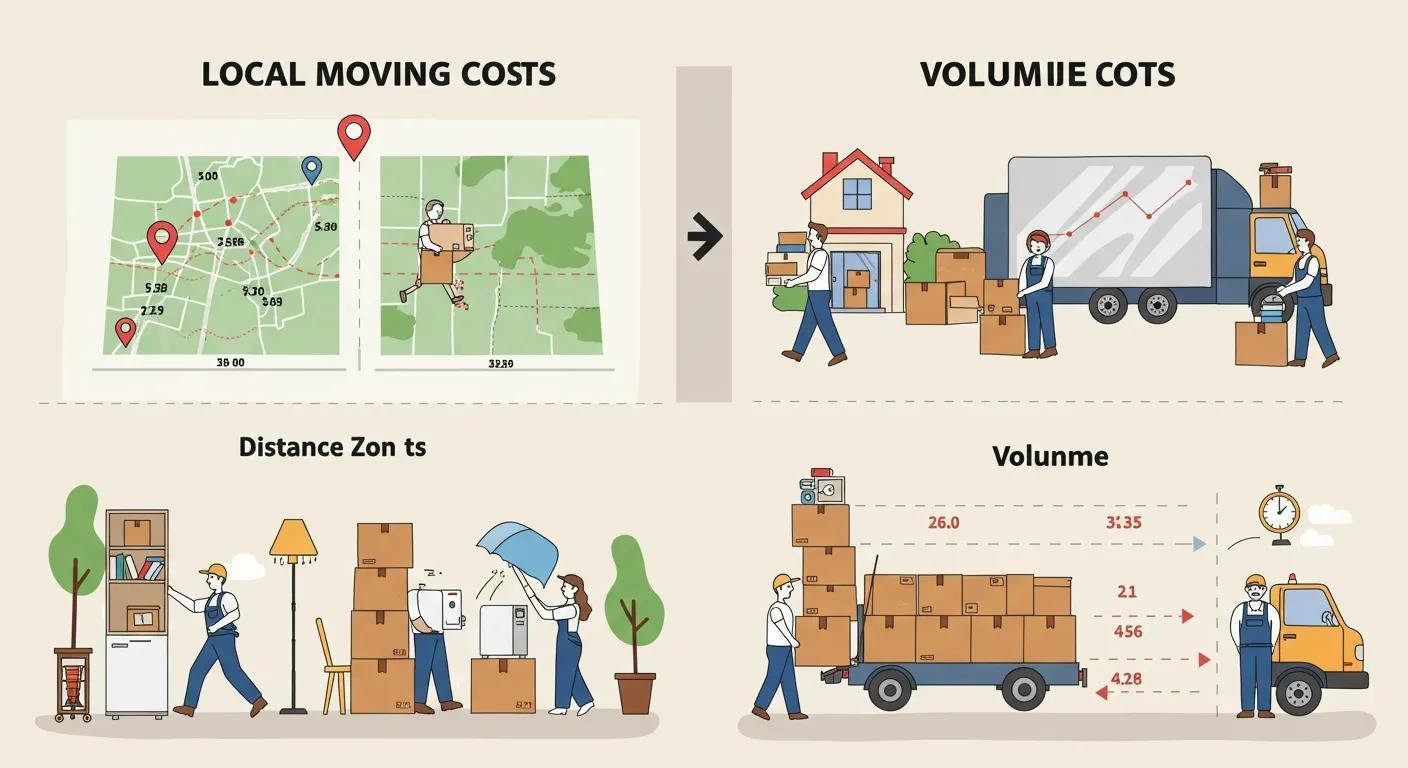
Local moves are typically billed hourly for shorter distances, while long-distance moves are often calculated based on the shipment’s weight and the miles traveled. Studies indicate that a significant percentage of consumers pay more than their initial moving quotes, emphasizing the importance of understanding binding versus non-binding estimates and watching for potential hidden fees.

This information validates the article’s comparison of local and long-distance moving costs and highlights the critical need for transparent quotes and awareness of potential hidden fees.

What Is the Average Cost Range for Local Moves?

Local moving rates typically span $38–$75 per mover per hour, with total costs between $880 and $2,570 for a two- to three-bedroom home including basic packing services.

This range sets the foundation for comparing binding quotes.

How Are Long-Distance Moving Prices Calculated?

Long-distance pricing formulas blend per-mile charges, shipment weight, and required services. Moves over 100 miles often involve carrier terminals, line-haul rates, and fuel adjustments based on current market indexes.

Understanding these components reveals true interstate costs.

What Additional Costs Are Common in Long-Distance Moves?

Fuel surcharges, tolls, long-carry fees, storage at origin or destination, and valuation coverage can add 5–15% to base rates. Advanced notice of bulky or specialty items avoids unexpected surcharges.

Mitigating these extras requires detailed quotes.

What Are Practical Tips to Save Money on Moving Costs?

Reducing your moving bill centers on decluttering, timing, model choice, and competitive quotes. For example, shedding 200 pounds of unneeded items may lower a weight-based move by $100–$200.

  1. Declutter belongings to minimize weight or hours.
  2. Schedule off-peak weekday moves for lower rates.
  3. Compare hourly versus flat rate based on job scope.
  4. Gather at least three binding quotes and use online calculators.

These strategies directly reduce labor, volume, and time charges.

How Can Decluttering Reduce Weight-Based Moving Charges?

Removing unused items decreases shipment mass, reduces required truck size, and cuts weight-based fees directly. Donating or selling unwanted goods also speeds loading.

Smaller loads streamline labor needs and cost.

When Is Choosing Hourly vs. Flat Rate Moving More Cost-Effective?

Hourly rates suit straightforward local moves under four hours, while flat rate pricing often beats hourly on multi-day or interstate jobs. Estimating time versus fixed fee ensures optimal choice.

Comparing quotes clarifies the most economical model.

How Does Timing Your Move During Off-Peak Seasons Lower Costs?

Moving outside May–September, mid-week, or mid-month leverages lower demand, reducing labor rates by up to 20%. Off-peak scheduling also offers flexible booking and additional discounts.

Timing directly influences hourly and flat fees.

What Are the Benefits of Getting Multiple Quotes and Using Calculators?

Multiple quotes reveal rate ranges and fee norms, while online calculators refine estimates for your inventory and route. This approach ensures competitive offers and prevents overpayment.

Informed comparison empowers better budgeting.

Moving costs become manageable when you understand pricing models, factor drivers, decode estimates, and apply savings tactics. With clear estimates and strategic planning, you can secure transparent service and avoid surprises while optimizing your relocation budget.

How to Accurately Calculate Your Moving Costs

How to Accurately Calculate Your Moving Costs Using a Moving Cost Calculator

Estimating relocation expenses with precision ensures budget control and stress reduction from start to finish. Accurate moving costs combine measurable factors—distance, weight of belongings, labor rates—and seasonal demand into transparent projections. This guide reveals the main cost drivers, explains how a moving cost calculator transforms inputs into reliable estimates, compares price ranges for local, long-distance, and DIY moves, uncovers hidden fees, and highlights cost-saving strategies. By following these steps, anyone can confidently plan a move without unexpected expenses.

What Are the Main Factors Affecting Moving Costs?

Moving costs represent the sum of distance charges, crew labor, and the weight or volume of items transported. These components interact to determine the final price.

What Factors Affect Moving Costs?

Moving costs are influenced by several key factors, including the weight and distance of the move, the time and number of movers required, and whether the relocation occurs during peak moving season. Additional fees can also arise from factors such as long carries, elevator usage, stairs, parking challenges, and the handling of bulky or specialty items, as well as optional services like packing and storage.
This source directly supports the article’s detailed breakdown of the main factors affecting moving costs, including distance, weight, labor, seasonality, and various additional fees.

How Does Moving Distance Impact Your Moving Expenses?

Moving distance determines transportation charges by mile, with local moves billed hourly and long-distance moves billed per mile. For example, a 20-mile local relocation might cost $200–$400 hourly, whereas a 500-mile long-distance journey can run $2,000–$4,000. Longer hauls require fuel surcharges and potentially additional drivers, increasing overall costs.

Why Do Weight and Volume Matter in Moving Cost Estimates?

Total weight or cubic footage directly affects the size of the moving truck and fuel consumption. Heavier loads need larger trucks, compactor usage, or multiple trips, which raises expenses. For instance, moving a two-bedroom home (3,000–4,000 lbs) typically costs 30–40% more than a studio apartment (1,000–1,500 lbs) for the same distance.

What Role Do Labor Costs Play in Your Moving Budget?

Labor expenses depend on crew size and hourly rates. Most professional teams charge between $25 and $50 per mover per hour. A three-person crew working five hours on a local move can total $375–$750 in labor alone. Peak season and specialized handling further increase these rates.

How Does the Time of Year Affect Moving Prices?

Seasonal demand peaks from May to September, raising hourly rates and mileage fees by 20–30%. Off-peak moves in winter often secure discounted rates and flexible scheduling. Aligning your move with shoulder seasons can significantly lower labor and transportation charges.

How Can You Use a Moving Cost Calculator to Estimate Your Expenses?

A moving cost calculator transforms raw inputs into precise estimates by applying standardized rates and aggregated data.

What Information Do You Need to Input in a Moving Cost Calculator?

To generate an accurate projection, provide:

  1. Origin and destination zip codes for distance measurement.
  2. Home size (studio, one-bedroom, two-bedroom) to estimate weight/volume.
  3. Desired services (basic loading/unloading, full packing/unpacking).
  4. Preferred moving date to factor seasonal surcharges.

These data points enable the calculator to apply the correct mileage rates, hourly labor costs, and supplementary service fees.

How Does a Moving Calculator Factor in Additional Services and Fees?

Interactive calculators itemize extra services—packing materials, furniture disassembly, specialty item handling (pianos, antiques)—and assign fixed or percentage-based fees. This ensures all cost elements, from bubble wrap to crating fragile art, are included in the final estimate.

What Are the Benefits of Using an Interactive Moving Cost Calculator?

An online calculator provides:

  • Transparent breakdown of each cost component.
  • Personalized estimates based on real-time rate databases.
  • Rapid quote comparisons without manual inquiries.
  • Editable fields for “what-if” planning to optimize budget decisions.

Free Moving Cost Calculator (No Email Required for Estimates)

Moving cost calculators are valuable tools that provide personalized estimates by incorporating details such as home size, distance, and desired services. They offer a transparent breakdown of cost components and facilitate quote comparisons. Average professional local moves typically range from $455 to $3,000, while long-distance moves can range from $1,000 to $14,000 or more.
This citation validates the benefits and functionality of moving cost calculators and provides typical cost ranges for different types of moves, aligning with the article’s sections on calculator usage and average moving expenses.

What Are the Average Moving Costs for Different Types of Moves?

Group discussing average moving costs with a laptop and estimates on a table

Average budgets vary widely by move type, driven by distance, labor, and DIY involvement.

How Much Does a Local Move Typically Cost?

Local moves (under 100 miles) average:

Move SizeEstimated CostCrew & Time
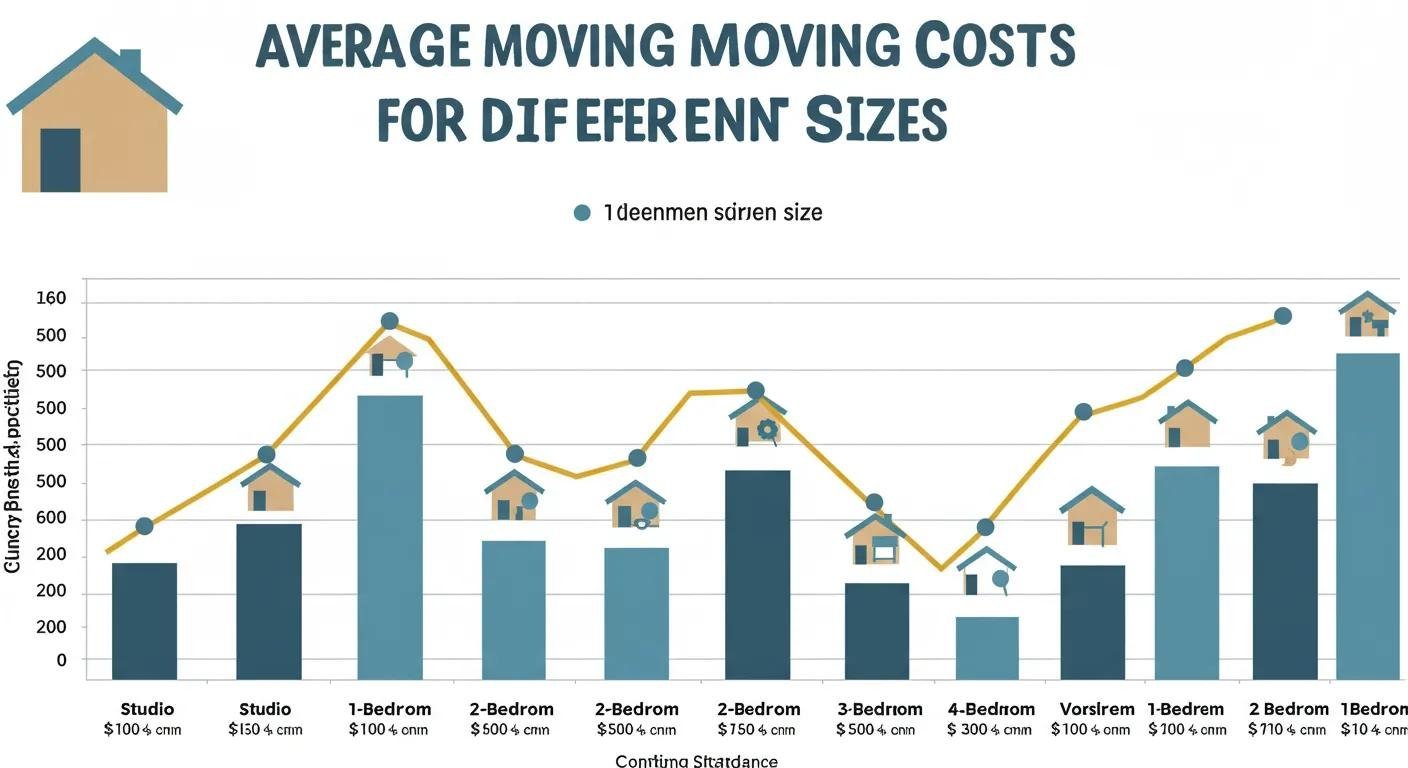
Studio/One-bedroom$300–$800Two movers, 3–5 hours
Two-bedroom$800–$1,800Three movers, 5–8 hours
Three-bedroom$1,500–$2,500Four movers, 8–12 hours

These ranges include labor and basic transportation.

What Are the Typical Costs for Long Distance Moving?

Long-distance moves exceed 100 miles and average:

Distance RangeCost per MileTotal Estimate
100–500 miles$0.60–$0.80$2,000–$5,000
500–1,000 miles$0.50–$0.70$3,500–$8,000
Over 1,000 miles$0.45–$0.65$5,000–$12,000

Mileage rates fall with longer hauls, but overall totals rise with distance.

How Do DIY Moving Costs Compare to Professional Movers?

ApproachPrimary CostsBenefits
DIY Truck Rental$50–$200/day + fuelFull control, lower labor
Professional Crew$25–$50/hour per moverFaster, insured, turnkey

Opting out of professionals can halve labor expenses but requires more planning and physical effort.

What Hidden and Additional Costs Should You Consider When Calculating Moving Expenses?

Anticipating extra fees prevents budget overruns by accounting for support services and contingencies.

What Are Common Hidden Moving Costs to Watch Out For?

  • Utility transfer fees for gas, electricity, internet.
  • Cleaning charges for old or new residences.
  • Temporary storage unit fees.
  • Elevator or stair carry charges in high-rise buildings.

How Much Does Moving Insurance Cost and What Does It Cover?

Basic valuation coverage is often included at $0.30 per pound per item, while full replacement value insurance ranges from 1–3% of total declared inventory value. Comprehensive plans protect against loss, damage, and theft throughout transit.

What Are the Costs of Packing Supplies and Specialty Item Handling?

ItemUnit CostTypical Use Case
Cardboard boxes$1.50–$3.00Packing books, dishes, linens
Bubble wrap per roll$10–$20Fragile glassware and decor
Piano crating service$200–$400Upright or grand piano relocation
Custom art crates$50–$150Paintings and sculptures

These supplies and services ensure safe transport for delicate belongings.

How Can You Save Money While Accurately Calculating Your Moving Costs?

What Strategies Help Reduce Moving Expenses?

  1. Declutter and donate unneeded items to lower weight.
  2. Schedule moves during off-peak months for discounted rates.
  3. Use reusable plastic bins instead of purchasing boxes.
  4. Combine professional and self-service options for packing.

Implementing these steps cuts both labor and material charges significantly.

How Do You Create an Effective Moving Budget Planner?

Start with a spreadsheet listing each cost category: transportation, labor, supplies, insurance, hidden fees. Assign estimated values from your calculator and update actual invoices once services are rendered. This dynamic plan tracks overages and savings in real time.

How Can Comparing Moving Quotes Help You Find the Best Price?

Request at least three estimates from reputable providers early in your timeline. Compare line-item breakdowns for distance, labor, and add-on services. For local options, get a free moving quote in Boston from Movers Boston to benchmark competitive rates and service quality. Effective comparison ensures you select the best value offer.

Accurate cost estimation empowers smooth relocation planning without last-minute surprises. By understanding each price driver, using an interactive moving cost calculator, and applying cost-saving strategies, homeowners and businesses can finalize a budget that reflects real-world needs. Apply these methods to every upcoming move to gain transparent, reliable projections and optimal value for your relocation investment.

Essential Checklist for Hiring Professional Movers

Essential Checklist for Hiring Professional Movers: How to Choose a Reliable Moving Company

Hiring professional movers ensures a smooth transition when relocating to a new home or office. Without a clear checklist, consumers risk unexpected costs, damaged belongings, or fraudulent practices. This guide delivers a concise checklist for hiring professional movers, covering research and verification, estimate evaluation, service selection, contract review, and scam prevention. Readers will learn how to vet credentials, compare binding and non-binding quotes, select essential services, understand contract clauses, and spot red flags.

How Do I Start Researching and Verifying Professional Moving Companies?

Person researching moving companies on a laptop in a cozy home office, highlighting the importance of thorough research

Researching a moving company means confirming credentials, reputation, and regulatory compliance to minimize risk and protect possessions. For example, checking license numbers directly on government sites prevents hiring unregistered carriers.

To get started, consider these trusted sources:

  • Consult friends, family, or coworkers for firsthand referrals.
  • Review online platforms such as Yelp, Google Reviews, and the Better Business Bureau.
  • Visit official registries like the FMCSA database for USDOT numbers.

These sources build a foundation of reliable feedback before requesting estimates or signing contracts.

What Trusted Sources Should I Use for Moving Company Reviews and Recommendations?

Consumers should rely on both personal network referrals and public review platforms to gauge satisfaction levels and service quality. Combining anecdotal insights with aggregated ratings yields a balanced view of a mover’s professionalism and reliability.

How Can I Check a Mover’s Better Business Bureau (BBB) Rating and Customer Feedback?

The BBB rating reflects a moving company’s complaint history and response practices. To verify:

  1. Visit bbb.org and search by company name.
  2. Note the letter grade (A+ through F) and read detailed complaint narratives.
  3. Assess resolution rates and customer sentiment to anticipate responsiveness.

This review process highlights any persistent service issues before making a commitment.

How Do I Verify a Moving Company’s License and Registration?

Verifying a mover’s license confirms legal authority to transport goods. Always check for both interstate and intrastate credentials to ensure comprehensive coverage.

What Is the Role of the USDOT Number and FMCSA in Interstate Moves?

A USDOT number issued by the Federal Motor Carrier Safety Administration (FMCSA) indicates that a mover meets federal safety, insurance, and operating standards. Users can verify this number at fmcsr.dot.gov to confirm active registration and safety records.

FMCSA Continues Nationwide Crackdown on Fraudulent Household Goods Movers and Brokers

The Federal Motor Carrier Safety Administration (FMCSA) launched “Operation Protect Your Move,” an initiative to combat fraudulent interstate household goods movers and brokers. This program enforces federal safety and consumer protection regulations, addressing complaints and holding dishonest companies accountable.
This research directly supports the article’s emphasis on verifying credentials, regulatory compliance, and preventing scams by highlighting the government’s role in consumer protection.

How Do State Licensing Requirements Affect Local Moves?

State regulatory agencies enforce local licensing, bonding, and insurance rules. Checking with the appropriate state department of transportation ensures that intrastate carriers maintain consumer protection and financial responsibility.

Why Is AMSA ProMover Certification Important When Hiring Movers?

AMSA ProMover certification signals voluntary compliance with industry best practices beyond basic licensing. Certified members agree to a Code of Ethics and annual inspections, guaranteeing a higher standard of training, equipment maintenance, and customer service.

What Are the Key Questions to Ask When Getting Moving Estimates?

Asking targeted questions about estimates clarifies cost structures, reduces surprises, and fosters transparency. A precise estimate type and detailed cost breakdown help consumers plan budgets and compare providers effectively.

How Do In-Home and Virtual Moving Estimates Differ?

In-home estimates involve an on-site survey of belongings, yielding highly accurate quotes that account for special items and access challenges. Virtual estimates rely on photos or video tours, offering convenience but potentially less precision due to unseen factors.

What Is the Difference Between Binding, Non-Binding, and Not-to-Exceed Estimates?

Below is a comparison of estimate types and their implications:

Estimate TypeDefinitionGuarantee
Binding EstimateFixed price based on inventory and services listedTotal cost will not exceed quoted amount
Non-Binding EstimateApproximate cost subject to weight, services, or conditionsFinal bill may be higher or lower
Not-to-Exceed EstimateMaximum cap on moving cost without additional chargesYou pay the quoted amount or less

Binding estimates protect budgets but offer less flexibility for added services, whereas non-binding quotes adapt to changing requirements.

Types of Moving Estimates & Quotes

Understanding the different types of moving estimates—binding, non-binding, and binding not-to-exceed—is crucial for consumers. Each type offers varying levels of price predictability, impacting the final cost and helping individuals budget and compare moving service providers effectively.
This source clarifies the distinctions between various estimate types, which is central to the article’s guidance on evaluating estimates and understanding cost structures.

How Can I Identify Hidden Fees and Additional Moving Costs?

Before signing a contract, request a breakdown of potential surcharges such as:

  • Stair or long-carry fees.
  • Fuel surcharges and environmental fees.
  • Packing materials or labor charges.
  • Accessorial charges (elevator use, shuttle services).

Confirming these extras in writing prevents unexpected invoice additions on moving day.

Which Moving Services Should I Consider for My Relocation Needs?

Selecting the right mix of moving services ensures efficient handling of belongings, tailored protection, and convenience. Understanding available options helps align services with budget and logistical requirements.

What Packing, Unpacking, and Specialty Item Services Are Offered?

  • Full packing and labeling of boxes by trained crews.
  • Unpacking and placement of items at the destination.
  • Specialty handling for fragile, oversized, or high-value items like pianos and antiques.

These services save time and reduce damage risk, especially for complex relocations.

How Does Moving Insurance and Valuation Coverage Protect My Belongings?

Moving companies typically offer two main valuation options:

Coverage OptionCoverage LevelBenefit
Released Value$0.60 per poundBasic financial protection at minimal cost
Full Value ProtectionActual repair or replacement costComprehensive coverage for loss or damage

Understanding Valuation and Insurance Options

Movers are federally mandated to offer two primary levels of liability coverage: Released Value Protection, which provides minimal compensation at $0.60 per pound per article, and Full Value Protection, which covers the replacement value of lost or damaged goods.
This information directly supports the article’s explanation of moving insurance and valuation coverage, detailing how these options protect belongings and influence financial security during a move.

What Should I Know About Storage and Furniture Disassembly Services?

  • Short-term or long-term secure warehouse storage.
  • Professional disassembly and reassembly of large furniture or modular units.
  • Inventory tracking for stored items to simplify retrieval.

Combining these logistics with moving services streamlines transitions involving renovation delays or staging requirements.

How Do I Review and Understand Moving Contracts and Policies?

Person reviewing a moving contract on a table, highlighting the importance of understanding terms and conditions

A moving contract formalizes obligations, timelines, and liability, making it essential to review every clause before commitment. Clear documentation prevents disputes and clarifies recourse options.

What Are the Essential Clauses to Look for in a Moving Contract?

  • Exact estimate type and maximum charge.
  • Liability and valuation coverage terms.
  • Delivery date or window guarantees.
  • Cancellation, deposit, and payment conditions.
  • Claims procedures and documentation requirements.

Identifying these clauses ensures comprehensive understanding of rights and responsibilities.

How Do Cancellation Policies and Claims Processes Work?

Most movers define a cancellation window with minimal penalties. A typical process involves:

  1. Notifying the mover in writing within the agreed timeframe.
  2. Receiving a deposit refund or credit according to contract terms.
  3. Documenting damage or loss with detailed photos and inventory lists.
  4. Filing a formal claim with the mover and receiving a resolution within statutory deadlines.

Knowing these steps prevents missed deadlines and streamlines dispute resolution.

What Red Flags and Scams Should I Watch Out for When Hiring Movers?

Awareness of common fraud tactics and warning signs helps consumers avoid unreliable or illegal operators who may break contracts or vanish with deposits.

What Are Common Moving Scams and How Can I Avoid Them?

  • Low-ball Estimates that balloon upon delivery.
  • Phantom Movers who dispatch subcontractors without credentials.
  • Blank Contracts requiring you to fill estimate details later.

Obtaining written, itemized estimates and verifying USDOT numbers prevents these scams.

What Warning Signs Indicate an Unreliable or Unlicensed Mover?

  • No physical office or rented mailbox.
  • Lack of a valid USDOT or state license number.
  • Requests for large upfront deposits.
  • Vague communication and no formal contract.

Recognizing these red flags avoids costly mistakes and ensures compliance with regulations.

How Do I File a Complaint or Claim Against a Moving Company?

  1. Gather the signed contract, inventory list, and damage photos.
  2. Submit a formal claim directly to the moving company.
  3. File with the FMCSA at protectyourmove.gov for interstate disputes.
  4. Lodge a complaint with the Better Business Bureau for unresolved issues.
  5. Consider small claims court if financial recovery remains incomplete.

These actions enforce accountability and help recover losses.

Smooth planning and thorough vetting transform a stressful relocation into an organized endeavor. By following this essential checklist for hiring professional movers, individuals gain confidence, avoid hidden costs, and safeguard possessions from origin to destination.

How to Choose the Best Local Moving Company

How to Choose the Best Local Moving Company: Essential Tips for Hiring Reliable Local Movers

Did you know that 84 percent of consumers trust online moving company reviews as much as personal recommendations?

How Online Reviews Shape Customer Decisions in the Moving Industry

Customer reviews are identified as a primary factor influencing potential clients’ decisions when selecting a moving company, serving as crucial proof of reliability, trustworthiness, and service quality. The article highlights that online feedback offers unfiltered experiences from real individuals, leveraging “social proof” to build confidence in a company’s expertise and dependability.
This research supports the article’s assertion regarding the significant impact of online reviews on consumer trust and decision-making when hiring moving companies.

Selecting the right local moving company can save you hundreds of dollars and protect your belongings from damage. This hiring guide for local movers will cover five key factors to evaluate, methods for assessing reputation, critical pre-move questions, strategies for comparing quotes, and red flags to avoid. Along the way, trusted providers such as Boston Movers- Moving Made Easy. Horizon Boston Movers | demonstrate how transparent pricing and comprehensive services simplify your relocation choices.

What Are the Key Factors to Consider When Hiring a Local Moving Company?

Key factors are attributes that determine a mover’s reliability, safety, and value. Evaluating these criteria ensures your household goods arrive on time, intact, and within budget. For example, verifying insurance protects your possessions if an accident occurs, while transparent pricing locks in expectations.

Before booking, focus on these essentials:

  • Licensing and insurance credentials for legal compliance and protection
  • Reputation and customer feedback for performance insight
  • Range of services offered to meet your specific needs
  • Pricing transparency to avoid unexpected charges
  • Crew experience and training standards for careful handling

These five factors form the foundation of a dependable local moving company, guiding you toward a secure and efficient relocation.

Why Is Licensing and Insurance Crucial for Local Movers?

Licensing verifies that a mover meets state and federal safety regulations while insurance coverage protects your belongings against loss, damage, or theft. Licensed moving companies demonstrate financial responsibility through bonds, and insurance policies cover repair or replacement costs. Understanding this relationship between authorization and protection sets the stage for confirming credentials.

Moving Companies Are Subject to Industry Regulations: What You Need to Know

Legitimate moving companies are required to be licensed and registered, with interstate movers needing to comply with Federal Motor Carrier Safety Administration (FMCSA) regulations and possess a valid U.S. DOT number. Additionally, companies must carry various insurance coverages, including liability and cargo insurance, to safeguard belongings during transit and ensure consumer protection.
This information directly verifies the article’s emphasis on the critical importance of checking a moving company’s licensing and insurance credentials for legal compliance and consumer protection.

How to Verify a Moving Company’s License and Insurance Credentials?

  1. Obtain the USDOT and MC numbers from the mover.
  2. Search the Federal Motor Carrier Safety Administration (FMCSA) portal or your state’s transportation registry.
  3. Request a certificate of insurance detailing coverage limits and policy duration.
  4. Cross-check policy validity with the issuing insurance provider.

Verifying these credentials ensures you hire a compliant and financially secure moving company.

What Services Should a Reliable Local Moving Company Offer?

A professional mover delivers both core relocation tasks and optional support services tailored to your needs. The following table compares standard offerings:

ServiceDescriptionBenefit
Local movingTransport within a defined geographic areaEfficient, cost-effective relocation
Packing and unpackingProfessional preparation and unpackingMinimizes risk of damage
Loading and unloadingSecure handling and placement of goodsReduces physical strain and delays
Short-term storageTemporary storage solutions at secure facilityFlexible scheduling and space needs

How Can You Evaluate Moving Company Reviews and Reputation?

Person reading online reviews about moving companies on a laptop

Reputation is shaped by authentic customer feedback and performance consistency. Analyzing reviews reveals service strengths and potential shortcomings, enabling you to make an informed decision. When testimonials emphasize careful handling, you can expect similar attention to your move.

Where to Find Trustworthy Local Moving Company Reviews?

  • Better Business Bureau for ratings, complaints, and dispute history
  • Google Reviews for recent customer experiences and star ratings
  • Yelp for detailed narratives on service quality and professionalism
  • Neighborhood forums and community groups for hyper-local insights

Consulting multiple sources paints a comprehensive picture of a mover’s reliability and customer focus.

How to Identify Fake or Misleading Moving Reviews?

  • Generic praise without specific details about services
  • Multiple five-star ratings posted on the same date
  • Reviewer profiles with no prior activity
  • Feedback that conflicts with documented service offerings

Spotting these patterns helps you distinguish genuine performance records from misleading claims.

What Questions Should You Ask Before Hiring Local Movers?

Pre-move questions define expectations, clarify responsibilities, and prevent misunderstandings. Asking targeted questions ensures transparent communication and service quality.

Which Experience and Training Questions Are Essential?

  • “How many local moves do you complete each month?”
  • “What formal training do your moving crews undergo?”
  • “Do you conduct background checks on all employees?”
  • “Can you provide references from recent local moves?”

These inquiries confirm a mover’s track record and commitment to safe handling.

What Should You Ask About Equipment and Moving Process?

  • “What sizes of trucks and trailers do you operate?”
  • “Do you supply moving blankets, straps, and pads?”
  • “How do you handle oversized or fragile items?”
  • “What is your step-by-step workflow on moving day?”

Detailing these aspects prevents surprises and ensures your goods receive appropriate care.

How Do You Compare Moving Company Quotes and Pricing?

Comparing quotes involves analyzing estimate types and fee structures to align costs with your budget and requirements. Clear understanding of estimate categories prevents unexpected expenses.

What Is the Difference Between Binding and Non-Binding Estimates?

Estimate TypeCommitment LevelTypical Use
Binding estimateHighFixed total price guarantee
Non-binding estimateModeratePreliminary cost approximation
Binding not-to-exceedFlexibleCapped cost with refundable surplus

How to Spot Hidden Fees and Ensure Transparent Pricing?

  • Check for fuel surcharges or mileage-based fees
  • Ask about stair-carry and long-carry charges
  • Confirm fees for appliance disconnect or reassembly
  • Request a line-item written estimate covering all services

Transparent fee disclosure prevents unexpected costs on moving day and supports confident budgeting.

What Are Common Red Flags and Scams to Avoid When Choosing Local Movers?

Moving scams target unaware customers with fraudulent credentials and misleading offers. Awareness of warning signs shields you from unreliable operators.

What Warning Signs Indicate Potential Moving Scams?

  • Estimates significantly below market averages
  • Demands for large upfront cash deposits
  • Lack of a detailed written contract outlining services and fees
  • Unmarked vehicles or missing company branding on trucks

Identifying these cues protects you from rogue movers and deceptive practices.

How to Protect Yourself from Rogue or Unlicensed Movers?

  • Verify license and insurance credentials before making any deposit
  • Use traceable payment options such as credit card or check
  • Confirm company address and, if possible, tour the local office
  • Thoroughly review and sign a detailed service agreement

These precautions ensure you engage a legitimate moving partner and minimize risk.

By focusing on licensing, reputation, service offerings, transparent pricing, and scam prevention, you can confidently choose the best local moving company. Thorough vetting and clear communication lay the groundwork for a smooth move that protects your time, budget, and personal belongings.

Local Move Packing Services Made Simple and Efficient

Local Move Packing Services Made Simple and Efficient: Professional Packing and Unpacking Solutions for Stress-Free Local Moves

Packing is the most labor-intensive aspect of any relocation, often consuming over half of your moving prep time and causing unnecessary stress. Local move packing services transform this burden into a streamlined process by providing expert teams, professional materials, and organized workflows tailored to your neighborhood move. In this guide, readers will discover (1) what full-service, partial, and unpacking options include, (2) transparent cost structures and factors, (3) benefits of hiring trained packers, (4) our step-by-step efficient workflow, and (5) where these services are available. By exploring these topics, you’ll gain actionable insight into premium packing services for local moves that reduce effort, protect valuables, and ensure a seamless transition to your new home.

What Are Local Move Packing Services and How Do They Simplify Your Move?

Local move packing services combine professional labor, high-quality materials, and proven techniques to wrap, box, and label belongings for short-distance relocations. By delegating the packing phase to trained specialists, homeowners reclaim hours otherwise spent sourcing supplies and wrestling with fragile items. For example, a two-bedroom apartment can be fully packed in under four hours instead of multiple weekend days, enabling families to focus on settling in rather than bubble-wrapping.

Top 5 Benefits of Using Professional Packing Services for Your Move

Professional packing services offer significant advantages for relocation, including efficient packing, substantial time savings, expert handling of fragile items, access to high-quality packing materials, and a notable reduction in moving-related stress. These services ensure belongings are packed quickly, securely, and with specialized care.
This research directly supports the article’s claims regarding the efficiency, time-saving, protection of belongings, and stress reduction benefits of professional packing services.

Professional teams assess your inventory, supply and apply custom crating for delicate objects, and use color-coded labels to match unpacking zones. This systematic approach speeds loading, protects items, and eliminates last-minute packing stress—paving the way to exploring cost details in the next section.

What Does Full-Service Packing Include for Local Moves?

Certified packer wrapping furniture and electronics with high-quality materials

Full-service packing delivers end-to-end handling of every item in your home:

  • Certified packers carefully wrap and pad all furniture, electronics, and décor.
  • Custom-sized boxes are assembled, labeled by room, and stacked for transport.
  • Fragile collections receive specialized materials such as foam inserts and crating.
  • All necessary supplies—from wardrobe cartons to stretch wrap—are provided on-site.
  • Upon arrival, unpacking options can be added to streamline move-in in minutes.

This comprehensive scope removes every packing decision from your plate, ensuring each piece is secured according to its size, shape, and fragility.

How Does Partial Packing Assistance Work for Local Relocations?

Partial packing assistance targets specific rooms or item categories based on your needs:

  • Selective wrapping of high-value or breakable objects to complement DIY efforts.
  • Room-by-room scheduling so you oversee priorities like bedrooms or kitchens first.
  • Hourly labor options with a minimum booking that fits tight timelines.
  • Supply delivery only, giving you pre-boxed essentials to pack at your own pace.

Partial service bridges the gap between full DIY and all-inclusive support, offering flexibility that aligns with busy schedules and budget constraints.

What Are Unpacking Services and Why Are They Important?

Family unpacking boxes in their new home, creating an organized space

Unpacking services complete the relocation cycle by removing packing materials and placing belongings exactly where you want them:

  • Boxes are emptied with belongings distributed into designated rooms.
  • Packing debris is collected, flattened, and removed for recycling.
  • Furniture and electronics are reassembled and positioned per your layout plan.

Arriving to an organized, unpacked home accelerates your time to normalcy and prevents chaotic pileups of boxes.

How Much Do Local Packing Services Cost? Transparent Pricing and Factors Explained

Local packing service rates depend on labor hours, home size, and material requirements. Typical hourly rates range from $50 to $80 per packer, while flat-fee models offer bundled pricing by rooms or square footage. A clear understanding of these structures and cost drivers helps homeowners budget accurately before scheduling an assessment.

Service ModelRate StructurePrice Range
Hourly LaborPer packer, per hour$50 – $80
Flat-Fee by RoomFixed price per room$150 – $400
Whole-Home PackageSquare footage basis$500 – $1,800
Add-On UnpackingPer hour unpacking$40 – $60

What Are the Typical Hourly Rates and Flat Fees for Local Packers?

Hour-based work gives you direct control over labor costs, generally starting at $50 per hour per professional. Flat-fee alternatives average $200 to pack a medium bedroom, including all materials. Bundled packages often reduce per-unit rates for larger projects and may include basic unpacking at no extra charge.

Which Factors Affect the Cost of Local Packing Services?

Several variables drive final pricing:

  • Home Size and Room Count influence total labor hours.
  • Item Fragility determines specialized materials and extra handling.
  • Distance from supply depot can add pickup or delivery fees.
  • Timing requests—weekend or last-minute bookings—affect availability premiums.
  • Custom crating needs for artwork or antiques require additional resources.

Each factor is evaluated during an initial site survey to calculate an accurate quote.

How Can You Get an Accurate Quote for Your Local Move Packing?

Requesting a detailed estimate is straightforward:

  1. Schedule a free on-site or virtual assessment to review your inventory.
  2. Provide home dimensions and a room-by-room item checklist.
  3. Discuss specific concerns like fragile antiques or bulky furniture.
  4. Receive a written proposal outlining labor, materials, and any service bundles.

This process ensures you see all cost components in a single transparent document before committing.

Why Choose Professional Packing for Your Local Move? Key Benefits Explained

Professional packers deliver unmatched efficiency, protection, and peace of mind through specialized training, industry-grade supplies, and proven workflows. By leveraging their expertise, you avoid packing mistakes that can lead to broken valuables, wasted time, or chaotic move-in days.

Effortless Relocation: The Benefits of Professional Packing Services

Professional packing services streamline the moving process by providing remarkable time-saving aspects, ensuring belongings are handled with utmost care, and significantly reducing moving stress. These services utilize high-quality packing materials and systematic procedures for secure and orderly packing.
This source reinforces the article’s points on how professional packers simplify moves through efficiency, careful handling, and stress alleviation.

How Do Professional Packers Reduce Moving Stress and Save Time?

Experienced packing crews accelerate every phase:

  • Pre-move inventory and labeling eliminates last-second panic.
  • Uniform team methods allow multiple rooms to be packed simultaneously.
  • Professional tools like stretch wrap guns and tape dispensers cut setup and takedown time.
  • Detailed checklists ensure no item is overlooked during loading.

Streamlined coordination with your moving team synchronizes packing and transport for a seamless transition.

How Are Your Belongings Protected During Local Move Packing?

Protection strategies combine high-quality products and expert technique:

  • Reinforced, double-wall corrugated boxes shield against compression.
  • Bubble wrap, packing paper, and foam peanuts cushion shocks in transit.
  • Custom-built crates safeguard oversized valuables during handling.
  • Secure strapping and labeling prevent boxes from shifting in the truck.

These layers of defense substantially lower the risk of damage compared to DIY methods.

What Customized Packing Solutions Are Available for Different Needs?

Tailored plans accommodate unique requirements:

  • Specialty crating for fine art, antiques, and electronics.
  • Short-term storage packaging that preserves items in rotation.
  • Eco-friendly materials like recycled paper and biodegradable peanuts.
  • Single-room focus for partial moves or seasonal item relocation.

Customizable services ensure you only pay for the support you truly need.

What Is the Step-by-Step Process of Our Simple and Efficient Local Packing Service?

Our streamlined workflow guides clients through five distinct phases—from assessment to post-move cleanup—to guarantee clarity and consistency at every turn.

How Does the Initial Assessment Determine Your Packing Needs?

In the first phase, a certified estimator catalogs your furnishings, fragile collections, and storage items. This evaluation establishes labor estimates, material types, and packing order. By mapping your belongings to service tiers, you receive a precise plan that matches timeframes and budget.

What Packing Materials Are Used to Ensure Safe Local Moves?

Professional packers rely on industry-standard supplies that deliver consistent protection:

MaterialPurposeProtective Level
Corrugated BoxesGeneral storage and stackingMedium
Bubble WrapCushioning fragile surfacesHigh
Packing PaperVoid fill and surface protectionLow-Medium
Foam PeanutsShock absorption in gapsMedium

These core materials are supplemented by specialty items—wardrobe cartons, mirror boxes, and crate frames—to meet any packing demand.

How Are Items Labeled and Organized for Efficient Transport?

A color-coded labeling system assigns each box to a specific room and content category, while digital inventory logs track box numbers and descriptions. This dual approach ensures that movers place boxes in the correct destinations and that you can locate essential items immediately upon arrival.

Which Local Areas Do We Serve with Expert Packing and Unpacking Services?

Our network of certified packing teams operates across Greater Boston and surrounding towns, guaranteeing rapid response times and local expertise. Whether you’re in downtown neighborhoods or suburban corridors, we align crews to your location for consistent service levels and on-time delivery.

What Packing Services Are Available in Boston Neighborhoods?

We provide full-service, partial, and unpacking options throughout Boston areas such as Back Bay, South End, Beacon Hill, and Dorchester. Local familiarity means our teams arrive equipped to navigate tight stairwells, parking restrictions, and building regulations without delay:

  • Back Bay: Cornerstone crating for antiques in historic brownstones.
  • South End: Compact team deployments for condo buildings.
  • Beacon Hill: Specialized window-safe packing for decorative glassware.

How Do Local Movers Coordinate Packing Services in Your City or Region?

Our local partners integrate packing schedules with moving crews via shared dispatch software. Real-time communication between packing and moving teams eliminates downtime between packing completion and loading, ensuring your entire relocation proceeds on a continuous, efficient timeline.

Moving with expert packers brings clarity, protection, and speed—allowing you to focus on what truly matters: settling into your new home with confidence. Moving services experts encourage booking assessments early to lock in preferred dates. Experience simplified, efficient local packing by arranging your free consultation today.

Essential Tips for Hiring Residential Moving Services

How to Hire Movers: Essential Tips for Hiring Residential Moving Services

Moving homes can become one of life’s most challenging transitions, especially when unanticipated costs, damaged furniture, or unreliable crews derail the process. By applying expert guidance on vetting providers, dissecting estimates, reviewing contracts, securing insurance, and planning the moving day, homeowners can reduce stress and ensure a seamless residential relocation. This guide covers five critical phases of hiring residential moving services:

  1. Choosing a reliable mover
  2. Understanding costs and estimates
  3. Reviewing and negotiating your contract
  4. Protecting belongings with insurance
  5. Preparing for moving day

Each section offers actionable insights to streamline your hire process and safeguard your property.

How Do You Choose a Reliable Residential Moving Company?

Person verifying moving company credentials on a laptop in a home office

Selecting a reputable moving company involves verifying credentials, evaluating customer feedback, and comparing service offerings to ensure a smooth relocation. Confirming proper licensing and positive track records reduces fraud risk and sets clear quality expectations for your move.

What Licenses and Credentials Should Movers Have?

Before hiring, verify that your mover holds:

  • A valid USDOT number for interstate moves
  • State or provincial moving licenses for intrastate relocations
  • Professional affiliations such as the American Moving and Storage Association membership
  • Proof of bonded status to guarantee compensation if funds disappear
  • Worker’s compensation insurance for crew safety

Ensuring these credentials affirms the mover’s commitment to regulatory compliance and customer protection.

Consumer Protections and Regulations for Interstate Moving Services

The Federal Motor Carrier Safety Administration (FMCSA), an agency under the U.S. Department of Transportation, is responsible for regulating interstate household goods movers. These regulations mandate that movers register with a USDOT number and adhere to federal safety standards. The FMCSA also provides consumers with essential resources, such as the “Your Rights and Responsibilities When You Move” handbook, to inform them about contracts, liability, and dispute resolution options.
This research directly supports the article’s guidance on verifying mover licenses and credentials, particularly the USDOT number for interstate moves, and understanding consumer rights and responsibilities.

These qualifications build trust and lead into evaluating real-world performance through reviews and ratings.

How Can You Verify Moving Company Reviews and Ratings?

Movers’ reputations hinge on verified customer experiences and third-party assessments. Compare platforms as shown below:

Company PlatformRating ScaleKey Insight
Google Reviews1–5 starsReflects recent local feedback
BBBA+ to FIndicates complaint resolution record
Yelp1–5 starsHighlights service consistency over time
Angi1–5 starsSpecializes in home services comparisons

Evaluating multiple channels balances anecdotal praise against documented complaints, guiding you to a mover with proven reliability and customer satisfaction.

Why Is Getting Multiple Moving Estimates Important?

Obtaining at least three written estimates enables:

  1. Cost comparison to reveal unusually low or high bids.
  2. Negotiation leverage by highlighting competitor offerings.
  3. Transparency in services included (packing, storage, specialty handling).

Best Practices for Selecting a Reputable Moving Company

To ensure a reliable residential relocation, consumers should thoroughly research moving companies by verifying their credentials, including proper licensing and registration with relevant authorities like the USDOT for interstate moves. Evaluating customer feedback on platforms such as the Better Business Bureau (BBB), Google Reviews, Yelp, and Angi is crucial. Additionally, obtaining multiple written estimates (binding or non-binding) from different companies is a key practice for comparing costs, understanding included services, and preventing unexpected charges.
This research supports the article’s recommendations on choosing a reliable mover, verifying reviews and ratings, and the importance of obtaining multiple moving estimates for transparency and cost comparison.

What Are the Key Factors Affecting Moving Costs and Estimates?

Understanding moving costs requires distinguishing estimate types, accounting for distance and volume, and identifying potential hidden charges to avoid budget surprises. Awareness of these factors unlocks accurate budgeting and reduces stress.

What Are the Differences Between Binding and Non-Binding Estimates?

Estimate TypeDefinitionCustomer Impact
BindingFixed-price quoteProtects budget, unlikely price increases
Non-bindingApproximate costFinal charges may exceed estimate
Binding Not-to-ExceedCap on max costCost savings if actual move is lighter

Which Hidden Fees Should You Watch Out For When Hiring Movers?

Hidden costs can inflate your bill. Watch for:

  • Stair fees when movers negotiate access challenges
  • Long-carry charges if the truck parks far from your door
  • Fuel surcharges tied to market rates
  • Packing material fees for specialized supplies
  • Appliance disassembly or crating premiums

Identifying these fees in advance prevents post-move billing disputes and promotes clearer budget forecasts.

What Should You Look for in a Moving Contract?

A thorough moving contract protects customers by outlining key clauses, liability terms, and cancellation rights, preventing disputes during relocation. Scrutinizing every provision ensures you understand obligations and limitations before the move begins.

What Are the Key Clauses in a Residential Moving Contract?

Your contract should include:

  1. Inventory List detailing items and condition notes.
  2. Service Scope specifying packing, loading, transport, and unloading details.
  3. Payment Terms with deposit, invoicing, and acceptable payment methods.
  4. Liability Coverage statement clarifying valuation and damage limits.
  5. Dispute Resolution process for claims and arbitration options.

How Does Mover Liability Affect Your Move?

Mover liability defines the extent of compensation for lost or damaged items. Under released-value protection, reimbursement is minimal (often $0.60 per pound). By contrast, full-value protection covers repair or replacement costs, offering comprehensive security. Selecting the appropriate liability level aligns coverage with the value of your belongings.

Understanding Moving Company Liability and Insurance Options

Federal law requires interstate moving companies to offer customers two primary levels of liability coverage: Released Value Protection and Full Value Protection. Released Value Protection offers minimal compensation, typically around $0.60 per pound per article, and is usually included at no extra cost. In contrast, Full Value Protection provides more comprehensive coverage, making the mover liable for the repair or replacement cost of lost or damaged items, though it comes with an additional fee.
This information directly verifies the article’s explanation of released-value and full-value protection, clarifying the differences and customer impact of each liability option.

What Are Your Rights and Cancellation Policies?

Customers retain rights to:

  • Inspect and dispute inventory notes before the move
  • Cancel or reschedule within a specified notice window without penalty
  • Withhold payment for undisclosed damage until resolution

Understanding cancellation terms and consumer protections empowers you to negotiate fair conditions and avoid unfair fees.

How Can Moving Insurance Protect Your Belongings?

Moving insurance safeguards personal property from damage or loss by offering coverage options and streamlined claims processes to minimize financial risk. Well-chosen protection ensures you recover value if items are compromised.

What Types of Moving Insurance Coverage Are Available?

Coverage OptionDescriptionBenefit
Released-ValueBasic weight-based rateLow cost, minimal coverage
Full-ValueRepair or replace at current valueComprehensive protection for high-value goods
Third-PartyIndependent insurer policySupplemental coverage for antiques or artwork

How Do You File a Moving Insurance Claim?

To initiate a claim:

  1. Document damage immediately with photos and written notes.
  2. Submit a claim form within the mover’s specified timeframe.
  3. Provide original inventory lists, receipts, and proof of value.
  4. Coordinate inspection and repair estimates with the mover or insurer.
  5. Receive reimbursement based on the chosen coverage.

A structured claim process accelerates compensation and restores peace of mind after transit incidents.

How Should You Prepare for Moving Day?

Moving day checklist on a clipboard with packed boxes in the background

Effective moving-day preparation combines careful planning, detailed checklists, and strategic packing techniques to ensure timely and damage-free transit. Organized readiness directly influences moving efficiency.

What Should Be Included in a Residential Moving Checklist?

A comprehensive checklist features:

  • Confirmed move date, time, and contact details
  • Labelled boxes by room and priority level
  • Essentials bag with toiletries, medications, and documents
  • Disassembled furniture stored in labelled hardware bags
  • Final walkthrough schedule to check for overlooked items

What Are Effective Packing Tips for a Residential Move?

Efficient packing maximizes protection:

  • Wrap fragile items in durable paper or bubble wrap.
  • Use color-coded labels to designate room destination.
  • Fill voids in boxes with soft materials to prevent shifting.
  • Pack heavy items in small boxes to ease lifting.
  • Seal and reinforce bottoms of each container securely.

What Can You Expect on Moving Day?

Expect professional movers to arrive with equipment, inspect your inventory, and confirm the loading plan. They will handle heavy lifting, load the truck safely, and deliver according to the agreed schedule. Clear communication during this phase ensures adherence to timelines and contract terms, making your final relocation steps predictable and controlled.

By following these essential tips for hiring residential moving services—thorough vetting, clear estimates, well-crafted contracts, appropriate insurance, and meticulous preparation—you can transform your move into an efficient, stress-free experience. For specialized local and long distance assistance backed by transparent pricing and professional crews, explore Movers Boston – Local and Long Distance Moving Company. Trusting proven experts ensures your belongings arrive safely and on time.

Uncovering Hidden Costs of Hiring a Moving Company

Uncovering Hidden Costs of Hiring a Moving Company: How to Identify and Avoid Unexpected Moving Expenses

Moving expenses often exceed initial quotes when hidden costs of hiring a moving company go unaccounted, leaving homeowners scrambling to cover extra charges. This guide delivers actionable insights to identify unexpected fees, from shuttle service surcharges to valuation shortfalls, and shows how to secure transparent pricing. It covers common accessorial charges, explains binding versus non-binding estimates, outlines consumer protections under FMCSA regulations, explores insurance and valuation options, and details proactive steps for avoiding surprises—all aimed at empowering informed decisions and stress-free relocations.

The Hidden Costs Of Moving In 2025: People Are Under Budgeting By $723

A 2024 Forbes Home study revealed that 80% of individuals underestimate their moving costs, leading to an average unexpected expense of $723. The research highlights that many people overlook various factors contributing to the total cost of a move, with 42% of first-time movers reporting costs exceeding $1,000.
This research directly supports the article’s premise that moving expenses often exceed initial quotes due to hidden costs, emphasizing the financial impact on consumers and the prevalence of underbudgeting.

What Are the Most Common Hidden Fees Charged by Moving Companies?

Hidden fees are additional charges for accessorial services that arise when movers deploy specialized equipment or extra labor, ensuring safe transport in challenging conditions. Understanding these fees prevents budget overruns and enables precise cost planning; for example, a shuttle service fee applies when trucks cannot navigate narrow driveways.

What Is a Shuttle Service Fee and When Does It Apply?

Moving truck and shuttle vehicle on a narrow street illustrating shuttle service fee

A shuttle service fee covers the use of smaller vehicles when a standard moving truck cannot access your location, ensuring all belongings reach the larger transport.

  • Narrow streets: When curb access is blocked by traffic or parking
  • Limited driveway space: When trucks can’t safely unload
  • Urban restrictions: When local ordinances limit large vehicles

Recognizing shuttle charges prepares you to anticipate labor-based fees like stair carry and long carry.

How Do Stair Carry and Long Carry Charges Increase Your Moving Bill?

Stair carry and long carry charges reflect extra labor required to move items up flights of stairs or over extended distances between truck and door.

  • Stair carry: Each flight typically incurs a per-flight fee
  • Long carry: Charges apply per 50–100 feet of distance
  • Multiple stops: Additional segments increase total labor cost

Knowing these fees helps you plan for staircases or long walkways, reducing invoice surprises as disassembly fees follow.

What Extra Costs Come from Packing and Unpacking Services?

Professional movers packing items into boxes with packing materials in an organized space

Packing and unpacking services add labor and material costs beyond basic transport, offering professional handling at a premium.

  • Packing materials: Boxes, padding, specialty crates
  • Labor fees: Hourly rates for trained packers
  • Unpacking time: Unloading and reassembling contents

Budgeting for packing services ensures your household goods arrive intact and ready to place, guiding you toward accurate estimates before disassembly fees appear.

When Are Disassembly and Reassembly Fees Added?

Disassembly and reassembly fees cover the careful breakdown and reconstruction of complex furniture and fixtures, protecting items during transport.

  • Large furniture: Beds, shelving units, modular sofas
  • Appliance hookup: Disconnecting and reconnecting appliances
  • Custom fixtures: Built-in cabinetry or entertainment centers

Factoring in these fees prevents last-minute bill increases, setting the stage for fuel surcharge and storage considerations.

How Do Fuel Surcharges and Storage-in-Transit Fees Affect Your Estimate?

Fuel surcharges and storage-in-transit fees adjust quotes for fluctuating fuel prices and interim warehousing, supporting seamless logistics.

  • Fuel surcharge: Percentage fee aligned with national fuel indexes
  • Storage-in-transit: Daily or weekly rates for short-term holding
  • Peak-season rates: Higher costs during busy moving months

Anticipating these variables ensures your final invoice aligns with real-time conditions, guiding you into precise binding estimates ahead.

How Can You Understand and Avoid Moving Estimate Discrepancies?

Moving estimate discrepancies arise when initial quotes lack accessorial details or binding guarantees, exposing you to unplanned expenses. Securing accurate projections enhances budget control and peace of mind, as seen when binding estimates lock in total cost despite service variations.

What Is the Difference Between Binding and Non-Binding Moving Estimates?

Moving estimates vary by guarantee level and potential cost variation:

Estimate TypeGuaranteePotential Variation
Binding EstimateFixed totalZero change if inventory list is accurate
Non-Binding EstimateApproximateCan increase by up to 10–12% based on weight and services

Types of Moving Estimates

Moving estimates are typically categorized as binding or non-binding. A binding estimate provides a fixed price that will not change, even if the actual weight is higher, while a non-binding estimate is an approximation that can increase, often significantly, based on the actual weight and services rendered.
This information directly supports the article’s explanation of the critical differences between binding and non-binding moving estimates and their implications for budget control and potential cost variations.

How Do Red Flags in Moving Quotes Signal Potential Hidden Costs?

Identifying vague or unfair contract language flags unlisted charges before they appear on your bill.

  • Non-itemized quotes: Lack of line-by-line service breakdown
  • Large upfront deposits: Demanding significant payment before service
  • No written confirmation: Verbal guarantees without documentation

Spotting these red flags ensures you request clarifications or seek alternative providers before unexpected surcharges arise.

What Key Clauses Should You Look for in Your Moving Contract?

Scrutinize your contract for clauses that define scope, liability, and fee disclosures.

  • Accessorial fee schedule: Explicit list of potential extra charges
  • Cancellation terms: Penalties for date changes or cancellations
  • Valuation coverage details: Limits and deductible amounts

Reviewing these clauses equips you to negotiate clearer terms and avoid hidden expense traps before scheduling your move.

How Can You Protect Yourself from Moving Scams and Unexpected Charges?

Moving scams prey on uninformed consumers with bait-and-switch quotes or unlicensed operations, eroding trust and upping costs. Verifying credentials and understanding consumer protections under federal regulations shield your budget and possessions.

What Are the Warning Signs of Rogue Movers?

Unlicensed or disreputable movers often exhibit warning signals that consumers can spot before hiring.

  • No USDOT number: Missing federal registration identifier
  • Unmarked vehicles: Lacking company logo or contact details
  • Pressure tactics: Insisting on immediate booking or large deposits

Recognizing these signs supports safe selection, leading into regulatory safeguards that follow.

How Do FMCSA Regulations Safeguard Consumers?

Federal Motor Carrier Safety Administration (FMCSA) rules enforce licensing, binding estimate requirements, and cargo liability standards to protect you.

  • Mandatory USDOT registration: Ensures legal operation
  • Binding estimate enforcement: Prevents post-move surprise fees
  • Cargo insurance minimums: Guarantees basic loss and damage coverage

Awareness of FMCSA oversight reinforces your confidence when interviewing potential movers, preparing you to vet options.

Consumer Rights and Responsibilities

The Federal Motor Carrier Safety Administration (FMCSA) provides regulations to protect consumers undertaking interstate moves, outlining their rights and responsibilities, as well as those of movers and brokers. These regulations require movers to provide specific documents, such as the “Your Rights and Responsibilities When You Move” booklet, and define liability for loss or damage.
This citation verifies the article’s claims regarding FMCSA regulations and their role in safeguarding consumers from moving scams and ensuring fair practices, including mandatory documentation and liability standards.

What Are Best Practices for Vetting and Choosing a Trustworthy Moving Company?

Effective vetting combines online research, direct inquiry, and comparison of transparent service offerings.

  • Check reviews and ratings on reputable platforms
  • Verify licensing and insurance credentials
  • Request itemized, binding quotes in writing
  • Confirm that Movers Boston provides upfront pricing and satisfaction guarantees

Following these steps streamlines your selection process and reduces exposure to hidden charges.

What Insurance and Valuation Options Help Cover Hidden Moving Costs?

Valuation and insurance options define your recourse if items are lost or damaged, offering financial protection against unforeseen expenses. Understanding coverage levels and claims procedures safeguards your investment and personal effects.

How Does Valuation Coverage Protect Your Belongings?

Valuation coverage sets liability limits per pound or per item, ensuring compensation after an incident.

  • Released value protection: Basic coverage at $0.60 per pound
  • Full value protection: Replacement cost or repair of lost or damaged goods
  • Third-party insurance: Supplemental policies for high-value items

Choosing the right option enhances peace of mind and prevents out-of-pocket losses following transit incidents.

What Are the Differences Between Full Value and Released Value Protection?

Comparing protection levels clarifies cost versus benefit trade-offs:

Protection OptionLiabilityTypical Cost
Released Value$0.60 per poundIncluded in base
Full ValueReplacement or repair of items1–3% of declared value

Selecting full value protection increases premium but improves compensation for valuable or irreplaceable belongings.

How Can You File Claims and Avoid Hidden Deductibles?

Filing claims efficiently and circumventing surprise deductibles requires clear documentation and timely action.

  • Inventory and photograph items before moving
  • File claims within 9 months for domestic moves
  • Review deductible clauses for valuation limits

Adhering to these steps streamlines reimbursement and prevents hidden out-of-pocket expenses during the claims process.

What Steps Can You Take to Avoid Unexpected Moving Expenses?

Proactive planning for moving expenses with detailed estimates, contract review, and fee confirmation delivers reliable budgeting and stress reduction.

How to Request Transparent, Detailed Moving Estimates?

Obtain quotes that list all services, surcharges, and coverage options in writing.

  • Ask for binding, itemized estimates
  • Confirm accessorial fee schedules
  • Compare multiple providers

Securing transparent estimates ensures you understand every cost component before committing.

Why Is Reading and Understanding Your Moving Contract Crucial?

Carefully reviewing contractual terms clarifies responsibilities and financial commitments.

  • Note cancellation and rescheduling penalties
  • Verify insurance and valuation coverage
  • Ensure accessorial fees are explicitly defined

Fully comprehending your contract prevents last-minute charges and enforces accountability.

How Can You Confirm All Accessorial Service Fees Upfront?

Directly inquire about each potential service charge during the estimate process.

  • Request written fee schedules for shuttle, stair carry, packing, and storage
  • Ask how fuel surcharges are calculated
  • Confirm peak-season or distance-based premiums

Confirming fees upfront finalizes a transparent agreement, supporting predictable moving expenses.

Relocating need not be a financial guessing game; by identifying common hidden fees, choosing binding estimates, leveraging regulatory safeguards, and selecting proper valuation coverage, consumers can secure a clear, comprehensive moving plan that prevents surprise charges and protects their budget.

Understanding Moving Company Rates and Fees Breakdown

Understanding Moving Company Rates and Fees Breakdown: How to Compare Costs and Avoid Hidden Charges

Comparing moving company rates and fees can save homeowners hundreds of dollars by uncovering cost drivers and eliminating unexpected surcharges. With the average relocation cost exceeding $3,000, understanding the breakdown of distance, weight, service level, timing, and insurance options empowers consumers to choose transparent providers. This guide defines each rate determinant, explores typical local and long-distance pricing, highlights hidden fee red flags and negotiation tactics, demystifies binding versus non-binding estimates, and reviews insurance alternatives—enabling informed comparisons of moving company rates and fees.

What Are the Main Factors Affecting Moving Company Rates and Fees?

Moving company rates and fees are determined by a combination of cost factors that reflect the resources required for a successful relocation. Distance affects fuel and labor allocation, weight and volume dictate load capacity, service options drive labor specialization, and timing or access constraints incur surcharge fees. For example, a 200-mile move with full packing services will cost more than a 50-mile, DIY-packed local move. Understanding these primary drivers lays the foundation for accurate cost comparisons and optimized budget planning.

Key Factors Influencing Moving Costs and Average Relocation Expenses

Research indicates that moving costs are primarily influenced by distance, the weight or volume of belongings, and the specific services required. Local moves are typically charged hourly, with costs generally ranging from $300 to $1,500, while long-distance moves are priced based on weight and distance, often starting at $2,000.
This research directly supports the article’s explanation of the main factors affecting moving company rates and the average costs for both local and long-distance relocations.

How Does Distance Influence Moving Costs?

Distance influences moving costs by increasing fuel consumption, driver travel time, and vehicle maintenance charges. Longer routes require more hours on the road and additional fuel surcharges, which cumulatively elevate the total price. For instance, a cross-state relocation of 500 miles often carries a per-mile fee, whereas a 20-mile local move normally falls under an hourly labor rate. Recognizing mileage-based pricing helps customers predict and compare long-distance move estimates.

What Role Does the Weight and Volume of Belongings Play?

Weight and volume directly determine shipment size, which drives pricing for long-distance moves and loading efficiency for local relocations. Heavier or bulkier shipments occupy more truck space and may exceed standard weight brackets, resulting in higher weight-based charges. For example, 10 hundredweight (cwt) of household goods can cost significantly less per cwt than 20 cwt on the same interstate route. Accurately estimating your load volume ensures more reliable long-distance quotes.

How Do Different Moving Services Impact Pricing?

Offering professional packing, specialty item handling, and temporary storage enhances protection and convenience but increases overall charges. Packing services require trained crews and packing materials, while handling pianos or antiques demands specialized equipment. Similarly, storage-in-transit facilities lock goods securely at daily rates. Evaluating the added value of each service against its cost helps tailor a relocation package that balances protection and budget.

Why Does Timing and Access Affect Moving Fees?

Peak-season bookings, narrow delivery windows, and difficult access conditions elevate labor costs and surcharge fees. Moves scheduled during summer months or weekends often incur higher demand rates, while long carry distances or multi-flight stair navigation trigger additional access fees. For example, a high-rise apartment without an elevator can add a “stair carry” surcharge per flight. Factoring in seasonal and logistical constraints prevents surprises on moving day.

How Much Do Moving Companies Charge on Average for Local and Long-Distance Moves?

Average moving costs vary by move type and home size, reflecting different pricing models and logistical requirements. Local moves typically use hourly rates to cover labor and mileage, while long-distance relocations combine weight-based charges with per-mile fees. A one-bedroom local move often ranges from $300 to $600, whereas an interstate three-bedroom move can exceed $4,000. These benchmarks enable side-by-side cost comparisons across providers.

What Are Typical Hourly Rates for Local Moves?

Typical hourly rates for local moves range from $80 to $120 per hour for two movers and a standard truck. Additional movers, heavy items, or large elevators may raise the rate by $20–$30 per hour. For example, hiring a three-person crew can increase efficiency but also raise hourly billing by 25–40 percent. Comparing crew size and hourly rates ensures accurate budgeting for local relocations.

How Are Long-Distance Moves Priced by Weight and Distance?

Long-distance moves are priced by shipment weight and total mileage. Movers calculate weight in hundredweight (cwt) units, apply a $30–$60 per cwt rate, then add a mileage fee of $0.50–$1.00 per mile. This combined model supports transparent breakdowns where heavier loads and longer routes appropriately increase costs. Understanding these components allows customers to forecast final charges and compare quotes effectively.

What Are Average Costs for Common Home Sizes and Move Types?

Home SizeLocal Move RangeInterstate Move Range
1-Bedroom$300 – $600$1,200 – $2,400
2-Bedroom$500 – $900$2,000 – $3,500
3-Bedroom$800 – $1,500$3,500 – $6,000

These benchmarks guide consumers in identifying outlier estimates and selecting providers whose rates align with market norms. Comparing similar home sizes ensures apples-to-apples cost evaluations.

What Hidden Moving Fees Should Customers Watch Out For and How Can They Be Avoided?

Hidden fees are unexpected charges not included in base estimates, reflecting extra labor, equipment, or logistical constraints. Hidden fees can push relocation costs 10–20 percent above the initial quote.

Identifying and Avoiding Hidden Fees in Moving Services

Studies reveal that unexpected charges, such as long carry fees (for distances over 75 feet), stair carry fees, bulky item surcharges, and fuel costs, can significantly increase the final price of a move. Over 50% of people report unexpected costs, with the average surprise costing over $723.
This citation directly verifies the article’s claims about common hidden fees and their potential impact on overall moving expenses, offering crucial information for consumers.

Spotting these surcharges—such as long carry, stair carry, or bulky item fees—before signing a contract prevents budget overruns and empowers customers to negotiate or shop around.

What Are Common Hidden Fees Like Long Carry and Stair Fees?

Movers routinely apply surcharges for non-truck-level loading distances and flight counts. Common hidden fees include:

  • Long carry fee for distances over 75 feet between front door and truck
  • Stair carry fee per flight when elevators are unavailable
  • Elevator access surcharge for limited elevator time windows
  • Bulky item fee for oversized items like pianos or safes

Identifying these fees upfront through detailed quotes eliminates last-minute surprises and supports transparent billing.

How Can You Identify and Negotiate Extra Charges Before Moving Day?

Negotiation begins with a line-by-line review of each estimate and clear communication of service requirements. Effective tactics include:

  1. Requesting a binding, itemized estimate that lists every surcharge
  2. Measuring carry distances and flight counts and supplying diagrams
  3. Asking about minimum hourly or weight thresholds and free labor hours
  4. Comparing at least three quotes to spot inconsistent fees

Securing a fully transparent contract ensures budget control and price certainty on moving day.

What Are Packing, Storage-in-Transit, and Specialty Item Fees?

Packing, storage-in-transit, and specialty item handling incur separate rate categories for labor, materials, or space requirements. The following table outlines typical service fees:

ServiceAttributeFee Range
Packing ServiceHourly rate per mover$25 – $40/hr
Storage-in-TransitDaily rate per cubic foot$0.50 – $2.00
Specialty Item HandlingPer-item charge$75 – $150 per item

These service-specific charges reflect additional labor or equipment needs. Knowing these fees in advance enables customers to choose only the services they truly require.

How Do Moving Company Quotes and Estimates Work?

Moving quotes and estimates clarify expected charges but vary by type—binding or non-binding—and level of flexibility. A binding estimate guarantees the final price, while a non-binding quote allows adjustments based on actual weight or service changes. Understanding estimate mechanics and contract terms guides consumers toward providers offering the best combination of price certainty and adaptability.

What Is the Difference Between Binding and Non-Binding Estimates?

Binding estimates lock in a fixed total, preventing final cost increases if shipment weight or services remain unchanged. Non-binding estimates provide a ballpark figure that may rise or fall based on actual conditions. Key distinctions include:

  • Binding: fixed price, higher provider risk, potential cancellation fees
  • Non-binding: variable final cost, lower upfront commitment, easier adjustments

Choosing the right estimate type aligns budget preferences with risk tolerance.

How Can You Compare Multiple Moving Quotes Effectively?

Effective quote comparisons hinge on consistent criteria and standardized data. Best practices include:

  • Verifying that each quote covers identical services, labor hours, and moving dates
  • Ensuring all estimates specify access fees, packing options, and insurance levels
  • Confirming whether fees such as overtime or fuel surcharges are included
  • Ranking quotes by total cost, contract terms, and provider reputation

A structured comparison matrix reveals the most cost-effective and reliable offer.

What Should You Know About Your Moving Bill of Lading?

A bill of lading serves as a legal contract and shipment inventory list, documenting service terms and carrier obligations. Essential elements to verify are:

  • Accurate item descriptions and recorded weight
  • Clear delivery date and address
  • Defined liability terms and claim procedures
  • Carrier identification and contact details

Reviewing this document ensures alignment between quoted services and contractual commitments.

What Are Your Options for Moving Insurance and How Do They Affect Overall Costs?

Understanding Moving Insurance: Released Value vs. Full Value Protection

Federal law mandates that interstate movers offer two liability options: Released Value Protection, which provides minimal coverage (e.g., $0.60 per pound per item) at no extra cost, and Full Value Protection, a purchased option that covers repair, replacement, or cash settlement up to the declared value of items. Third-party insurance is also available for broader coverage.
This research confirms the different types of moving insurance discussed in the article, their coverage levels, and the legal requirements for movers, helping consumers make informed decisions.

What Is Released Value Protection and What Does It Cover?

Released Value Protection typically reimburses $0.60 per pound per item at no additional premium. This low-cost option covers basic liability but limits total recovery. For a 10-pound antique lamp, Released Value Protection would offer only $6 in reimbursement, underscoring its minimal coverage. Customers seeking broader protection often opt for upgraded plans.

How Does Full Value Protection Differ and What Are Its Benefits?

Full Value Protection carries a premium—usually 1–2 percent of declared shipment value—but guarantees repair, replacement, or cash settlement up to full declared worth. This policy covers damage caused during transit, handling, or storage. For example, a $5,000 total shipment value incurs a $50–$100 premium but ensures full recovery of repair or replacement costs.

When Should You Consider Third-Party Moving Insurance Providers?

Third-party insurers offer standalone policies with higher coverage limits and customizable deductibles at competitive rates. These providers are ideal when:

  • Declared shipment value exceeds carrier coverage caps
  • Customers require coverage for high-value art, electronics, or collectibles
  • Flexible claim procedures and faster reimbursements are priorities

Evaluating third-party options alongside carrier plans ensures optimal protection.

Navigating moving company rates and fees requires a clear grasp of cost drivers, pricing models, hidden charges, estimate types, and insurance alternatives. By defining each factor, comparing standardized quotes, negotiating surcharges, and selecting appropriate coverage, homeowners can secure transparent pricing and avoid surprises on moving day. Empowered with a structured cost-comparison approach, consumers can choose the best relocation solution to protect both their belongings and their budget.

Average Cost of Local Moving Services Explained

Average Cost of Local Moving Services Explained: How Much Do Local Movers Cost?

Understanding the average cost of local moving services empowers consumers to budget accurately and avoid unexpected expenses. Local moves—typically under 100 miles—combine labor, transportation, and optional packing services into a single package, and knowing price benchmarks helps avoid surprise fees. This guide covers the average prices for different home sizes, hourly rates, regional variations, key cost factors, quote accuracy, and money-saving strategies—all framed around transparent pricing principles. For example, organizations like Movers Boston – Local & Long Distance Moving Company emphasize clear rate structures to help residents plan their relocation without hidden charges.

What Are the Average Prices for Local Moving Services?

Visual representation of average moving costs for different home sizes

Local moving services deliver efficient relocation within a city or state by charging either a flat rate or an hourly labor fee. Typical price estimates reflect home size, crew size, and distance, with costs ranging from a few hundred dollars for a studio to several thousand for larger homes.

How Much Does It Cost to Move Different Home Sizes Locally?

Below is a breakdown of typical costs based on residence size and crew requirements.

Home SizeTypical Price RangeStandard Crew & Duration
Studio Apartment$300 – $6002 Movers for 2–4 hours
1-Bedroom Apartment$400 – $8002 Movers for 3–5 hours
2-Bedroom Home$700 – 1,2003 Movers for 4–6 hours
3-Bedroom House or More$1,200 – 2,5003–4 Movers for 6–8 hours

Moving a studio apartment locally generally requires a smaller crew and shorter time, while a 3-bedroom house involves more labor and equipment, naturally increasing the total cost.

What Are Typical Hourly Rates for Local Movers?

Local movers set hourly rates per person, covering labor, truck usage, and basic equipment.

  • $25 – $50 per mover per hour, depending on market and season
  • Team of 2 movers: $50 – $100 per hour
  • Team of 3 movers: $75 – $150 per hour

Smaller teams suit compact moves but may extend labor time on larger jobs, affecting overall cost.

Average Costs and Hourly Rates for Local Moving Services

The average cost for local moving services varies significantly based on home size, with studio apartments ranging from $501 to $985 and larger 2-3 bedroom homes costing between $966 and $1,733. Hourly rates for local movers typically fall between $38 and $75 per mover, per hour, though some markets may see rates up to $150 or $200 per hour.

This research provides verified price ranges and hourly rates for various home sizes and crew configurations, directly supporting the article’s initial cost breakdown.

How Do Local Moving Company Rates Vary by Location and Distance?

Rates adjust based on urban density, living-cost indices, and mileage bands.

  • Major metro areas (e.g., Boston, New York) see 10–20% higher rates than smaller towns
  • Short distances under 10 miles often incur a minimum charge of 2–3 hours
  • Moves between 10 and 50 miles typically include a per-mile surcharge of $0.50–$1.00 per mile

Urban parking restrictions and high demand can elevate hourly fees, whereas rural moves may involve fuel surcharges to cover longer travel segments.

What Factors Affect the Cost of Local Moving Services?

Illustration of factors affecting local moving costs, including distance and volume

Several core variables drive local moving expenses, from move length to service add-ons.

How Does Distance Influence Local Moving Costs?

Distance directly impacts travel time and fuel use, making it a central cost component.

  • Under 10 miles: minimum hourly charge often applies
  • 10–50 miles: additional $0.50–$1.00 per mile
  • 50–100 miles: custom flat rate or premium per-mile rate

Longer hauls increase total labor hours and truck usage fees, pushing prices upward.

What Role Does Volume and Number of Movers Play in Pricing?

The quantity and weight of belongings determine crew size and handling time.

  • Studio: 1–2 movers handle 20–30 boxes in 2–4 hours
  • 1-Bedroom: 2 movers manage 50–70 items in 3–5 hours
  • 2-Bedroom: 3 movers pack and load 100–150 items in 4–6 hours
  • 3-Bedroom+: 3–4 movers tackle 200+ items over 6–8 hours

Larger volumes require more personnel and longer durations, directly influencing total labor costs.

How Do Special Items and Additional Services Affect Costs?

Transporting bulky or delicate possessions and opting for packing elevates service fees.

  • Piano or pool table: $150–$400 extra
  • Appliance relocation: $50–$150 per item
  • Full packing/unpacking: $25–$50 per hour per packer
  • Furniture disassembly/reassembly: $30–$60 per item

Specialized handling, protective materials, and extra labor create additional line items on your invoice.

When Is the Cheapest Time to Move Locally?

Seasonal demand and scheduling windows influence rate fluctuations.

  • Off-peak months (December–February): rates can drop 10–20%
  • Mid-week moves (Tuesday–Thursday) often cost less than weekends
  • Mid-month bookings avoid peak rush at month-end

Strategic timing can reduce hourly rates and secure crew availability when demand eases.

Seasonal Impact on Moving Rates and Quote Accuracy

Moving costs are heavily influenced by seasonal demand, with prices typically increasing by 20-30% during the peak moving season from May to September. Conversely, off-peak months, such as December, often present the cheapest rates. Studies indicate that a significant portion of consumers, around 60%, experience final moving costs that differ from their initial estimates, highlighting the importance of detailed quotes.

This research validates the article’s advice on strategic timing for cost savings and the critical need for accurate, transparent quotes to avoid unexpected charges.

How Can You Get an Accurate Quote for Local Moving Services?

A precise moving quote requires detailed information and transparent rate calculations.

What Information Should You Provide to Get a Precise Moving Quote?

Suppliers need comprehensive move specifications to refine estimates.

  1. Complete inventory of furniture and box count
  2. Exact origin and destination addresses
  3. Access details (stairs, elevator, narrow hallways)
  4. Special item list (piano, artwork, antiques)
  5. Desired date and time window
  6. Insurance coverage preferences

Giving full details ensures quotes reflect actual scope and avoid last-minute surcharges.

How Do Moving Companies Calculate Local Moving Quotes?

Quotes typically combine several pricing components to form a comprehensive estimate.

  • Hourly labor: crew size × hourly rate
  • Truck and fuel surcharge: fixed plus mileage fee
  • Equipment rental: dollies, furniture pads, straps
  • Packing materials and labor
  • Additional service fees for disassembly or specialty items

Transparent movers break down each element so customers see how the total is derived.

What Are Common Hidden Fees to Watch for in Local Moving Quotes?

Even the most transparent estimates can include unexpected charges.

  • Long carry fees when distance from door to truck exceeds 75 feet
  • Stair or elevator service surcharges per flight
  • Mandatory fuel surcharges during high-cost periods
  • Overtime premiums for moves extending beyond contracted hours
  • Reservation or cancellation fees if plans change last minute

Asking about these line items upfront prevents sticker shock on moving day.

Key Factors Influencing Local Moving Costs and Potential Hidden Fees

Several factors significantly impact the total cost of local moving services, including the distance of the move, the volume and weight of belongings, and the time of year. Additional services such as packing, specialized item handling (e.g., pianos), and furniture disassembly/reassembly also increase expenses. Consumers should be aware of potential hidden fees like long carry charges, stair or elevator surcharges, and fuel surcharges, which can add to the final bill.

This information directly corroborates the article’s detailed explanation of cost-influencing factors and common hidden fees, offering a comprehensive view of potential expenses.

What Are Effective Tips to Save Money on Local Moving Costs?

Cost-management strategies can lower your overall expenditure without sacrificing service quality.

How Can Decluttering and DIY Packing Reduce Moving Expenses?

Reducing volume and handling your own packing shifts labor away from movers.

  • Donate or sell items you no longer need to shrink shipment size
  • Pack standard boxes yourself using recycled or free materials
  • Label each box for fast loading and unloading efficiency

Eliminating unnecessary items and DIY packing can cut moving time by 1–2 hours.

When Should You Schedule Your Move to Get the Best Rates?

Timing your relocation during off-peak periods unlocks lower rate brackets.

  • Mid-week scheduling yields lower hourly charges than weekends
  • Mid-month moves avoid month-end surges in demand
  • Winter months typically offer up to 20% savings compared to summer

Aligning with these windows ensures more competitive quotes.

Should You Choose DIY Moving or Professional Movers for Cost Savings?

Weighing cost against effort and risk helps determine the best approach.

  • DIY Rental Truck: up to 50% lower than full-service movers but requires self-loading and driving
  • Professional Movers: higher hourly rates but provide efficient handling, equipment, and insurance
  • Hybrid Options: hire movers for heavy lifting while you pack and unpack

Balancing budget constraints with convenience needs leads to a tailored moving plan.

Moving locally with a clear understanding of typical costs, influential factors, and strategic timing fosters confidence in budgeting and service selection. By detailing inventory, comparing hourly versus flat-rate quotes, and leveraging cost-saving tips, homeowners can secure competitive pricing and a smooth relocation experience.